
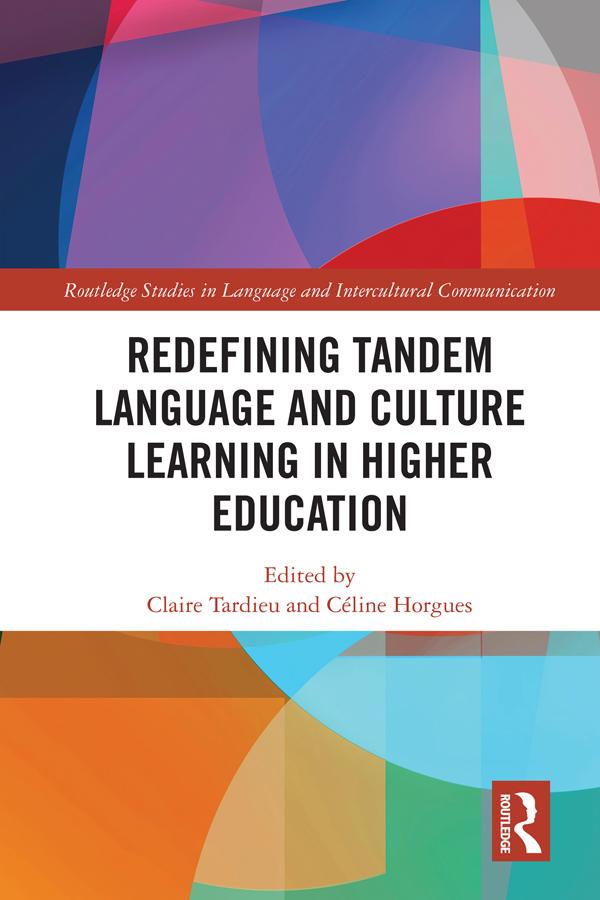
This book provides a comprehensive critical account of tandem learning, charting it evolution from its origins in European educational settings to modern programs offering new perspectives on the approach’s role within higher education. Taking stock of the ways in which increased globalization has produced new linguistic and sociocultural realities, the volume begins by looking back at the development of tandem learning over the last several decades, growing out of a need to create more opportunities for L2 learners to communicate in their target language. The book then examines the different learning objectives and learning outcomes of tandem learning arrangements, moving toward a discussion of tandem learning’s potential role in shaping language policy and the unique challenges involved in implementing tandem programs at higher education institutions. The final section of the book brings the previous discussions together to consider new tools and technology and the ways in which they can better equip language educators to implement tandem learning in their own practice. Highlighting tandem learning’s potential to promote multilingual and multicultural learning on a global scale, this volume will be of particular interest to students and researchers in intercultural communication, language education, multilingualism, and applied linguistics.
Płać wygodnie kartą, Klarną, Apple Pay lub Google Pay. Nie jesteś zadowolony? Zawsze masz 14-dniową gwarancję zwrotu pieniędzy. Więcej przeczytasz w naszych warunkach. Masz pytania? Napisz do nas na hello@memmo.org.
Memmo ułatwia naukę – gdziekolwiek jesteś na świecie. U nas znajdziesz podręczniki i sprytne narzędzia do nauki w jednym miejscu: streszczenia, quizy, podcasty i fiszki. A do tego Ted, Twój kumpel do nauki, który odpowie na wszystko, co Cię nurtuje. Ponad 50 000 studentów już tu się uczy – stworzone, byś uczył się szybciej i mniej stresował.