
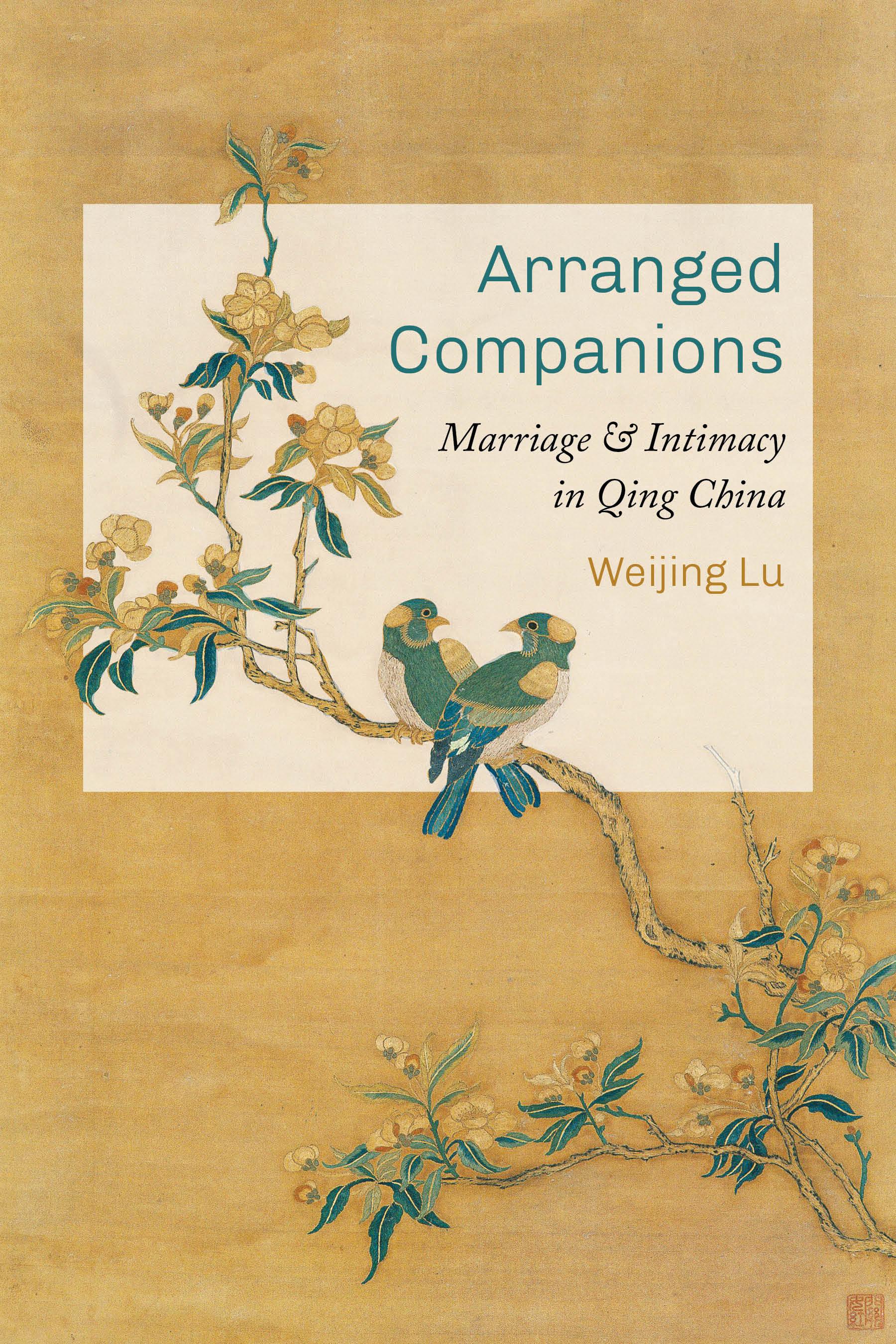
Questions conventional assumptions about premodern conjugal relationships
Although commonly associated with patriarchal oppression, arranged marriages have adapted over the centuries to changing cultural norms and the lived experiences of men and women. In Arranged Companions, historian Weijing Lu chronicles how marital behaviors during the early and High Qing (mid-seventeenth through mid-nineteenth centuries) were informed by rich and complex traditions and mediated by the historical conditions of the period, during which marital affection was celebrated as a basic ingredient of an ideal marriage.
Lu finds public representation and private communication of marital affection in personal records, including poetry, biographies, letters, and memoirs. During this unique historical moment, ideals of marital companionship and love came to fruition while social changes also created new tensions for couples and extended families. Offering surprising revelations about conjugal relations during this time of change, Arranged Companions raises provocative questions about the cultural construction of intimacy and the meaning of a “happy marriage.”
Płać wygodnie kartą, Klarną, Apple Pay lub Google Pay. Nie jesteś zadowolony? Zawsze masz 14-dniową gwarancję zwrotu pieniędzy. Więcej przeczytasz w naszych warunkach. Masz pytania? Napisz do nas na hello@memmo.org.
Memmo ułatwia naukę – gdziekolwiek jesteś na świecie. U nas znajdziesz podręczniki i sprytne narzędzia do nauki w jednym miejscu: streszczenia, quizy, podcasty i fiszki. A do tego Ted, Twój kumpel do nauki, który odpowie na wszystko, co Cię nurtuje. Ponad 50 000 studentów już tu się uczy – stworzone, byś uczył się szybciej i mniej stresował.