
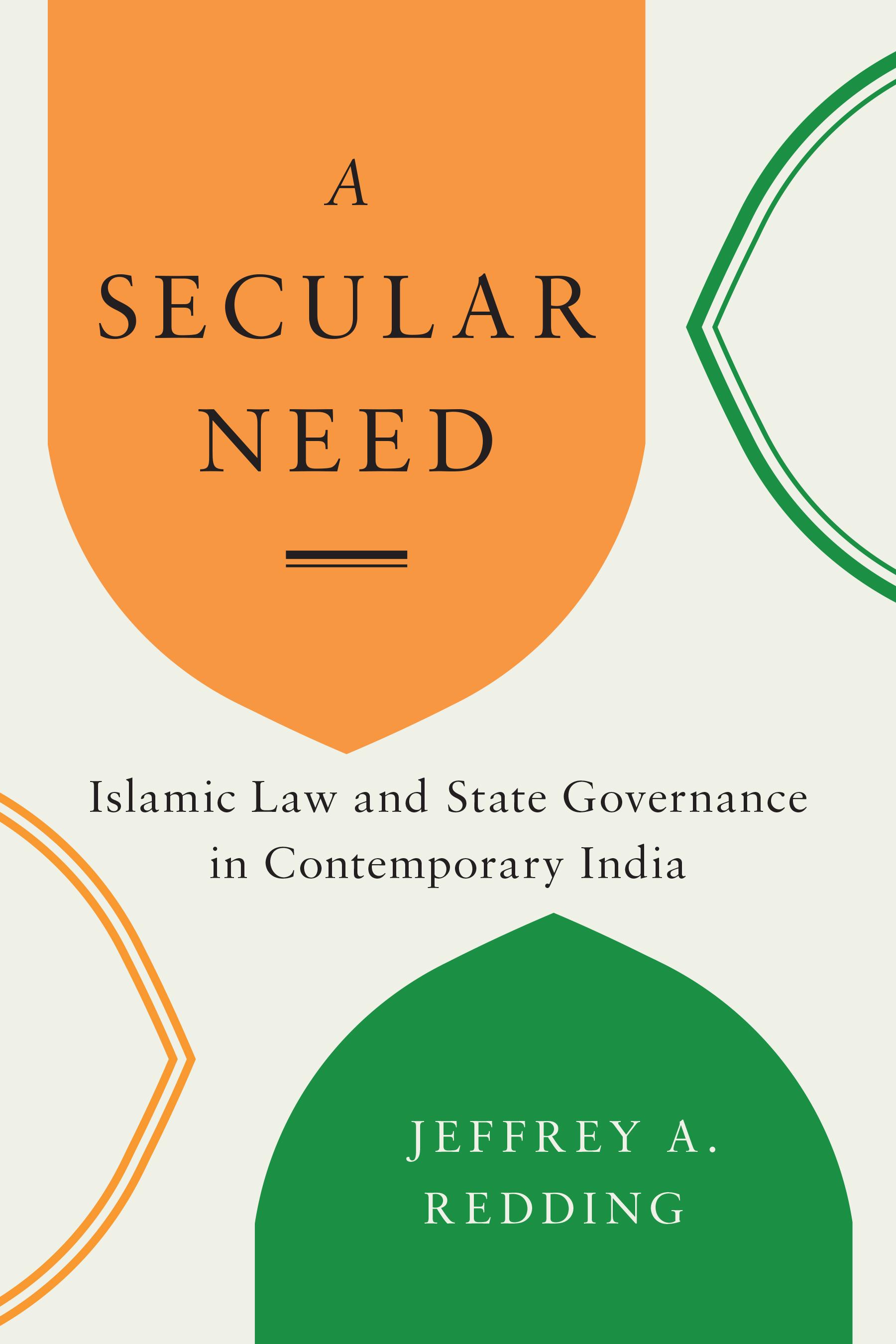
Whether from the perspective of Islamic law’s advocates, secularism’s partisans, or communities caught in their crossfire, many people see the relationship between Islamic law and secularism as antagonistic and increasingly discordant. In the United States there are calls for “sharia bans” in the courts, in western Europe legal limitations have been imposed on mosques and the wearing of headscarves, and in the Arab Middle East conflicts between secularist old guards and Islamist revolutionaries persist—suggesting that previously unsteady coexistences are transforming into outright hostilities.
Jeffrey Redding’s exploration of India’s non-state system of Muslim dispute resolution—known as the dar-ul-qaza system and commonly referred to as “Muslim courts” or “shariat courts”—challenges conventional narratives about the inevitable opposition between Islamic law and secular forms of governance, demonstrating that Indian secular law and governance cannot work without the significant assistance of non-state Islamic legal actors.
Płać wygodnie kartą, Klarną, Apple Pay lub Google Pay. Nie jesteś zadowolony? Zawsze masz 14-dniową gwarancję zwrotu pieniędzy. Więcej przeczytasz w naszych warunkach. Masz pytania? Napisz do nas na hello@memmo.org.
Memmo ułatwia naukę – gdziekolwiek jesteś na świecie. U nas znajdziesz podręczniki i sprytne narzędzia do nauki w jednym miejscu: streszczenia, quizy, podcasty i fiszki. A do tego Ted, Twój kumpel do nauki, który odpowie na wszystko, co Cię nurtuje. Ponad 50 000 studentów już tu się uczy – stworzone, byś uczył się szybciej i mniej stresował.