
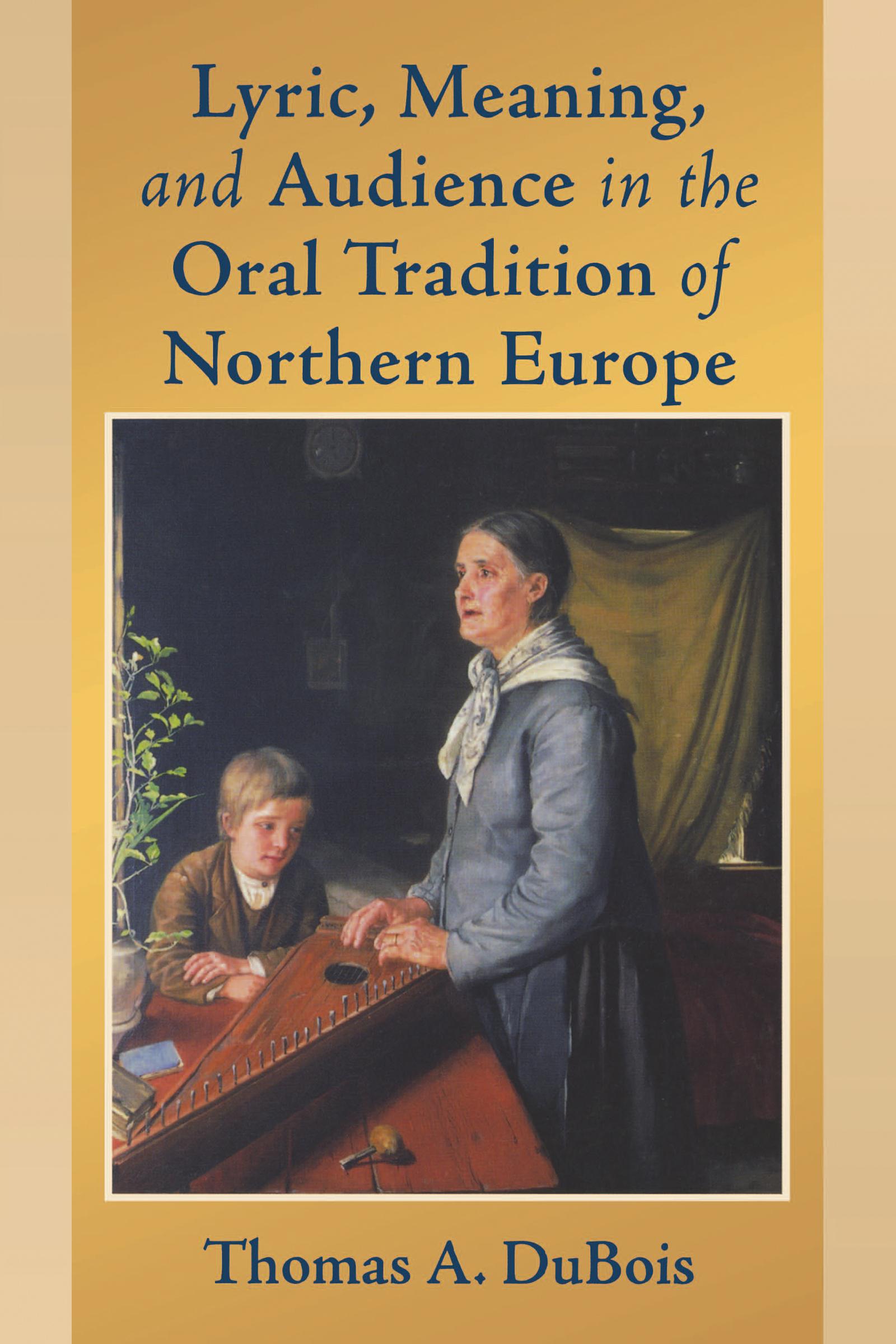
Focusing on particular characters, situations, or emotions—usually with little or no explicit plot—lyric song poses interpretive challenges to the listening audience. Without an overt plot, how does one understand what a song is about? Are there rules or norms for how to interpret them? Do these rules remain the same from culture to culture, or do they vary?
By looking at the ways in which cultures in Northern Europe interpret lyric songs, Thomas A. DuBois illuminates both commonalities of interpretive practice and unique features of their musical traditions. DuBois draws on sets of lyric songs from England, Wales, Scotland, Ireland, Norway, Sweden, and Finland to explore the question of meaning in folklore, especially the role of traditional audiences in appraising and understanding nonnarrative songs.
DuBois's examples range from the medieval and early modern periods to the late twentieth century. His nuanced study explicates folk practices of interpretation—a "native hermeneutics" existing alongside folk songs in North European oral tradition. He examines lyric songs—particularly formal laments—embedded with prose or poetic narratives; the ritual use of lyric as charms and laments in premodern Europe; the development of personalized meanings within hymns and devotional prayers of the high Middle Ages; Shakespeare's lyric songs and their demands on the audience; and the ways in which professional lyric singers encourage certain interpretations of their songs. The only study to examine a range of northern European lyric traditions as a unified group, Lyric, Meaning, and Audience in the Oral Tradition of Northern Europe will be of interest to scholars in medieval studies, literary studies, and folklore.
Płać wygodnie kartą, Klarną, Apple Pay lub Google Pay. Nie jesteś zadowolony? Zawsze masz 14-dniową gwarancję zwrotu pieniędzy. Więcej przeczytasz w naszych warunkach. Masz pytania? Napisz do nas na hello@memmo.org.
Memmo ułatwia naukę – gdziekolwiek jesteś na świecie. U nas znajdziesz podręczniki i sprytne narzędzia do nauki w jednym miejscu: streszczenia, quizy, podcasty i fiszki. A do tego Ted, Twój kumpel do nauki, który odpowie na wszystko, co Cię nurtuje. Ponad 50 000 studentów już tu się uczy – stworzone, byś uczył się szybciej i mniej stresował.