
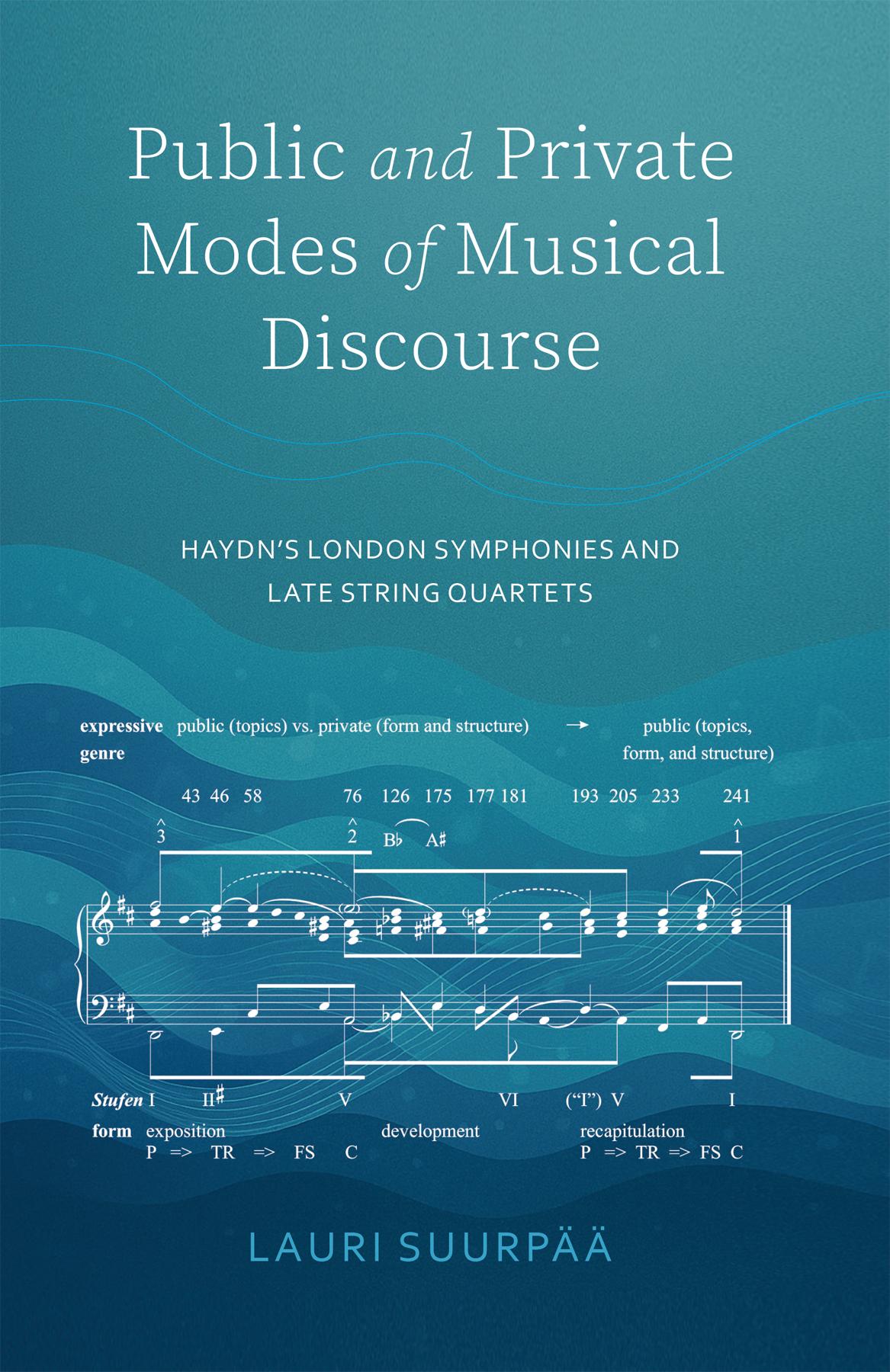
Public and Private Modes of Musical Discourse brings a new contribution to discussions on the difference between the public and private layers of music, which have often centered on issues of stylistic expression such as genre, performance venue, texture, and phrase organization. Symphonies, for example, have historically been seen as public expressions of grandeur with a festive, powerful musical character, while sonatas were associated with the subtler emotions of chamber music and private audiences.
Author Lauri Suurpää offers an alternative starting point for the distinction between these modes, grounding the public-private distinction on structure and expression. Focusing on Joseph Haydn's London symphonies and late string quartets, Suurpää exposes the interplay of details and large-scale narrative and unveils a key aspect of the music—its interactions and dialogues between public and private modes of discourse. In structure, if a musical segment adheres to conventional patterns, it is public; if it deviates from them, it is private. In expression, if a musical topic refers to an object shared by a crowd, such as a fanfare announcing a battle, it is public; if a topic refers to emotions felt by an individual, it is private.
With sonata theory, form-functional theory, Schenkerian analysis, hypermetrical analysis, and approaching musical expression from the perspective of topic theory, layers of structure and expression are peeled back. Public and Private Modes of Musical Discourse offers a valuable new way into how we discuss eighteenth-century music.
Płać wygodnie kartą, Klarną, Apple Pay lub Google Pay. Nie jesteś zadowolony? Zawsze masz 14-dniową gwarancję zwrotu pieniędzy. Więcej przeczytasz w naszych warunkach. Masz pytania? Napisz do nas na hello@memmo.org.
Memmo ułatwia naukę – gdziekolwiek jesteś na świecie. U nas znajdziesz podręczniki i sprytne narzędzia do nauki w jednym miejscu: streszczenia, quizy, podcasty i fiszki. A do tego Ted, Twój kumpel do nauki, który odpowie na wszystko, co Cię nurtuje. Ponad 50 000 studentów już tu się uczy – stworzone, byś uczył się szybciej i mniej stresował.