
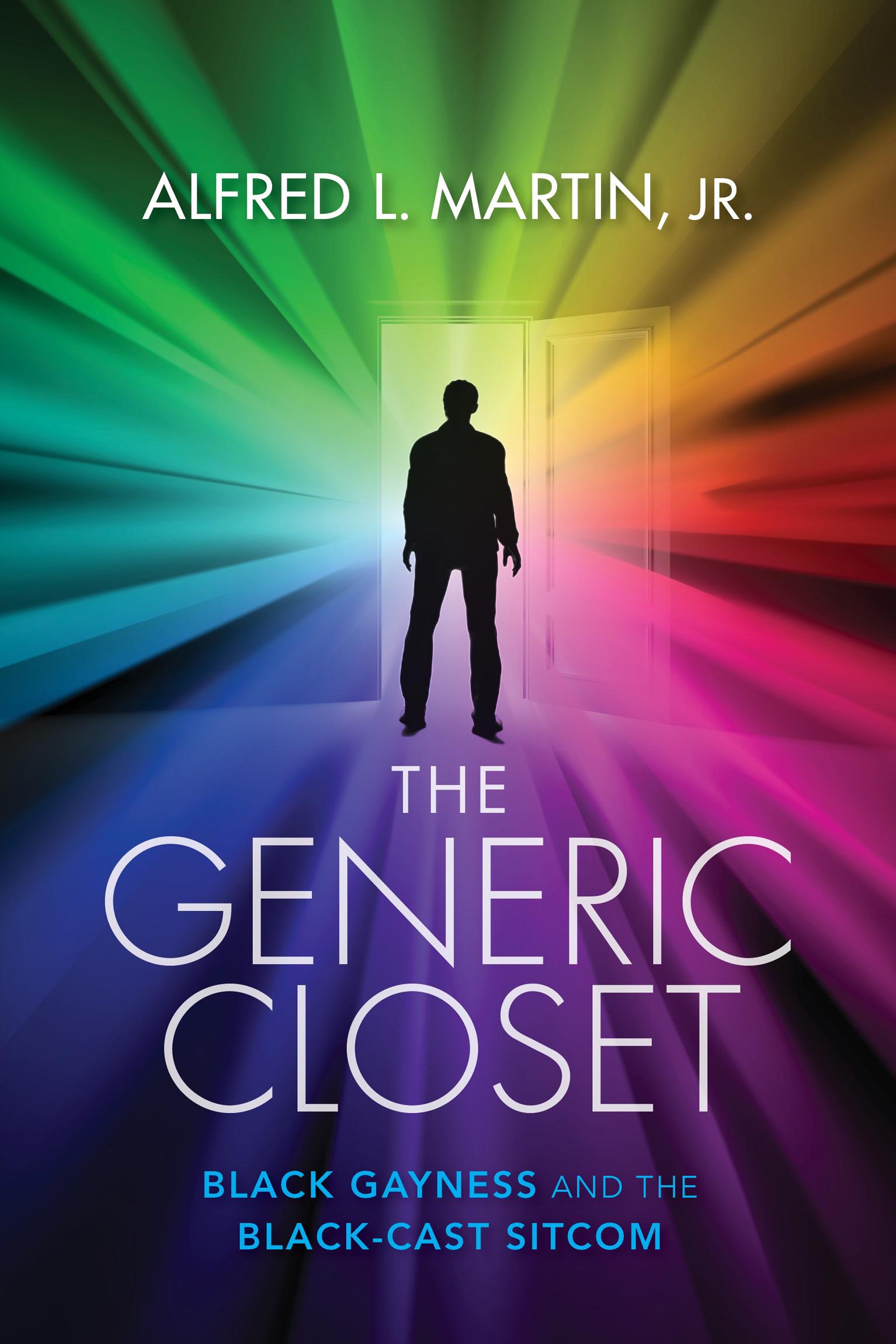
Even after a rise in gay and Black representation and production on TV in the 1990s, the sitcom became a "generic closet," restricting Black gay characters with narrative tropes.
Drawing from 20 interviews with credited episode writers, key show-runners, and Black gay men, The Generic Closet situates Black-cast sitcoms as a unique genre that uses Black gay characters in service of the series' heterosexual main cast. Alfred L. Martin, Jr., argues that the Black community is considered to be antigay due to misrepresentation by shows that aired during the family viewing hour and that were written for the imagined, "traditional" Black family. Martin considers audience reception, industrial production practices, and authorship to unpack the claim that Black gay characters are written into Black-cast sitcoms such as Moesha, Good News, and Let's Stay Together in order to closet Black gayness.
By exploring how systems of power produce ideologies about Black gayness, The Generic Closet deconstructs the concept of a monolithic Black audience and investigates whether this generic closet still exists.
Płać wygodnie kartą, Klarną, Apple Pay lub Google Pay. Nie jesteś zadowolony? Zawsze masz 14-dniową gwarancję zwrotu pieniędzy. Więcej przeczytasz w naszych warunkach. Masz pytania? Napisz do nas na hello@memmo.org.
Memmo ułatwia naukę – gdziekolwiek jesteś na świecie. U nas znajdziesz podręczniki i sprytne narzędzia do nauki w jednym miejscu: streszczenia, quizy, podcasty i fiszki. A do tego Ted, Twój kumpel do nauki, który odpowie na wszystko, co Cię nurtuje. Ponad 50 000 studentów już tu się uczy – stworzone, byś uczył się szybciej i mniej stresował.