
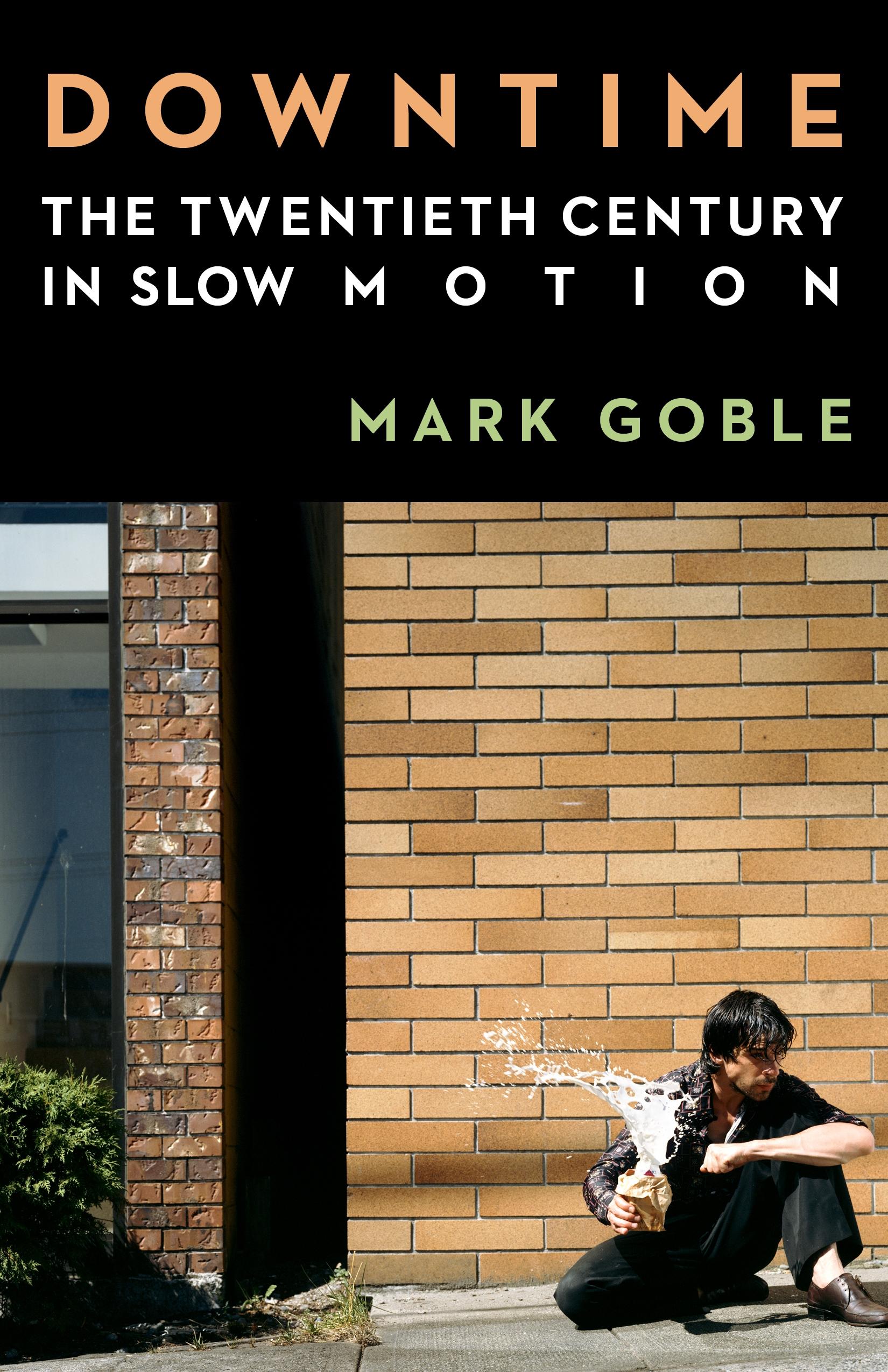
Slow motion has become perhaps the least special effect in film and media, a stylistic technique for showing violence, dream sequences, and flashbacks or other experiences outside ordinary time. We see so much slow motion on our screens today that we can look past its history and forget how rare it was before the 1960s, when films such as The Wild Bunch, Bonnie and Clyde, and 2001: A Space Odyssey helped it explode in popularity at a moment of cultural change and social upheaval. This ambitious book tells the story of slow motion, tracing a broader fascination with the uneven speeds of modern life and our ability to comprehend them.
Downtime explores the history and aesthetics of slow motion, from its origins in early film to its prominence today. Mark Goble argues that the effect’s sudden visibility after 1968 registers experience of modernity as a period of perpetual acceleration that somehow makes even the smallest intervals of time feel endless. Ranging across literature, art, and cinema—including novels by William Faulkner, Don DeLillo, and W. G. Sebald as well as Robert Smithson’s Spiral Jetty and Julie Dash’s Daughters of the Dust—he describes how writers and filmmakers depict the velocities and durations of contemporary life. Goble reveals the twentieth century and its aftermath as figured in slow motion: rushing past and deliriously delayed, everything going fast and slow at once. Downtime is about time and its technologies in an accelerated world that can advance only in slow motion.
Płać wygodnie kartą, Klarną, Apple Pay lub Google Pay. Nie jesteś zadowolony? Zawsze masz 14-dniową gwarancję zwrotu pieniędzy. Więcej przeczytasz w naszych warunkach. Masz pytania? Napisz do nas na hello@memmo.org.
Memmo ułatwia naukę – gdziekolwiek jesteś na świecie. U nas znajdziesz podręczniki i sprytne narzędzia do nauki w jednym miejscu: streszczenia, quizy, podcasty i fiszki. A do tego Ted, Twój kumpel do nauki, który odpowie na wszystko, co Cię nurtuje. Ponad 50 000 studentów już tu się uczy – stworzone, byś uczył się szybciej i mniej stresował.