
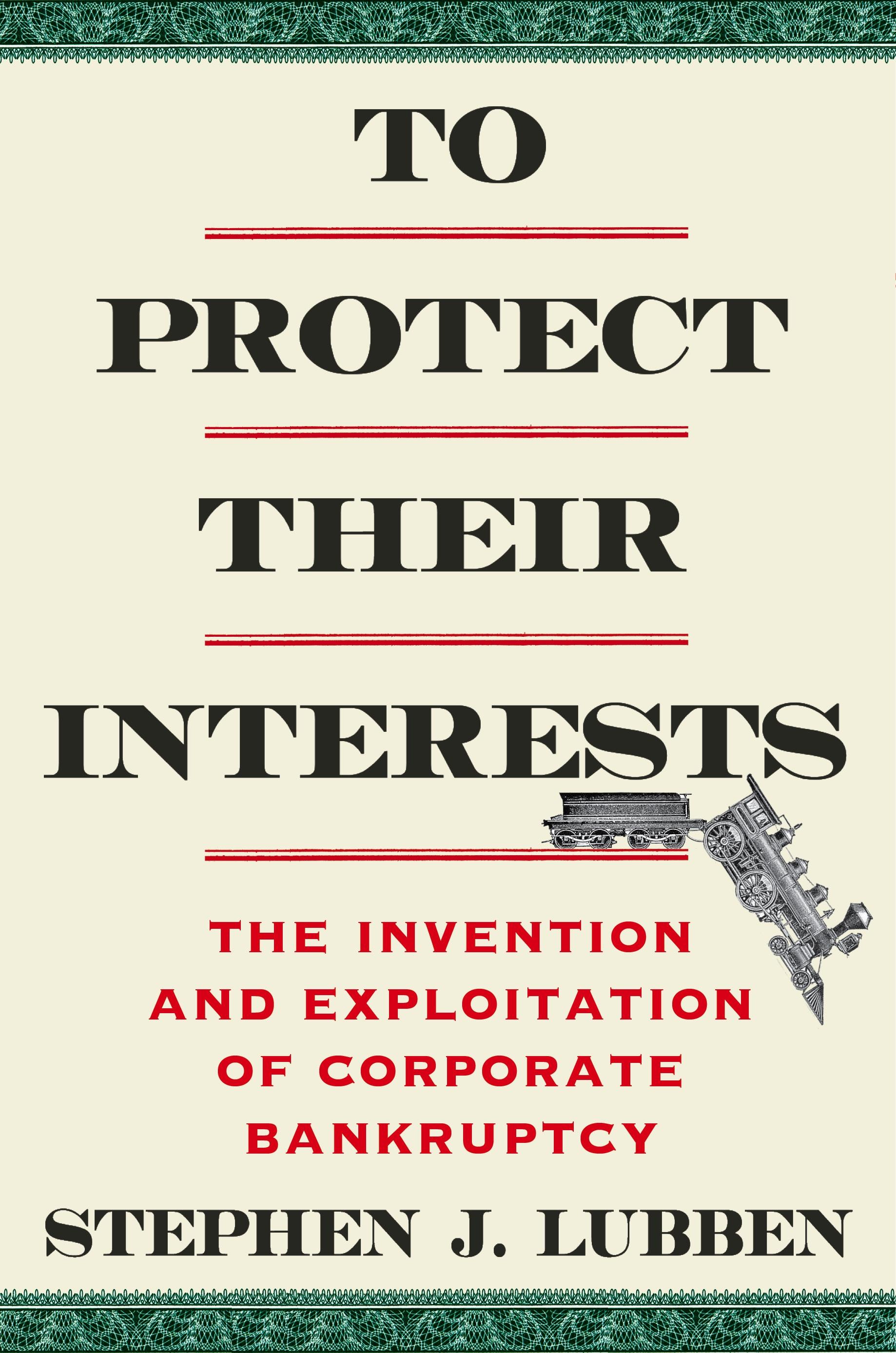
Chapter 11 corporate bankruptcy proceedings are commonly thought of as a tool to protect the broader economy from the failure of large firms, even though the biggest players reap the greatest rewards. In the conventional telling, modern corporate reorganization began in the 1890s, with J. P. Morgan leading a noble effort to protect bondholders from the depredations of corporate insiders. What does this story leave out, and how do the true origins of bankruptcy law shed light on its present-day uses and abuses?
To Protect Their Interests is a groundbreaking historical account of how corporate bankruptcy became what it is today—a forum for battles between well-heeled insiders. Stephen J. Lubben strips away the myths surrounding the history of corporate restructuring, showing that it emerged a decade before Morgan, when the robber baron Jay Gould strove to keep control of his railroad by working out a compromise with a handful of wealthy investors. The 1885 restructuring of Texas and Pacific Railway set the pattern for future corporate reorganizations: insider dealing, elite manipulation of the legal system, and judicial deference. Lubben traces the evolution of the bankruptcy system through a series of major cases involving companies such as W. T. Grant and Toys “R” Us, demonstrating that it has always been a way for the powerful to maintain power. Revealing the sordid origins of bankruptcy law, this book also considers the limited prospects for reform.
Płać wygodnie kartą, Klarną, Apple Pay lub Google Pay. Nie jesteś zadowolony? Zawsze masz 14-dniową gwarancję zwrotu pieniędzy. Więcej przeczytasz w naszych warunkach. Masz pytania? Napisz do nas na hello@memmo.org.
Memmo ułatwia naukę – gdziekolwiek jesteś na świecie. U nas znajdziesz podręczniki i sprytne narzędzia do nauki w jednym miejscu: streszczenia, quizy, podcasty i fiszki. A do tego Ted, Twój kumpel do nauki, który odpowie na wszystko, co Cię nurtuje. Ponad 50 000 studentów już tu się uczy – stworzone, byś uczył się szybciej i mniej stresował.