
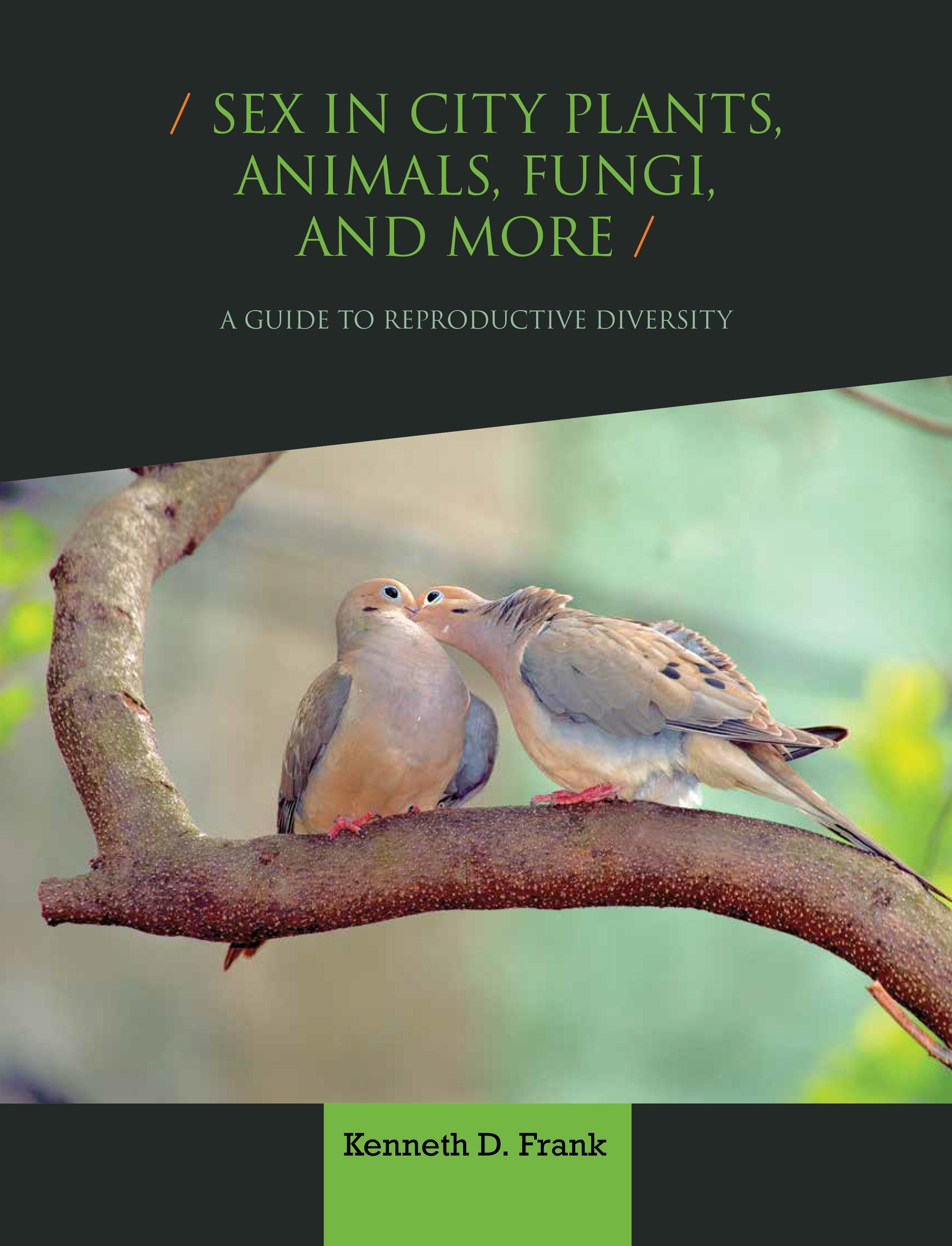
Cities pose formidable obstacles to nonhuman life. Vast expanses of asphalt and concrete are inhospitable to plants and animals; traffic noise and artificial light disturb natural rhythms; sewage and pollutants imperil existence. Yet cities teem with life: In rowhouse neighborhoods, tiny flowers bloom from cracks in the sidewalk. White clover covers lawns, its seeds dispersed by shoes and birds. Moths flutter and spiders weave their webs near electric lights. Sparrows and squirrels feast on the scraps people leave behind. Pairs of red-tailed hawks nest on window ledges. How do wild plants and animals in urban areas find mates? How do they navigate the patchwork of habitats to reproduce while avoiding inbreeding? In what ways do built environments enable or inhibit mating?
This book explores the natural history of sex in urban bacteria, fungi, plants, and nonhuman animals. Kenneth D. Frank illuminates the reproductive behavior of scores of species. He examines topics such as breeding systems, sex determination, sex change, sexual conflict, sexual trauma, sexually transmitted disease, sexual mimicry, sexual cannibalism, aphrodisiacs, and lost sex. Frank offers a guide to urban reproductive diversity across a range of conditions, showing how understanding of sex and mating furthers the appreciation of biodiversity. He presents reproductive diversity as elegant but vulnerable, underscoring the consequences of human activity. Featuring compelling photographs of a multitude of life forms in their city habitats, this book provides a new lens on urban natural history.
Płać wygodnie kartą, Klarną, Apple Pay lub Google Pay. Nie jesteś zadowolony? Zawsze masz 14-dniową gwarancję zwrotu pieniędzy. Więcej przeczytasz w naszych warunkach. Masz pytania? Napisz do nas na hello@memmo.org.
Memmo ułatwia naukę – gdziekolwiek jesteś na świecie. U nas znajdziesz podręczniki i sprytne narzędzia do nauki w jednym miejscu: streszczenia, quizy, podcasty i fiszki. A do tego Ted, Twój kumpel do nauki, który odpowie na wszystko, co Cię nurtuje. Ponad 50 000 studentów już tu się uczy – stworzone, byś uczył się szybciej i mniej stresował.