
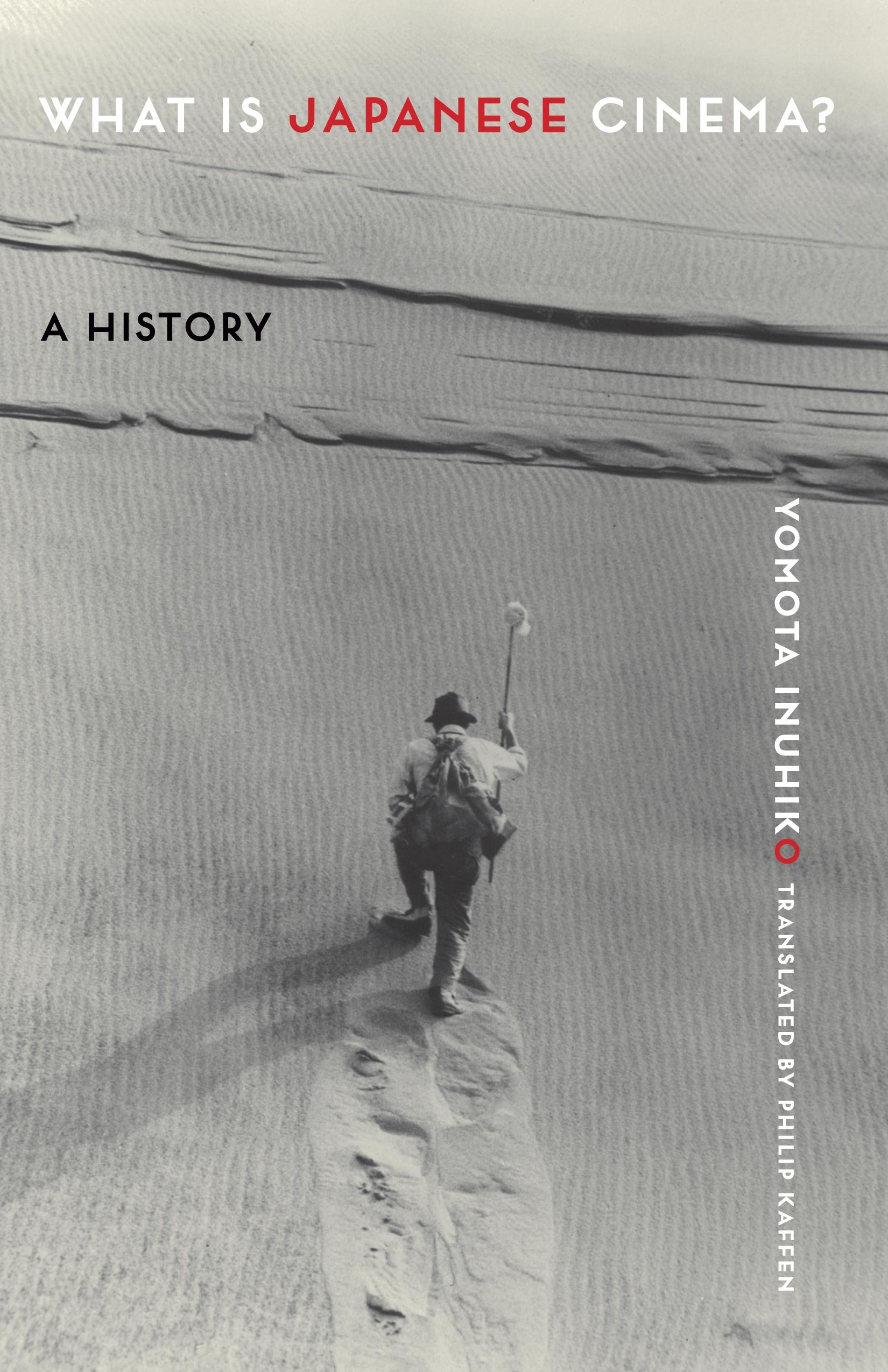
What might Godzilla and Kurosawa have in common? What, if anything, links Ozu’s sparse portraits of domestic life and the colorful worlds of anime? In What Is Japanese Cinema? Yomota Inuhiko provides a concise and lively history of Japanese film that shows how cinema tells the story of Japan’s modern age.
Discussing popular works alongside auteurist masterpieces, Yomota considers films in light of both Japanese cultural particularities and cinema as a worldwide art form. He covers the history of Japanese film from the silent era to the rise of J-Horror in its historical, technological, and global contexts. Yomota shows how Japanese film has been shaped by traditonal art forms such as kabuki theater as well as foreign influences spanning Hollywood and Italian neorealism. Along the way, he considers the first golden age of Japanese film; colonial filmmaking in Korea, Manchuria, and Taiwan; the impact of World War II and the U.S. occupation; the Japanese film industry’s rise to international prominence during the 1950s and 1960s; and the challenges and technological shifts of recent decades. Alongside a larger thematic discussion of what defines and characterizes Japanese film, Yomota provides insightful readings of canonical directors including Kurosawa, Ozu, Suzuki, and Miyazaki as well as genre movies, documentaries, indie film, and pornography. An incisive and opinionated history, What Is Japanese Cinema? is essential reading for admirers and students of Japan’s contributions to the world of film.
Płać wygodnie kartą, Klarną, Apple Pay lub Google Pay. Nie jesteś zadowolony? Zawsze masz 14-dniową gwarancję zwrotu pieniędzy. Więcej przeczytasz w naszych warunkach. Masz pytania? Napisz do nas na hello@memmo.org.
Memmo ułatwia naukę – gdziekolwiek jesteś na świecie. U nas znajdziesz podręczniki i sprytne narzędzia do nauki w jednym miejscu: streszczenia, quizy, podcasty i fiszki. A do tego Ted, Twój kumpel do nauki, który odpowie na wszystko, co Cię nurtuje. Ponad 50 000 studentów już tu się uczy – stworzone, byś uczył się szybciej i mniej stresował.