
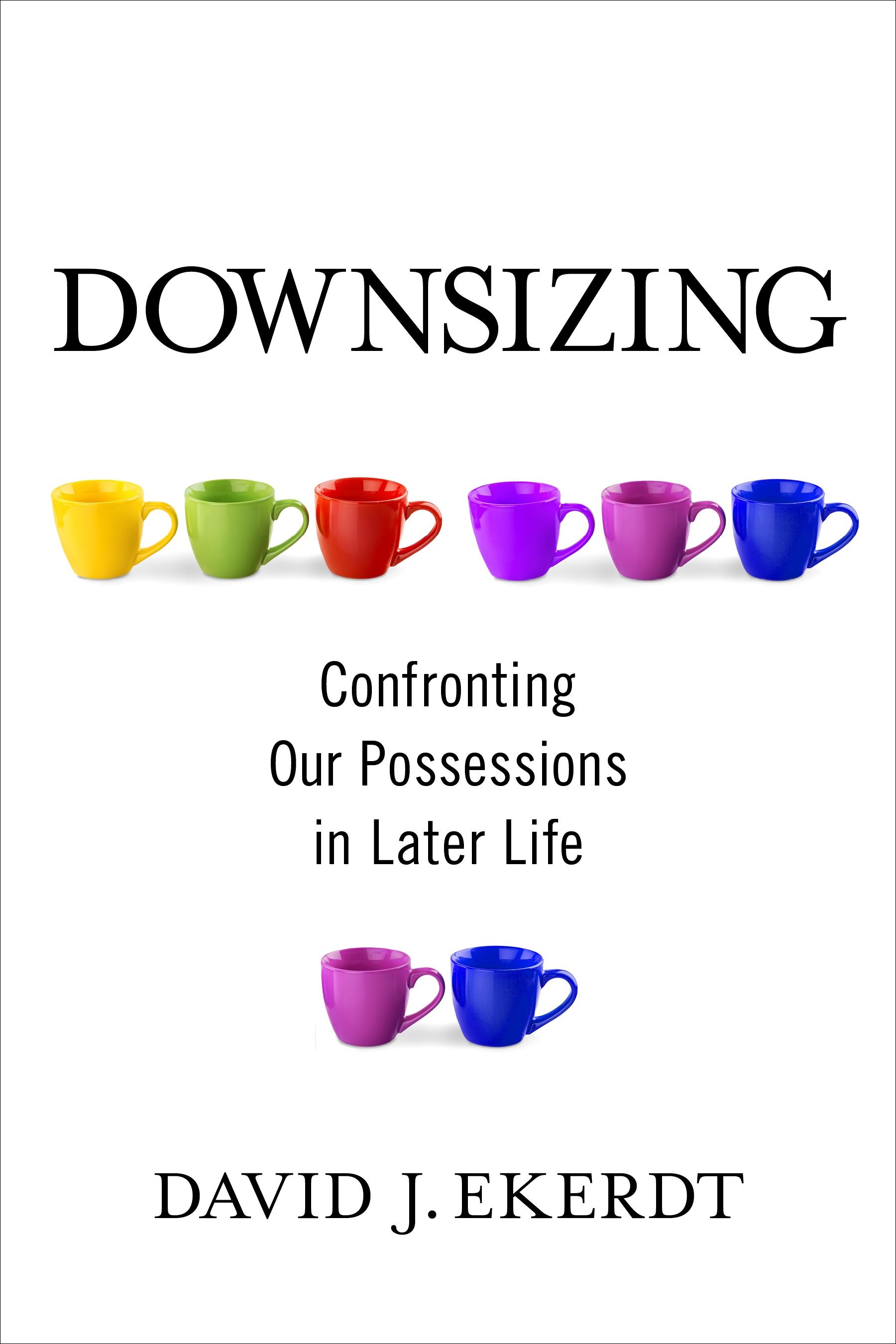
As life unfolds, things tend to accumulate. When older adults undergo health, residential, and marital changes, they will face a reckoning with their lifelong store of possessions—special, ordinary, and forgotten. Such a predicament now confronts tens of millions of Americans as the Baby Boom cohort passes into retirement and beyond. Despite what a thriving industry of clutter manuals tells us, for most older adults, downsizing is no simple task.
Drawing on in-depth interviews with recent movers in over a hundred diverse U.S. households, David Ekerdt analyzes the downsizing process and what it says about the meaning and management of possessions. He details how households approach and accomplish downsizing, exploring the decision-making process and the effectiveness of different strategies. From an expert gerontological perspective, he considers the cognitive, physical, emotional, and social tasks that the process entails and the role of factors such as gender and class on the divestment of things. Ekerdt finds that despite the fatigue and emotional challenges people encounter, afterward they report satisfaction in having completed a downsizing and feel empowerment on the other side of the task. Offering an empathetic and practical look at one of life’s major transitions, Downsizing brings forward the voices of elders so that older adults, their families and friends, and practitioners working with older clients can understand and benefit from their experience.
Płać wygodnie kartą, Klarną, Apple Pay lub Google Pay. Nie jesteś zadowolony? Zawsze masz 14-dniową gwarancję zwrotu pieniędzy. Więcej przeczytasz w naszych warunkach. Masz pytania? Napisz do nas na hello@memmo.org.
Memmo ułatwia naukę – gdziekolwiek jesteś na świecie. U nas znajdziesz podręczniki i sprytne narzędzia do nauki w jednym miejscu: streszczenia, quizy, podcasty i fiszki. A do tego Ted, Twój kumpel do nauki, który odpowie na wszystko, co Cię nurtuje. Ponad 50 000 studentów już tu się uczy – stworzone, byś uczył się szybciej i mniej stresował.