
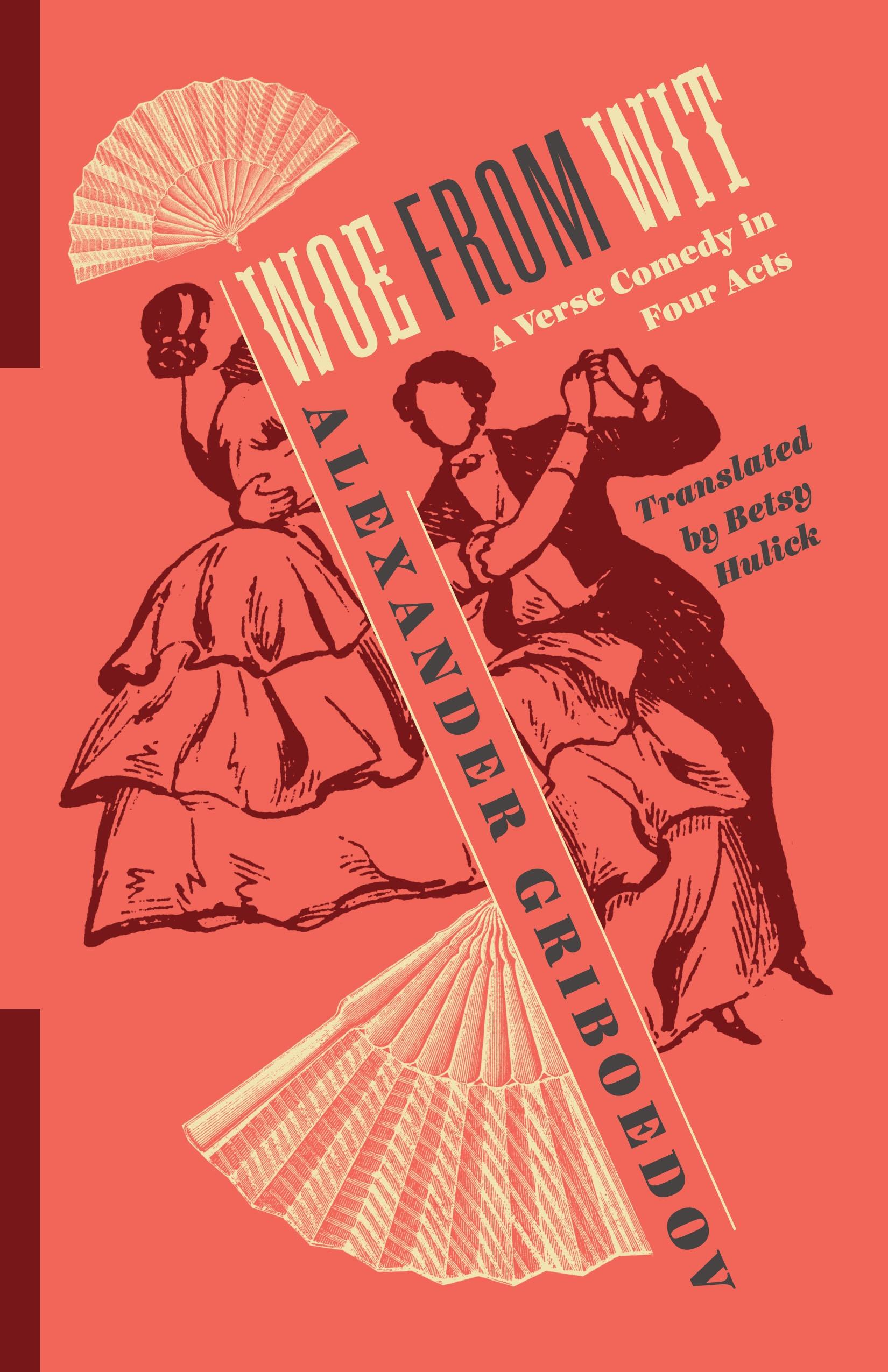
Alexander Griboedov’s Woe from Wit is one of the masterpieces of Russian drama. A verse comedy set in Moscow high society after the Napoleonic wars, it offers sharply drawn characters and clever repartee, mixing meticulously crafted banter and biting social critique. Its protagonist, Alexander Chatsky, is an idealistic ironist, a complex Romantic figure who would be echoed in Russian literature from Pushkin onward. Chatsky returns from three years abroad hoping to rekindle a romance with his childhood sweetheart, Sophie. In the meantime, she has fallen in love with Molchalin, her reactionary father Famusov’s scheming secretary. Chatsky speaks out against the hypocrisy of aristocratic society—and as scandal erupts, he is met with accusations of madness.
Woe from Wit was written in 1823 and was an immediate sensation, but under heavy-handed tsarist censorship, it was not published in full until forty years later. Its influence is felt not just in Russian literary language but in everyday speech. It is the source of a remarkable number of frequently quoted aphorisms and turns of phrase, comparable to Shakespeare’s influence on English. Yet owing to its complex rhyme scheme and verse structure, the play has frequently been considered almost untranslatable. Betsy Hulick’s translation brings Griboedov’s sparkling wit, spirited dialogue, and effortless crossing of registers from elevated to colloquial into a lively contemporary English.
Płać wygodnie kartą, Klarną, Apple Pay lub Google Pay. Nie jesteś zadowolony? Zawsze masz 14-dniową gwarancję zwrotu pieniędzy. Więcej przeczytasz w naszych warunkach. Masz pytania? Napisz do nas na hello@memmo.org.
Memmo ułatwia naukę – gdziekolwiek jesteś na świecie. U nas znajdziesz podręczniki i sprytne narzędzia do nauki w jednym miejscu: streszczenia, quizy, podcasty i fiszki. A do tego Ted, Twój kumpel do nauki, który odpowie na wszystko, co Cię nurtuje. Ponad 50 000 studentów już tu się uczy – stworzone, byś uczył się szybciej i mniej stresował.