
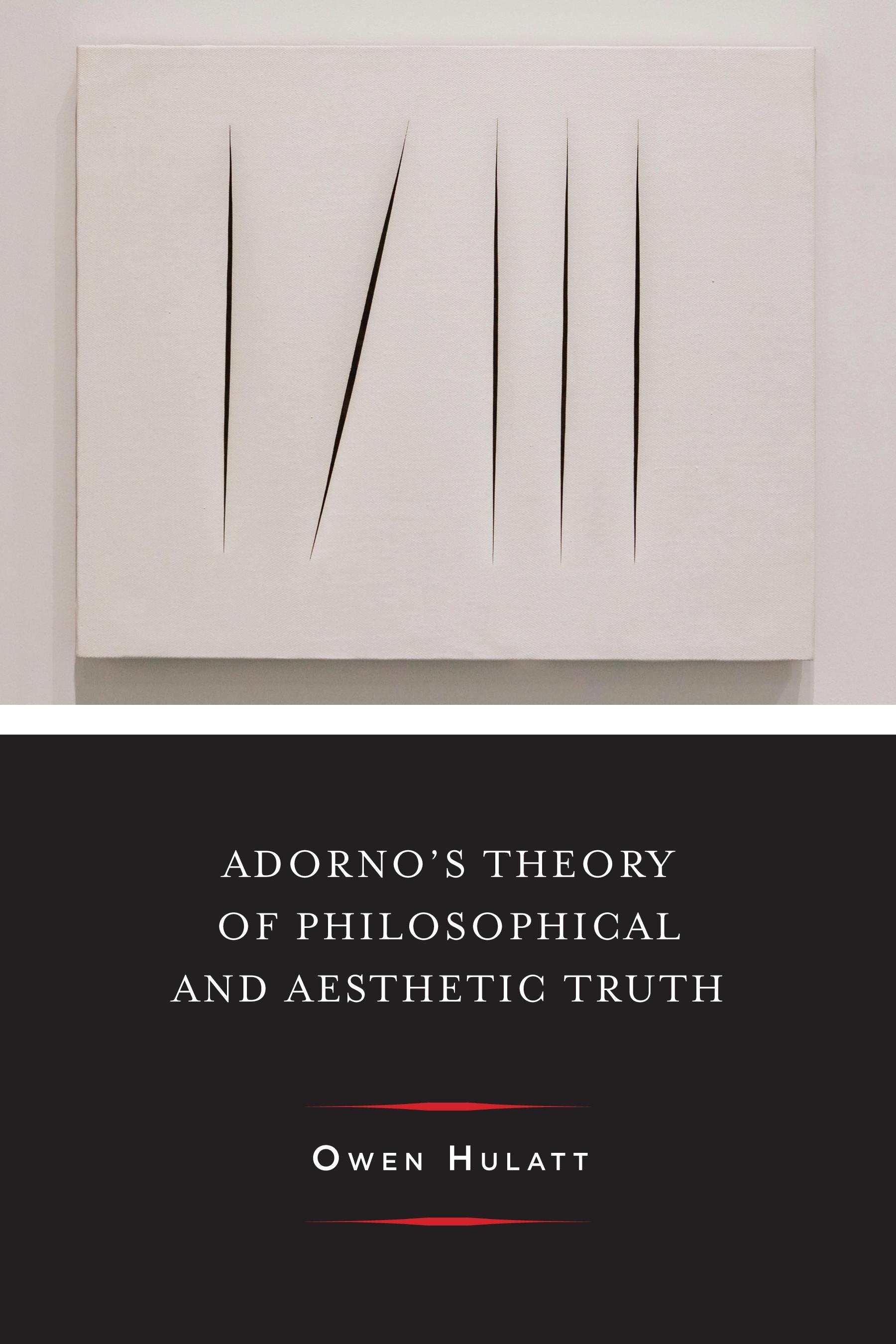
In Adorno's Theory of Philosophical and Aesthetic Truth, Owen Hulatt undertakes an original reading of Theodor W. Adorno's epistemology and its material underpinnings, deepening our understanding of his theories of truth, art, and the nonidentical. Hulatt's novel interpretation casts Adorno's theory of philosophical and aesthetic truth as substantially unified, supporting the thinker's claim that both philosophy and art are capable of being true.
For Adorno, truth is produced when rhetorical "texture" combines with cognitive "performance," leading to the breakdown of concepts that mediate the experience of the consciousness. Both philosophy and art manifest these features, although philosophy enacts these conceptual issues directly, while art does so obliquely. Hulatt builds a robust argument for Adorno's claim that concepts ineluctably misconstrue their objects. He also puts the still influential thinker into conversation with Hegel, Husserl, Frazer, Sohn-Rethel, Benjamin, Strawson, Dahlhaus, Habermas, and Caillois, among many others.
Płać wygodnie kartą, Klarną, Apple Pay lub Google Pay. Nie jesteś zadowolony? Zawsze masz 14-dniową gwarancję zwrotu pieniędzy. Więcej przeczytasz w naszych warunkach. Masz pytania? Napisz do nas na hello@memmo.org.
Memmo ułatwia naukę – gdziekolwiek jesteś na świecie. U nas znajdziesz podręczniki i sprytne narzędzia do nauki w jednym miejscu: streszczenia, quizy, podcasty i fiszki. A do tego Ted, Twój kumpel do nauki, który odpowie na wszystko, co Cię nurtuje. Ponad 50 000 studentów już tu się uczy – stworzone, byś uczył się szybciej i mniej stresował.