
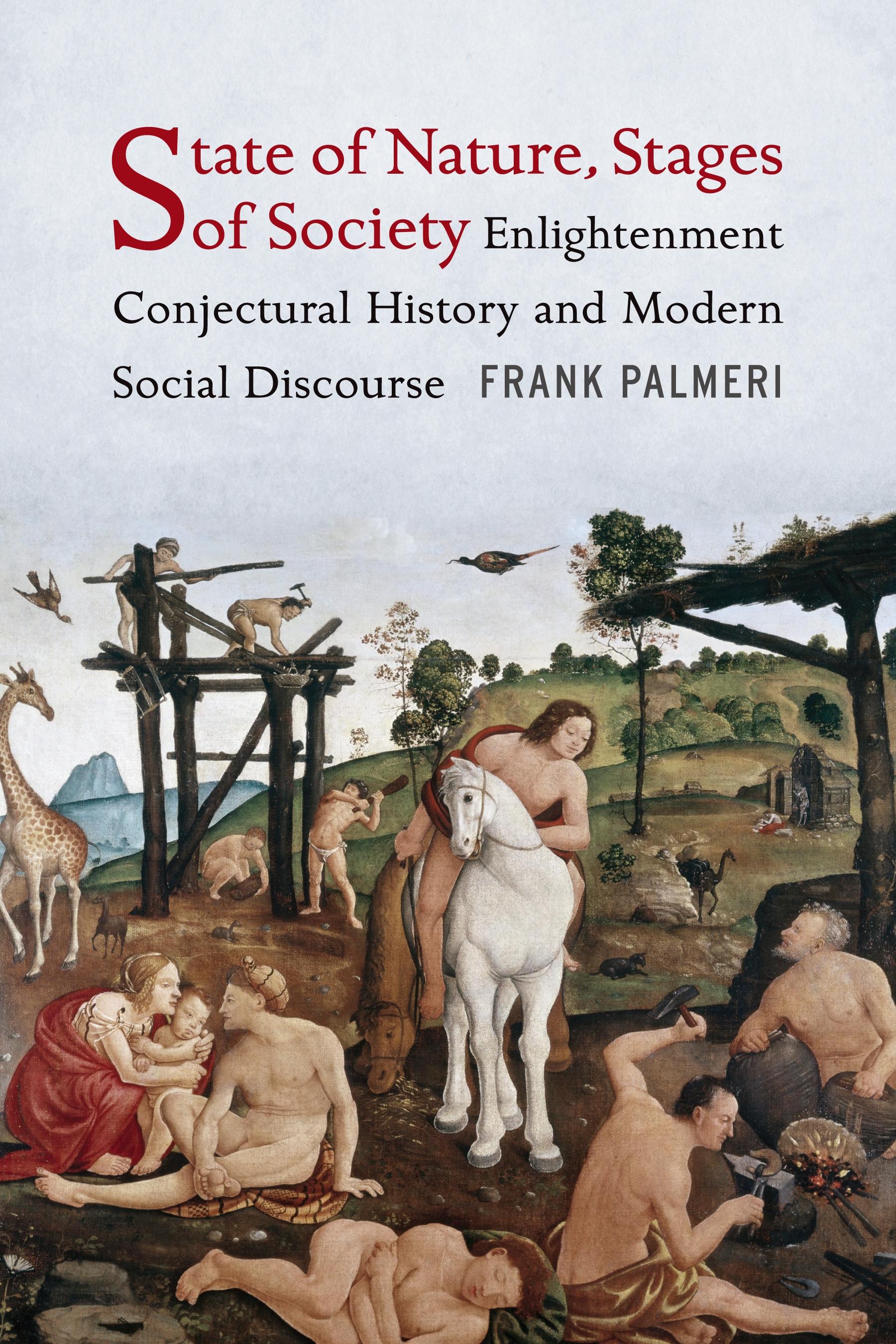
Frank Palmeri sees the conjectural histories of Rousseau, Hume, Herder, and other Enlightenment philosophers as a template for the development of the social sciences in the nineteenth and early twentieth centuries. Without documents or memorials, these thinkers, he argues, employed conjecture to formulate a naturalistic account of society's commercial and secular progression.
Palmeri finds evidence of speculative frameworks in the political economy of Malthus, Martineau, Mill, and Marx. He traces the influence of speculative thought in the development of anthropology and ethnography in the 1860s, the foundational sociology of Comte and Spencer, and the sociology of religion pioneered by Weber, Durkheim, and Freud. Conjectural histories reveal a surprising ambivalence toward progress, modernity, and secularization among leading thinkers of the time, an attitude that affected texts as varied as Darwin's Descent of Man, Nietzsche's Genealogy of Morality, and the novels of Walter Scott, George Eliot, and H.G. Wells. Establishing the critical value of conjectural thinking in the study of modern forms of knowledge, Palmeri concludes his investigation with its return in the work of Foucault and in recent histories on early religion, political organization, and material life.
Płać wygodnie kartą, Klarną, Apple Pay lub Google Pay. Nie jesteś zadowolony? Zawsze masz 14-dniową gwarancję zwrotu pieniędzy. Więcej przeczytasz w naszych warunkach. Masz pytania? Napisz do nas na hello@memmo.org.
Memmo ułatwia naukę – gdziekolwiek jesteś na świecie. U nas znajdziesz podręczniki i sprytne narzędzia do nauki w jednym miejscu: streszczenia, quizy, podcasty i fiszki. A do tego Ted, Twój kumpel do nauki, który odpowie na wszystko, co Cię nurtuje. Ponad 50 000 studentów już tu się uczy – stworzone, byś uczył się szybciej i mniej stresował.