
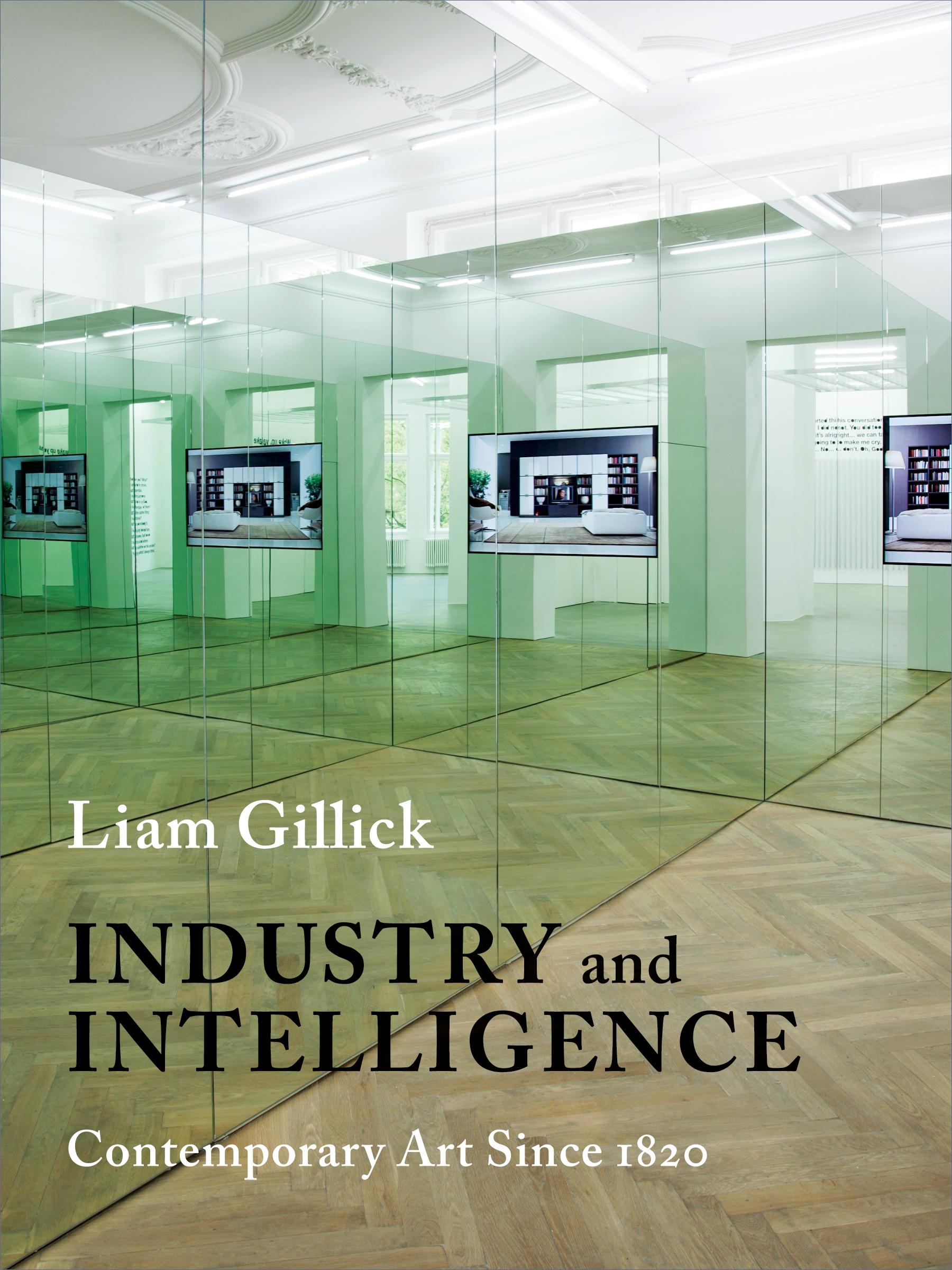
The history of modern art is often told through aesthetic breakthroughs that sync well with cultural and political change. From Courbet to Picasso, from Malevich to Warhol, it is accepted that art tracks the disruptions of industrialization, fascism, revolution, and war. Yet filtering the history of modern art only through catastrophic events cannot account for the subtle developments that lead to the profound confusion at the heart of contemporary art.
In Industry and Intelligence, the artist Liam Gillick writes a nuanced genealogy to help us appreciate contemporary art's engagement with history even when it seems apathetic or blind to current events. Taking a broad view of artistic creation from 1820 to today, Gillick follows the response of artists to incremental developments in science, politics, and technology. The great innovations and dislocations of the nineteenth and twentieth centuries have their place in this timeline, but their traces are alternately amplified and diminished as Gillick moves through artistic reactions to liberalism, mass manufacturing, psychology, nuclear physics, automobiles, and a host of other advances. He intimately ties the origins of contemporary art to the social and technological adjustments of modern life, which artists struggled to incorporate truthfully into their works.
Płać wygodnie kartą, Klarną, Apple Pay lub Google Pay. Nie jesteś zadowolony? Zawsze masz 14-dniową gwarancję zwrotu pieniędzy. Więcej przeczytasz w naszych warunkach. Masz pytania? Napisz do nas na hello@memmo.org.
Memmo ułatwia naukę – gdziekolwiek jesteś na świecie. U nas znajdziesz podręczniki i sprytne narzędzia do nauki w jednym miejscu: streszczenia, quizy, podcasty i fiszki. A do tego Ted, Twój kumpel do nauki, który odpowie na wszystko, co Cię nurtuje. Ponad 50 000 studentów już tu się uczy – stworzone, byś uczył się szybciej i mniej stresował.