
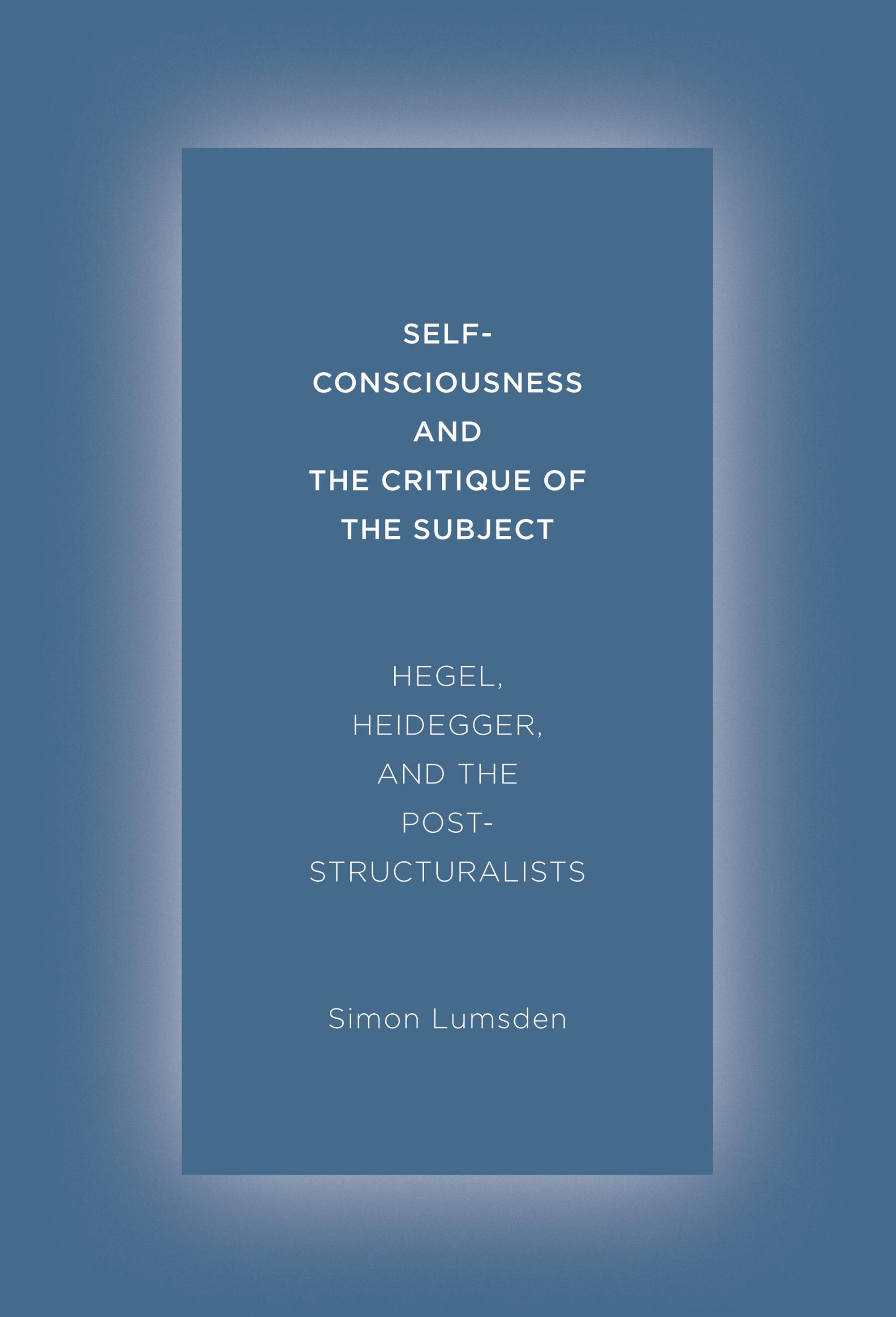
Poststructuralists hold Hegel responsible for giving rise to many of modern philosophy's problematic concepts—the authority of reason, self-consciousness, the knowing subject. Yet, according to Simon Lumsden, this animosity is rooted in a fundamental misunderstanding of Hegel's thought, and resolving this tension can not only heal the rift between poststructuralism and German idealism but also point these traditions in exciting new directions.
Revisiting the philosopher's key texts, Lumsden calls attention to Hegel's reformulation of liberal and Cartesian conceptions of subjectivity, identifying a critical though unrecognized continuity between poststructuralism and German idealism. Poststructuralism forged its identity in opposition to idealist subjectivity; however, Lumsden argues this model is not found in Hegel's texts but in an uncritical acceptance of Heidegger's characterization of Hegel and Fichte as "metaphysicians of subjectivity." Recasting Hegel as both post-Kantian and postmetaphysical, Lumsden sheds new light on this complex philosopher while revealing the surprising affinities between two supposedly antithetical modes of thought.
Płać wygodnie kartą, Klarną, Apple Pay lub Google Pay. Nie jesteś zadowolony? Zawsze masz 14-dniową gwarancję zwrotu pieniędzy. Więcej przeczytasz w naszych warunkach. Masz pytania? Napisz do nas na hello@memmo.org.
Memmo ułatwia naukę – gdziekolwiek jesteś na świecie. U nas znajdziesz podręczniki i sprytne narzędzia do nauki w jednym miejscu: streszczenia, quizy, podcasty i fiszki. A do tego Ted, Twój kumpel do nauki, który odpowie na wszystko, co Cię nurtuje. Ponad 50 000 studentów już tu się uczy – stworzone, byś uczył się szybciej i mniej stresował.