
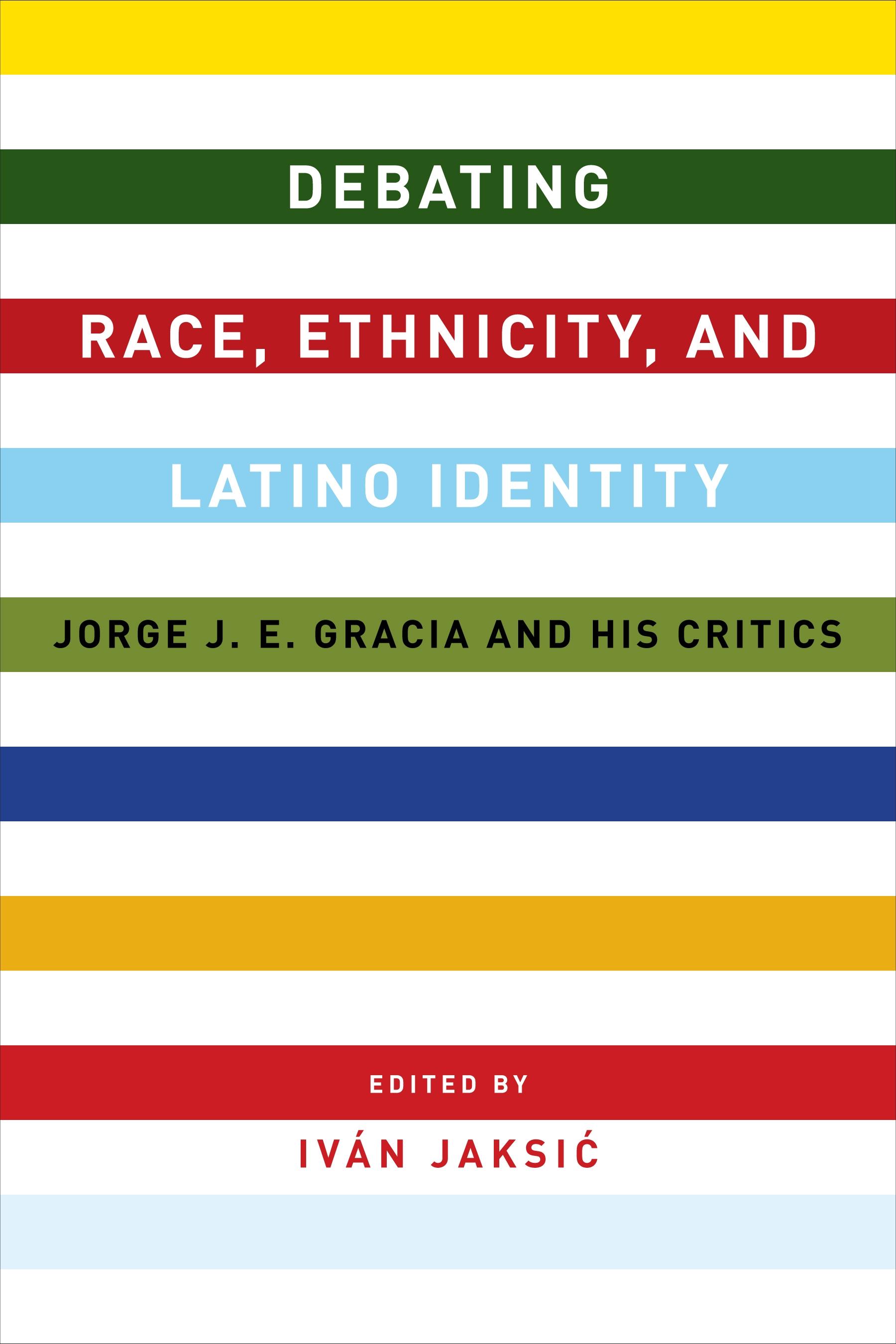
The philosopher Jorge J. E. Gracia engages fifteen prominent scholars on race, ethnicity, nationality, and Hispanic/Latino identity in the United States. Their discussion joins two distinct traditions: the philosophy of race begun by African Americans in the nineteenth century, and the search for an understanding of identity initiated by Latin American philosophers in the sixteenth century. Participants include Linda M. Alcoff, K. Anthony Appiah, Richard J. Bernstein, Lawrence Blum, Robert Gooding-Williams, Eduardo Mendieta, and Lucius T. Outlaw Jr., and their dialogue reflects the analytic, Aristotelian, Continental, literary, Marxist, and pragmatic schools of thought.
These intellectuals start with the philosophy of Hispanics/Latinos in the United States and then move to the philosophy of African Americans and Anglo Americans in the United States and the philosophy of Latin Americans in Latin America. Gracia and his interlocutors debate the nature of race and ethnicity and their relation to nationality, linguistic rights, matters of identity, and Affirmative Action, binding the concepts of race and ethnicity together in ways that open new paths of inquiry. Gracia's Familial-Historical View of ethnic and Hispanic/Latino identity operates at the center of each of these discussions, providing vivid access to the philosopher's provocative arguments while adding unique depth to issues that each of us struggles to understand.
Płać wygodnie kartą, Klarną, Apple Pay lub Google Pay. Nie jesteś zadowolony? Zawsze masz 14-dniową gwarancję zwrotu pieniędzy. Więcej przeczytasz w naszych warunkach. Masz pytania? Napisz do nas na hello@memmo.org.
Memmo ułatwia naukę – gdziekolwiek jesteś na świecie. U nas znajdziesz podręczniki i sprytne narzędzia do nauki w jednym miejscu: streszczenia, quizy, podcasty i fiszki. A do tego Ted, Twój kumpel do nauki, który odpowie na wszystko, co Cię nurtuje. Ponad 50 000 studentów już tu się uczy – stworzone, byś uczył się szybciej i mniej stresował.