
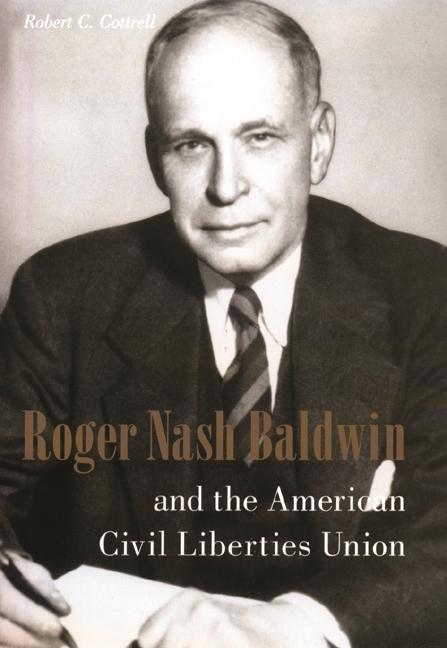
Roger Nash Baldwin's thirty-year tenure as director of the ACLU marked the period when the modern understanding of the Bill of Rights came into being. Spearheaded by Baldwin, volunteer attorneys of the caliber of Clarence Darrow, Arthur Garfield Hays, Osmond Frankel, and Edward Ennis transformed the constitutional landscape. Company police forces were dismantled. Antievolutionists were discredited (thanks to the Scopes Trial). Censorship of such works as James Joyce's Ulysses was halted. The Scottsboro Boys and Sacco and Vanzetti were defended. The right of free speech for communists and Ku Klux Klansmen alike was upheld, and the foundations were laid for an end to school segregation.
Robert Cottrell's magnificent book recaptures the accomplishments and contradictions of the complicated man at the center of these events. Driven, vain, frugal, and tempestuous, America's greatest civil libertarian was initially also a staunch defender of Communist Russia, deferred to the U.S. government over the internment of Japanese Americans, and openly admired J. Edgar Hoover and Douglas MacArthur. His personal relationships were equally complex. Spanning a hundred years from the late 1800s through Baldwin's death in 1981, this riveting biography is an eye-opening view of the development of the American left.
Płać wygodnie kartą, Klarną, Apple Pay lub Google Pay. Nie jesteś zadowolony? Zawsze masz 14-dniową gwarancję zwrotu pieniędzy. Więcej przeczytasz w naszych warunkach. Masz pytania? Napisz do nas na hello@memmo.org.
Memmo ułatwia naukę – gdziekolwiek jesteś na świecie. U nas znajdziesz podręczniki i sprytne narzędzia do nauki w jednym miejscu: streszczenia, quizy, podcasty i fiszki. A do tego Ted, Twój kumpel do nauki, który odpowie na wszystko, co Cię nurtuje. Ponad 50 000 studentów już tu się uczy – stworzone, byś uczył się szybciej i mniej stresował.