
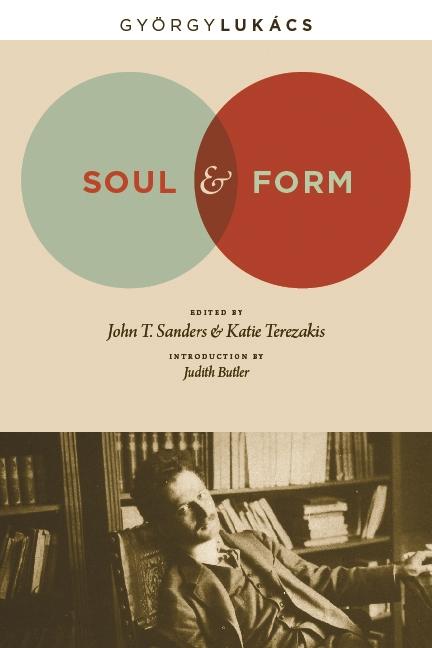
György Lukacs was a Hungarian Marxist philosopher, writer, and literary critic who shaped mainstream European Communist thought. Soul and Form was his first book, published in 1910, and it established his reputation, treating questions of linguistic expressivity and literary style in the works of Plato, Kierkegaard, Novalis, Sterne, and others. By isolating the formal techniques these thinkers developed, Lukács laid the groundwork for his later work in Marxist aesthetics, a field that introduced the historical and political implications of text.
For this centennial edition, John T. Sanders and Katie Terezakis add a dialogue entitled "On Poverty of Spirit," which Lukács wrote at the time of Soul and Form, and an introduction by Judith Butler, which compares Lukács's key claims to his later work and subsequent movements in literary theory and criticism. In an afterword, Terezakis continues to trace the Lukácsian system within his writing and other fields. These essays explore problems of alienation and isolation and the curative quality of aesthetic form, which communicates both individuality and a shared human condition. They investigate the elements that give rise to form, the history that form implies, and the historicity that form embodies. Taken together, they showcase the breakdown, in modern times, of an objective aesthetics, and the rise of a new art born from lived experience.
Płać wygodnie kartą, Klarną, Apple Pay lub Google Pay. Nie jesteś zadowolony? Zawsze masz 14-dniową gwarancję zwrotu pieniędzy. Więcej przeczytasz w naszych warunkach. Masz pytania? Napisz do nas na hello@memmo.org.
Memmo ułatwia naukę – gdziekolwiek jesteś na świecie. U nas znajdziesz podręczniki i sprytne narzędzia do nauki w jednym miejscu: streszczenia, quizy, podcasty i fiszki. A do tego Ted, Twój kumpel do nauki, który odpowie na wszystko, co Cię nurtuje. Ponad 50 000 studentów już tu się uczy – stworzone, byś uczył się szybciej i mniej stresował.