
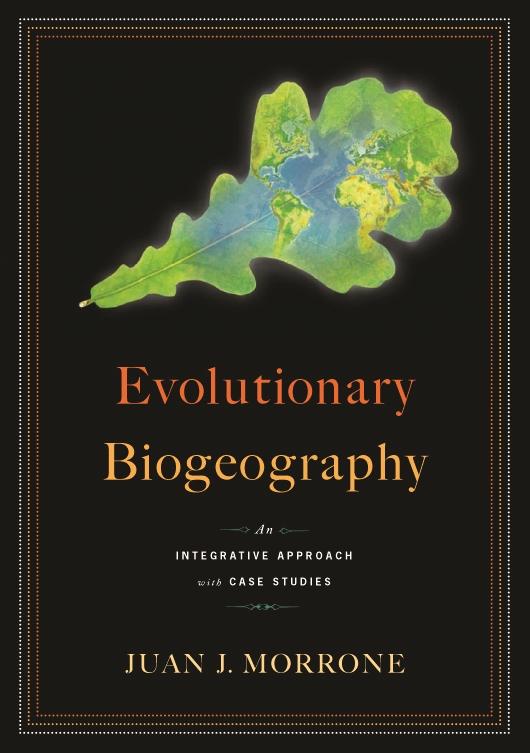
Rather than favoring only one approach, Juan J. Morrone proposes a comprehensive treatment of the developments and theories of evolutionary biogeography. Evolutionary biogeography uses distributional, phylogenetic, molecular, and fossil data to assess the historical changes that have produced current biotic patterns. Panbiogeography, parsimony analysis of endemicity, cladistic biogeography, and phylogeography are the four recent and most common approaches. Many conceive of these methods as representing different "schools," but Morrone shows how each addresses different questions in the various steps of an evolutionary biogeographical analysis.
Panbiogeography and parsimony analysis of endemicity are useful for identifying biotic components or areas of endemism. Cladistic biogeography uses phylogenetic data to determine the relationships between these biotic components. Further information on fossils, phylogeographic patterns, and molecular clocks can be incorporated to identify different cenocrons. Finally, available geological knowledge can help construct a geobiotic scenario that may explain how analyzed areas were put into contact and how the biotic components and cenocrons inhabiting them evolved. Morrone compares these methods and employs case studies to make it clear which is best for the question at hand. Set problems, discussion sections, and glossaries further enhance classroom use.
Płać wygodnie kartą, Klarną, Apple Pay lub Google Pay. Nie jesteś zadowolony? Zawsze masz 14-dniową gwarancję zwrotu pieniędzy. Więcej przeczytasz w naszych warunkach. Masz pytania? Napisz do nas na hello@memmo.org.
Memmo ułatwia naukę – gdziekolwiek jesteś na świecie. U nas znajdziesz podręczniki i sprytne narzędzia do nauki w jednym miejscu: streszczenia, quizy, podcasty i fiszki. A do tego Ted, Twój kumpel do nauki, który odpowie na wszystko, co Cię nurtuje. Ponad 50 000 studentów już tu się uczy – stworzone, byś uczył się szybciej i mniej stresował.