
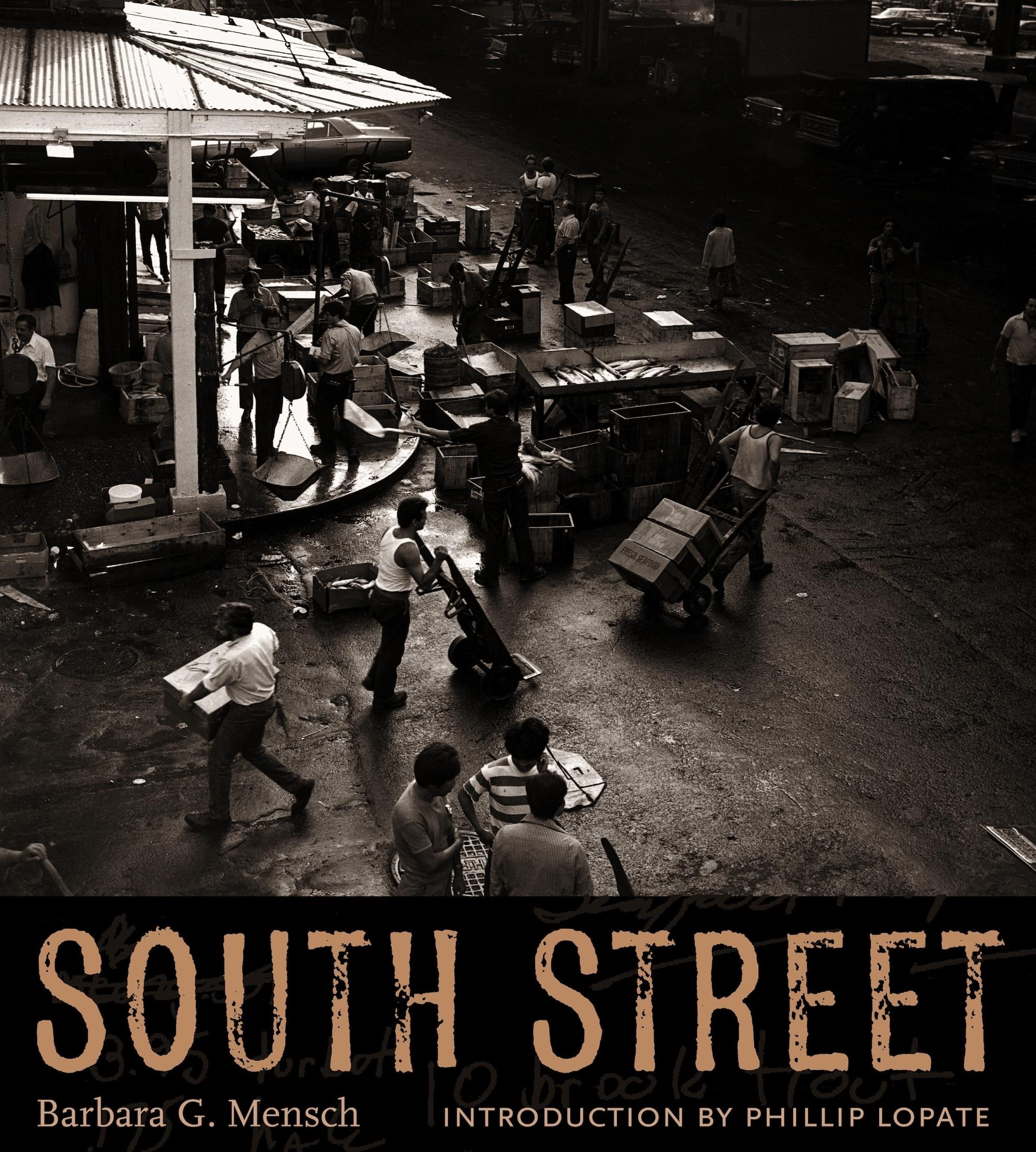
South Street is Barbara G. Mensch's evocative tribute to the lost world of Lower Manhattan's Fulton Fish Market. For more than a century, a colorful, tightly knit community of fishmongers, many of them recent immigrants and children of immigrants, thrived under the base of the Brooklyn Bridge. Resistant to government regulations and corporate encroachment, these men lived in a closed, internally policed world that was deeply hostile to outsiders.
As a young photographer in the early 1980s, Mensch bonded with this particular group of "authentic New Yorkers," becoming a confidante for their life stories, which were often filled with hardship, mystery, and misadventures. These striking photographs capture the unique personality and fierce secrecy of their vibrant working-class culture. Combined with lively commentaryreminiscent of Studs Terkel's riveting oral historiesthe images offer a rare peek inside a society described by Philip Lopate as "a precious last vestige of historic Gotham."
Mensch's story ends with the closure of the docks and the opening of the Seaport mall, a symbolic victory of corporate interests over more than a century of mob rule. Her visual essay recounts the driving forces and the effects of this urban transformation on the entrenched community of fishmongers, creating an enduring historical document. Though the Fulton Fish Market no longer resides below the Brooklyn Bridge, the history and energy of this cherished New York City landmark are beautifully preserved in this book.
Płać wygodnie kartą, Klarną, Apple Pay lub Google Pay. Nie jesteś zadowolony? Zawsze masz 14-dniową gwarancję zwrotu pieniędzy. Więcej przeczytasz w naszych warunkach. Masz pytania? Napisz do nas na hello@memmo.org.
Memmo ułatwia naukę – gdziekolwiek jesteś na świecie. U nas znajdziesz podręczniki i sprytne narzędzia do nauki w jednym miejscu: streszczenia, quizy, podcasty i fiszki. A do tego Ted, Twój kumpel do nauki, który odpowie na wszystko, co Cię nurtuje. Ponad 50 000 studentów już tu się uczy – stworzone, byś uczył się szybciej i mniej stresował.