
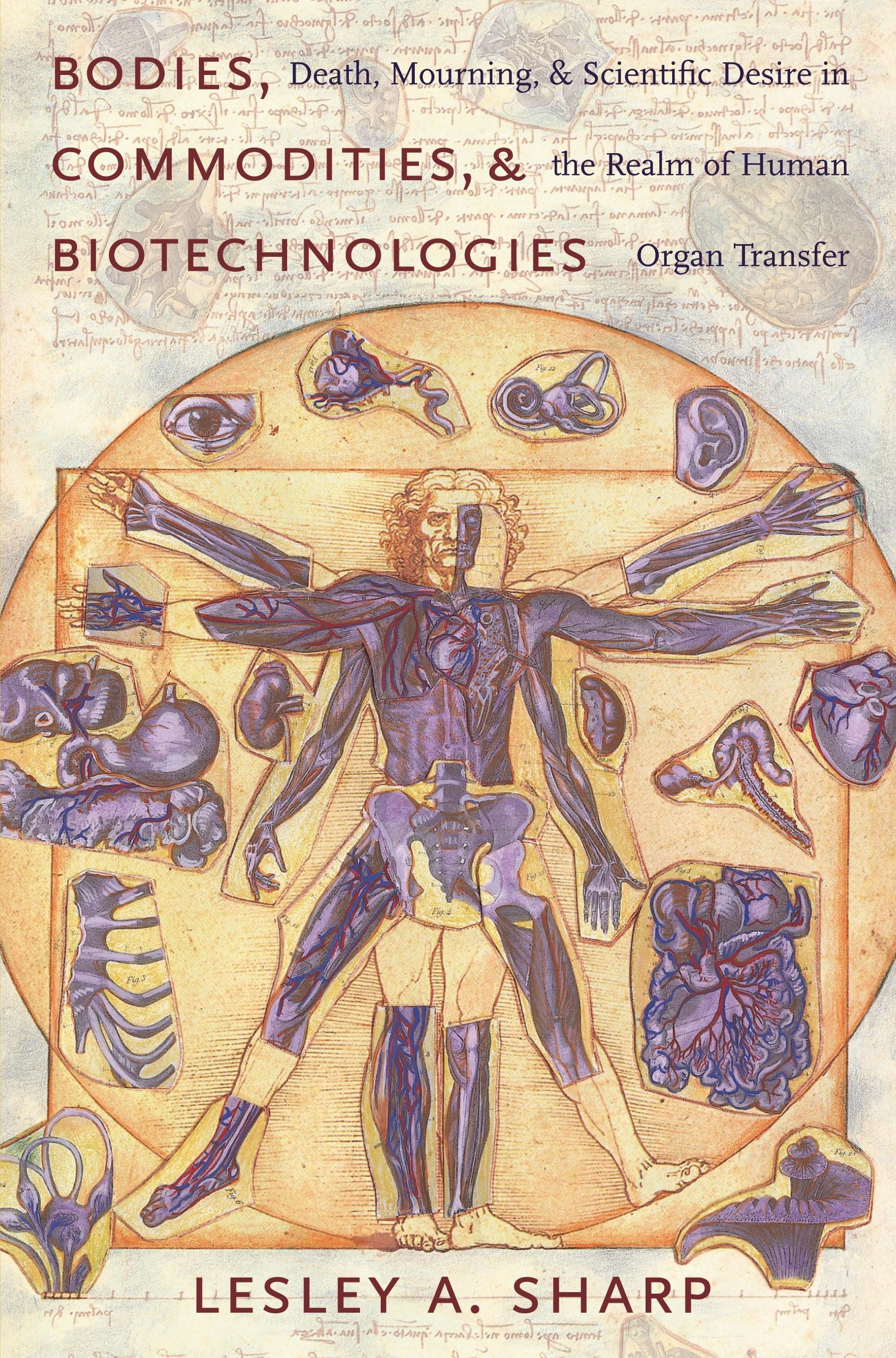
In the United States today, the human body defines a lucrative site of reusable parts, ranging from whole organs to minuscule and even microscopic tissues. Although the medical practices that enable the transfer of parts from one body to another most certainly relieve suffering and extend lives, they have also irrevocably altered perceptions of the cultural values assigned to the body.
Organ transfer is rich terrain to investigate—especially in the American context, where sophisticated technological interventions have significantly shaped understandings of health and well-being, suffering, and death. In Bodies, Commodities, and Biotechnologies, Lesley Sharp probes the ideological assumptions underlying the transfer of body parts, the social significance of donors' deaths, and the medico-scientific desires surrounding complex forms of body repair. Sharp also considers the experimental realm, in which nonhuman species and artificial devices present further opportunities for recovery and for controversy.
A compelling scientific investigation and social critique, Bodies, Commodities, and Biotechnologies explores the pervasive, and at times pernicious, practices shaping American biomedicine in the twenty-first century.
Płać wygodnie kartą, Klarną, Apple Pay lub Google Pay. Nie jesteś zadowolony? Zawsze masz 14-dniową gwarancję zwrotu pieniędzy. Więcej przeczytasz w naszych warunkach. Masz pytania? Napisz do nas na hello@memmo.org.
Memmo ułatwia naukę – gdziekolwiek jesteś na świecie. U nas znajdziesz podręczniki i sprytne narzędzia do nauki w jednym miejscu: streszczenia, quizy, podcasty i fiszki. A do tego Ted, Twój kumpel do nauki, który odpowie na wszystko, co Cię nurtuje. Ponad 50 000 studentów już tu się uczy – stworzone, byś uczył się szybciej i mniej stresował.