
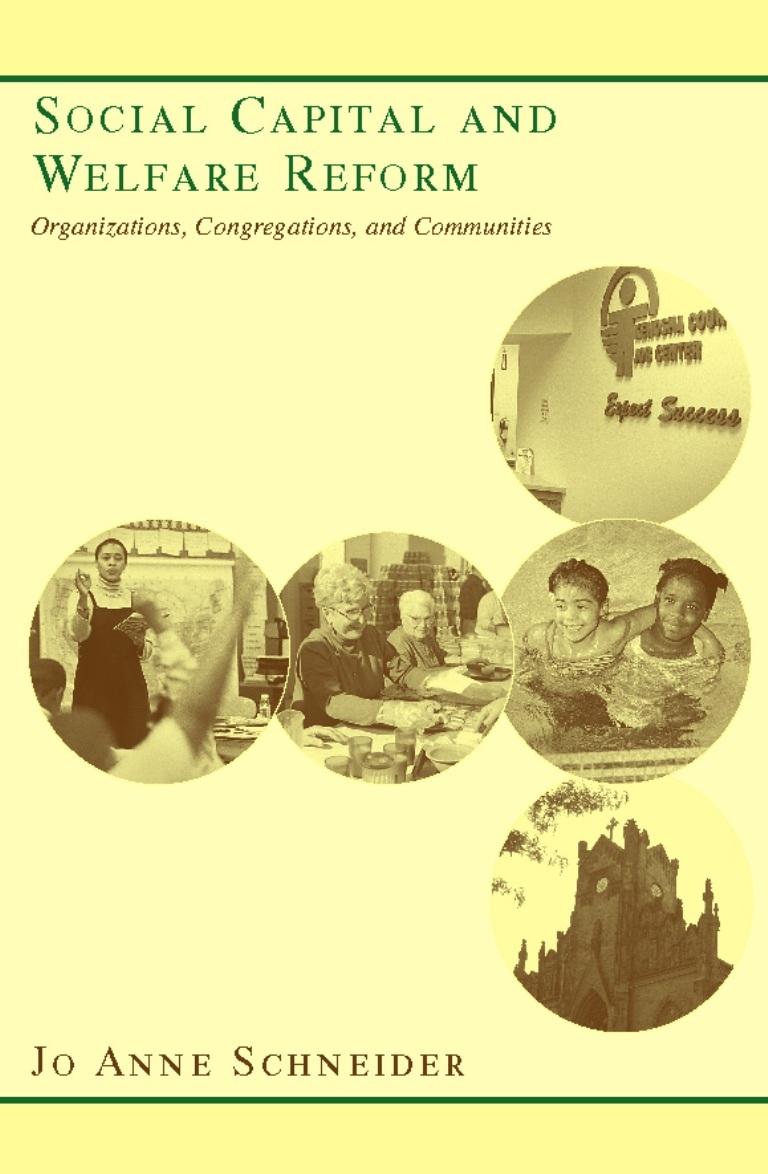
In this groundbreaking study, Jo Anne Schneider considers the reasons behind the limited success of most welfare reform initiatives and offers evidence-based recommendations for enhancing the effectiveness of welfare policy.
Schneider draws on her rich and nuanced ethnographic studies of Philadelphia, Milwaukee, and Kenosha, Wisconsin to clarify the role of social capital for both individuals and institutions. She shows that the social relationships and patterns of trust that enable people to gain access to resources like government services, organization funding, and jobs are crucial in helping families achieve their goals. Schneider examines the complex ways in which social capital functions in conjunction with economic, human, and cultural capital, and explores social capital dynamics among government, nonprofits, and congregations that together provide the welfare support system.
Social Capital and Welfare Reform is compulsory reading for researchers and students in social work, sociology, anthropology, public policy, education, community psychology, social psychiatry, and non-profit and public administration as well as policy makers interested in welfare reform, poverty, and nonprofits.
Płać wygodnie kartą, Klarną, Apple Pay lub Google Pay. Nie jesteś zadowolony? Zawsze masz 14-dniową gwarancję zwrotu pieniędzy. Więcej przeczytasz w naszych warunkach. Masz pytania? Napisz do nas na hello@memmo.org.
Memmo ułatwia naukę – gdziekolwiek jesteś na świecie. U nas znajdziesz podręczniki i sprytne narzędzia do nauki w jednym miejscu: streszczenia, quizy, podcasty i fiszki. A do tego Ted, Twój kumpel do nauki, który odpowie na wszystko, co Cię nurtuje. Ponad 50 000 studentów już tu się uczy – stworzone, byś uczył się szybciej i mniej stresował.