
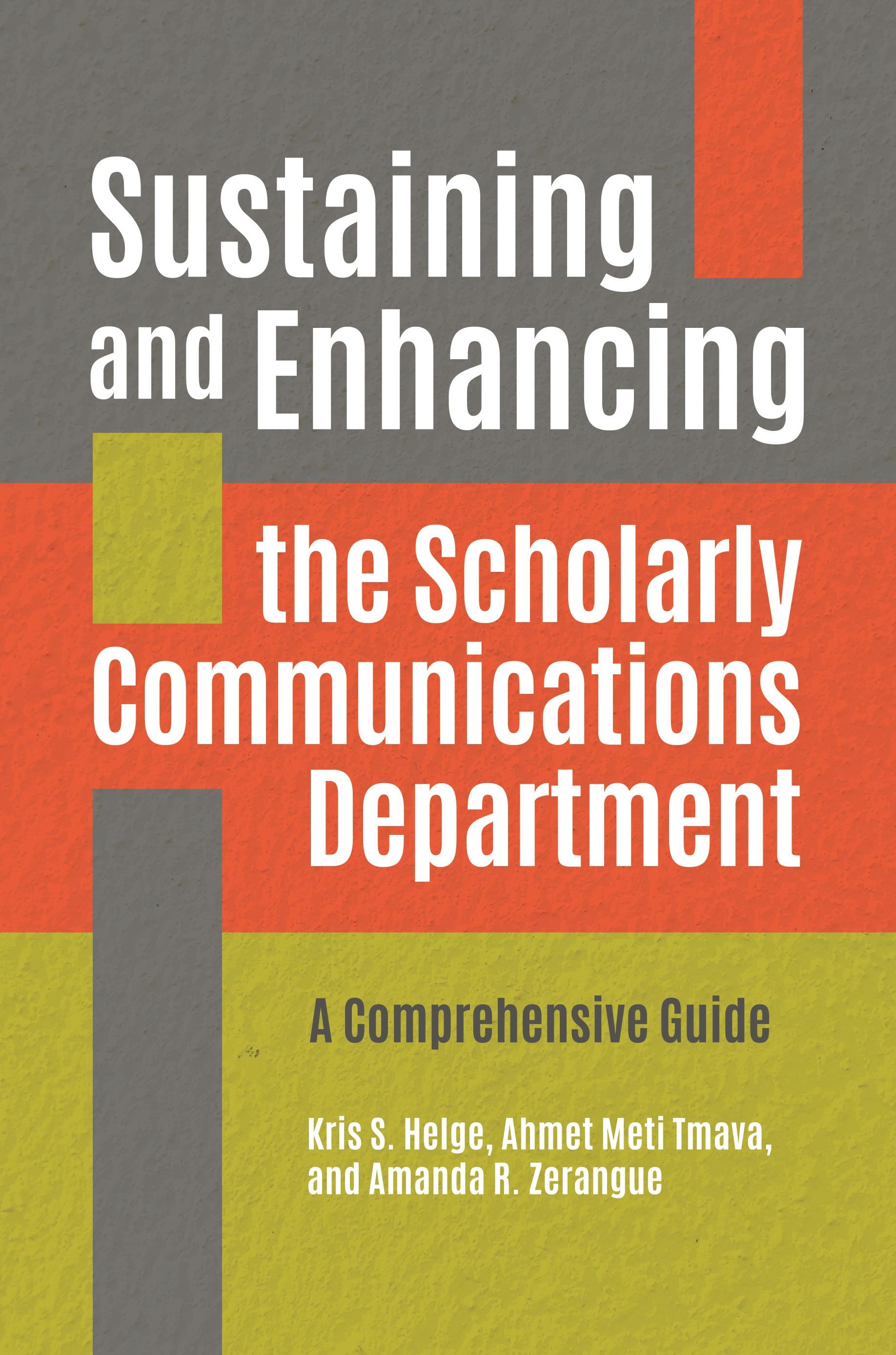
Learn how to develop, manage, and maintain a scholarly communications department.
More and more academic libraries are being asked to provide scholarly communications services to their campuses, ranging from general information about copyright law to instruction for creating and hosting digital repositories and publishing services. To support academic librarians and information specialists in starting their own scholarly communications departments, Sustaining and Enhancing the Scholarly Communications Department begins by introducing key scholarly communications concepts, including copyright, Creative Commons licenses, author rights, open access, open educational resources, open-access e-journals, and institutional repositories.
Authors Helge, Tmava, and Zerangue explain how to develop, manage, market, and maintain a scholarly communications department. They define specific tasks and tools for which many scholarly communications departments are responsible, including intellectual property, licensing issues, promoting open access, data management, and plagiarism conundrums. They also discuss strategies for collaborating with key campus stakeholders and convey which academic degrees benefit and may be necessary for personnel in a scholarly communications department. Finally, the authors offer managerial and leadership techniques to increase employee productivity, efficiency, retention, motivation, and happiness within the scholarly communications department.
More and more academic libraries are being asked to provide scholarly communications services to their campuses, ranging from general information about copyright law to instruction for creating and hosting digital repositories and publishing services. To support academic librarians and information specialists in starting their own scholarly communications departments, Sustaining and Enhancing the Scholarly Communications Department begins by introducing key scholarly communications concepts, including copyright, Creative Commons licenses, author rights, open access, open educational resources, open-access e-journals, and institutional repositories.
Authors Helge, Tmava, and Zerangue explain how to develop, manage, market, and maintain a scholarly communications department. They define specific tasks and tools for which many scholarly communications departments are responsible, including intellectual property, licensing issues, promoting open access, data management, and plagiarism conundrums. They also discuss strategies for collaborating with key campus stakeholders and convey which academic degrees benefit and may be necessary for personnel in a scholarly communications department. Finally, the authors offer managerial and leadership techniques to increase employee productivity, efficiency, retention, motivation, and happiness within the scholarly communications department.
Paga facilmente con carta, Klarna, Apple Pay o Google Pay. Non sei soddisfatto? Hai sempre 14 giorni per il rimborso. Leggi di più nei nostri termini. Per qualsiasi domanda, scrivici a hello@memmo.org.
Memmo rende lo studio più facile, ovunque tu sia nel mondo. Qui trovi i tuoi libri di testo e strumenti di studio intelligenti, tutto in un unico posto: riassunti, quiz, podcast e flashcard. E poi c'è Ted, il tuo compagno di studio che risponde a ogni tua domanda. Oltre 50.000 studenti studiano già qui: è stato creato per aiutarti a imparare più velocemente e a stressarti meno.