
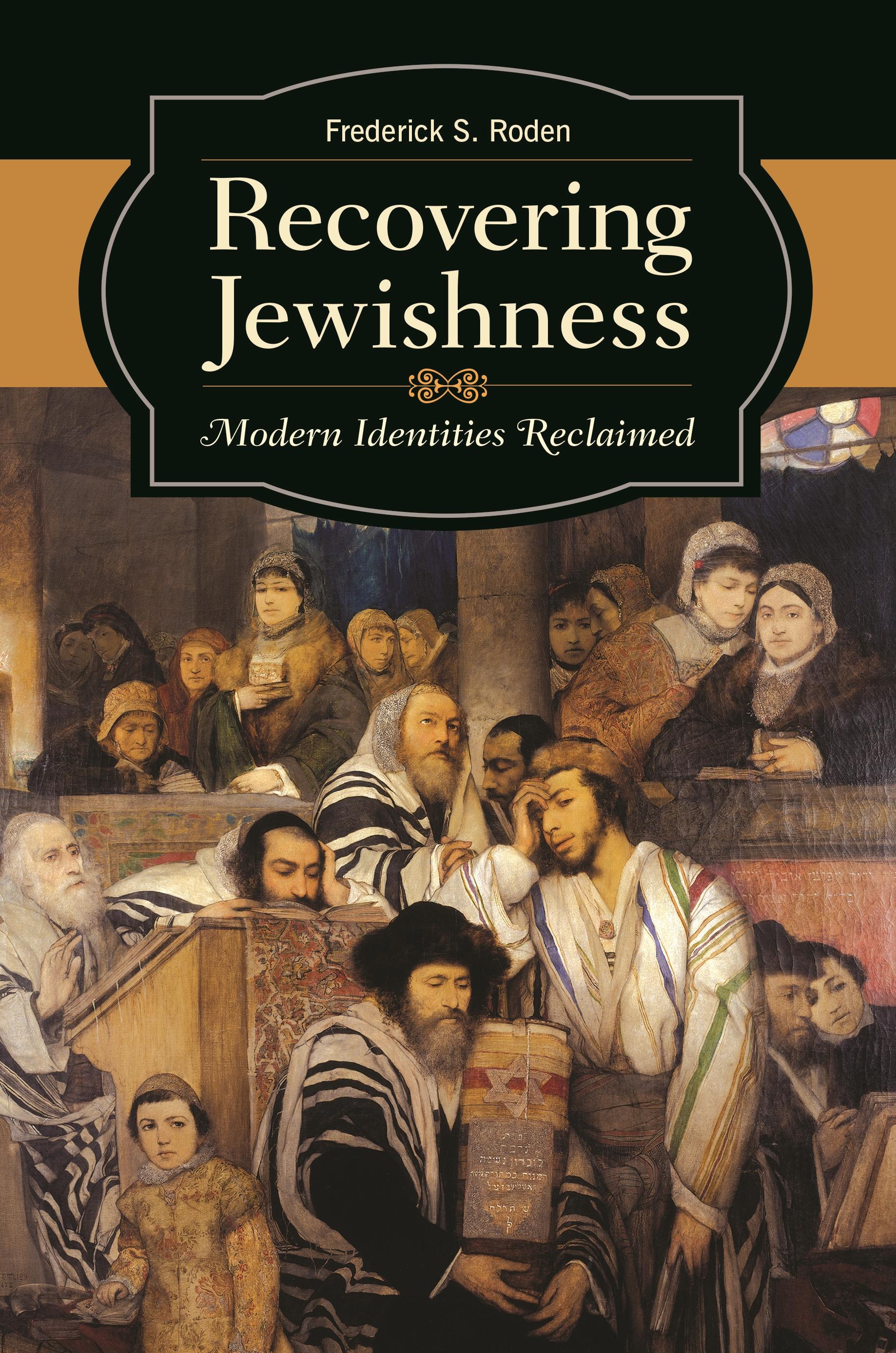
Judaism and Jewish life reflect a diversity of identity after the past two centuries of modernization. This work examines how the early reformers of the 19th century and their legacy into the 20th century created a livable, liberal Jewish identity that allowed a reinvention of what it meant to be Jewish—a process that continues today.
Many scholars of the modern Jewish identity focus on the ways in which the past two centuries have resulted in the loss of Jewishness: through "assimilation," intermarriage, conversion to other faiths, genocide (in the Holocaust), and decline in religious observance. In this work, author Frederick S. Roden presents a decidedly different perspective: that the changes in Judaism throughout the 19th and 20th centuries resulted in a malleable, welcoming, and expanded Jewish identity—one that has benefited from intermarriage and converts to Judaism.
The book examines key issues in the modern definition of Jewish identity: who is and is not considered a Jew, and why; issues of Jewish "authenticity"; and the recent history of the debate. Attention is paid to the experiences of individuals who came to Judaism from outside the tradition: through marrying into Jewish families and/or choosing Judaism as a religion. In his consideration of the tragedy of the Holocaust, the author examines how a totalitarian regime's racial policing of Jewish identity served to awaken a connection with and reconfiguration of what that Jewish identity meant for those who retrospectively realized their Jewishness in the postwar era.
Many scholars of the modern Jewish identity focus on the ways in which the past two centuries have resulted in the loss of Jewishness: through "assimilation," intermarriage, conversion to other faiths, genocide (in the Holocaust), and decline in religious observance. In this work, author Frederick S. Roden presents a decidedly different perspective: that the changes in Judaism throughout the 19th and 20th centuries resulted in a malleable, welcoming, and expanded Jewish identity—one that has benefited from intermarriage and converts to Judaism.
The book examines key issues in the modern definition of Jewish identity: who is and is not considered a Jew, and why; issues of Jewish "authenticity"; and the recent history of the debate. Attention is paid to the experiences of individuals who came to Judaism from outside the tradition: through marrying into Jewish families and/or choosing Judaism as a religion. In his consideration of the tragedy of the Holocaust, the author examines how a totalitarian regime's racial policing of Jewish identity served to awaken a connection with and reconfiguration of what that Jewish identity meant for those who retrospectively realized their Jewishness in the postwar era.
Paga facilmente con carta, Klarna, Apple Pay o Google Pay. Non sei soddisfatto? Hai sempre 14 giorni per il rimborso. Leggi di più nei nostri termini. Per qualsiasi domanda, scrivici a hello@memmo.org.
Memmo rende lo studio più facile, ovunque tu sia nel mondo. Qui trovi i tuoi libri di testo e strumenti di studio intelligenti, tutto in un unico posto: riassunti, quiz, podcast e flashcard. E poi c'è Ted, il tuo compagno di studio che risponde a ogni tua domanda. Oltre 50.000 studenti studiano già qui: è stato creato per aiutarti a imparare più velocemente e a stressarti meno.