
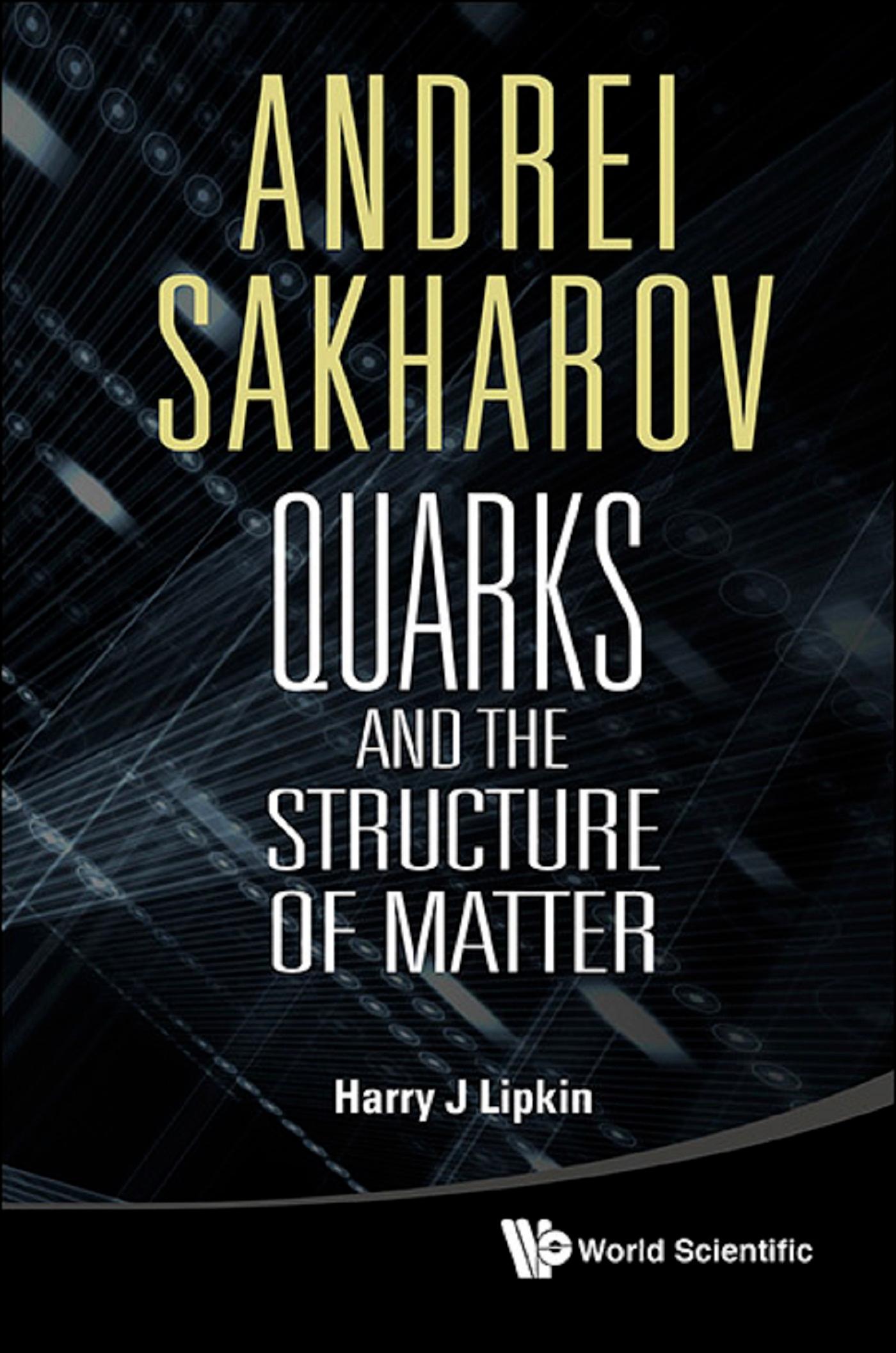
In 1980, the Cold War was in full bloom. The Soviet father of the hydrogen bomb and Nobel Peace Laureate turned dissident physicist, Andrei Sakharov, had been exiled to Gorki by the Soviet authorities. Called “senile” and under heavy Soviet censorship, Sakharov had a hard time communicating his latest scientific results to readers outside of Gorki. Some smuggled results reached the author, Harry Lipkin, who then realized that he and Sakharov were both pioneers in a new revolution on our understanding the structure of matter. The particle physics community had resisted their revelation that the accepted building blocks of matter, neutrons and protons, were composed of tinier building blocks called “quarks”. What followed was a remarkable adventure in which both scientists fought the Soviet censors, smuggling postcards and manuscripts into and out of the Soviet Union while trying to further scientific progress.Against a backdrop of politics, suppression, and genius, Andrei Sakharov, Quarks and the Structure of Matter details the search for the basic building blocks of matter, the path to understanding the forces that bind them together, and how scientific knowledge is learned, communicated and passed from one group of investigators to another.
Paga facilmente con carta, Klarna, Apple Pay o Google Pay. Non sei soddisfatto? Hai sempre 14 giorni per il rimborso. Leggi di più nei nostri termini. Per qualsiasi domanda, scrivici a hello@memmo.org.
Memmo rende lo studio più facile, ovunque tu sia nel mondo. Qui trovi i tuoi libri di testo e strumenti di studio intelligenti, tutto in un unico posto: riassunti, quiz, podcast e flashcard. E poi c'è Ted, il tuo compagno di studio che risponde a ogni tua domanda. Oltre 50.000 studenti studiano già qui: è stato creato per aiutarti a imparare più velocemente e a stressarti meno.
Potrebbe interessarti anche
Acquista il libro0