
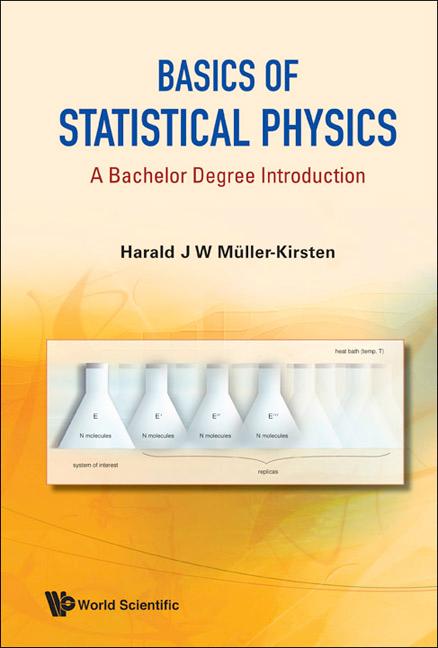
Statistics links microscopic and macroscopic phenomena, and requires for this reason a large number of microscopic elements like atoms. The results are values of maximum probability or of averaging. This introduction to statistical physics concentrates on the basic principles, and attempts to explain these in simple terms supplemented by numerous examples. The basic principles concentrated on are the difference between classical and quantum statistics, the a priori probabilities as related to degeneracies, the vital aspect of indistinguishability as compared with distinguishability in classical physics, the differences between conserved and nonconserved elements (the latter including photons and phonons), the different ways of counting arrangements in the three statistics (Maxwell–Boltzmann, Fermi–Dirac, Bose–Einstein), the difference between maximization of the number of arrangements of elements in these and averaging in the Darwin–Fowler method. Significant applications to solids, radiation and to electrons in metals are treated in separate chapters. Finally the Bose–Einstein distribution is rederived under condensation conditions. Each chapter concludes with examples and exercises.
Paga facilmente con carta, Klarna, Apple Pay o Google Pay. Non sei soddisfatto? Hai sempre 14 giorni per il rimborso. Leggi di più nei nostri termini. Per qualsiasi domanda, scrivici a hello@memmo.org.
Memmo rende lo studio più facile, ovunque tu sia nel mondo. Qui trovi i tuoi libri di testo e strumenti di studio intelligenti, tutto in un unico posto: riassunti, quiz, podcast e flashcard. E poi c'è Ted, il tuo compagno di studio che risponde a ogni tua domanda. Oltre 50.000 studenti studiano già qui: è stato creato per aiutarti a imparare più velocemente e a stressarti meno.