
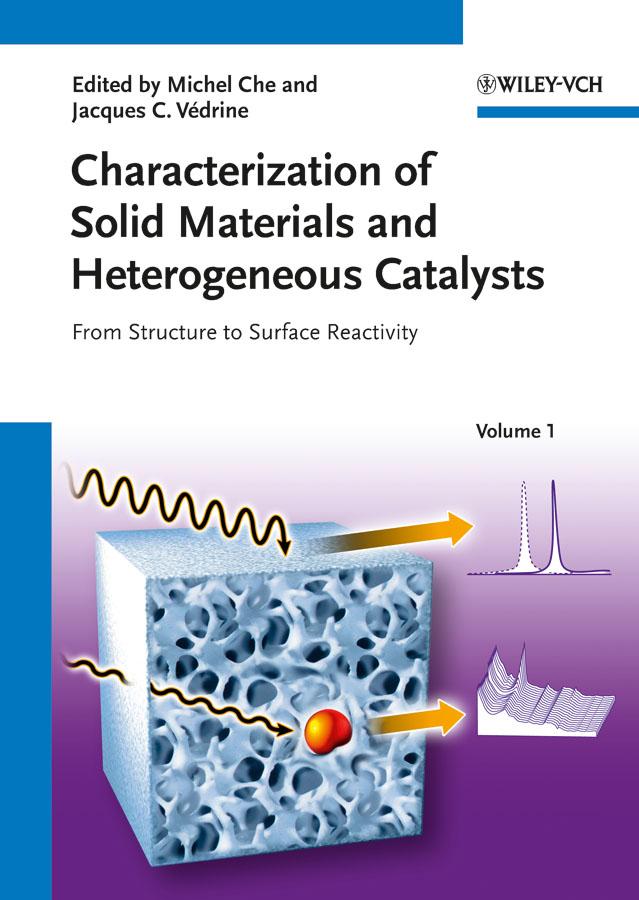
This two-volume book provides an overview of physical techniques used to characterize the structure of solid materials, on the one hand,
and to investigate the reactivity of their surface, on the other. Therefore this book is a must-have for anyone working in fields related to surface
reactivity. Among the latter, and because of its most important industrial impact, catalysis has been used as the directing thread of the book.
After the preface and a general introduction to physical techniques by M. Che and J.C. Vedrine, two overviews on physical techniques are
presented by G. Ertl and Sir J.M. Thomas for investigating model catalysts and porous catalysts, respectively.
The book is organized into four parts: Molecular/Local Spectroscopies, Macroscopic Techniques, Characterization of the Fluid Phase (Gas and/
or Liquid), and Advanced Characterization. Each chapter focuses upon the following important themes: overview of the technique, most important parameters to interpret the experimental data, practical details, applications of the technique, particularly during chemical processes,
with its advantages and disadvantages, conclusions.
and to investigate the reactivity of their surface, on the other. Therefore this book is a must-have for anyone working in fields related to surface
reactivity. Among the latter, and because of its most important industrial impact, catalysis has been used as the directing thread of the book.
After the preface and a general introduction to physical techniques by M. Che and J.C. Vedrine, two overviews on physical techniques are
presented by G. Ertl and Sir J.M. Thomas for investigating model catalysts and porous catalysts, respectively.
The book is organized into four parts: Molecular/Local Spectroscopies, Macroscopic Techniques, Characterization of the Fluid Phase (Gas and/
or Liquid), and Advanced Characterization. Each chapter focuses upon the following important themes: overview of the technique, most important parameters to interpret the experimental data, practical details, applications of the technique, particularly during chemical processes,
with its advantages and disadvantages, conclusions.
Paga facilmente con carta, Klarna, Apple Pay o Google Pay. Non sei soddisfatto? Hai sempre 14 giorni per il rimborso. Leggi di più nei nostri termini. Per qualsiasi domanda, scrivici a hello@memmo.org.
Memmo rende lo studio più facile, ovunque tu sia nel mondo. Qui trovi i tuoi libri di testo e strumenti di studio intelligenti, tutto in un unico posto: riassunti, quiz, podcast e flashcard. E poi c'è Ted, il tuo compagno di studio che risponde a ogni tua domanda. Oltre 50.000 studenti studiano già qui: è stato creato per aiutarti a imparare più velocemente e a stressarti meno.