
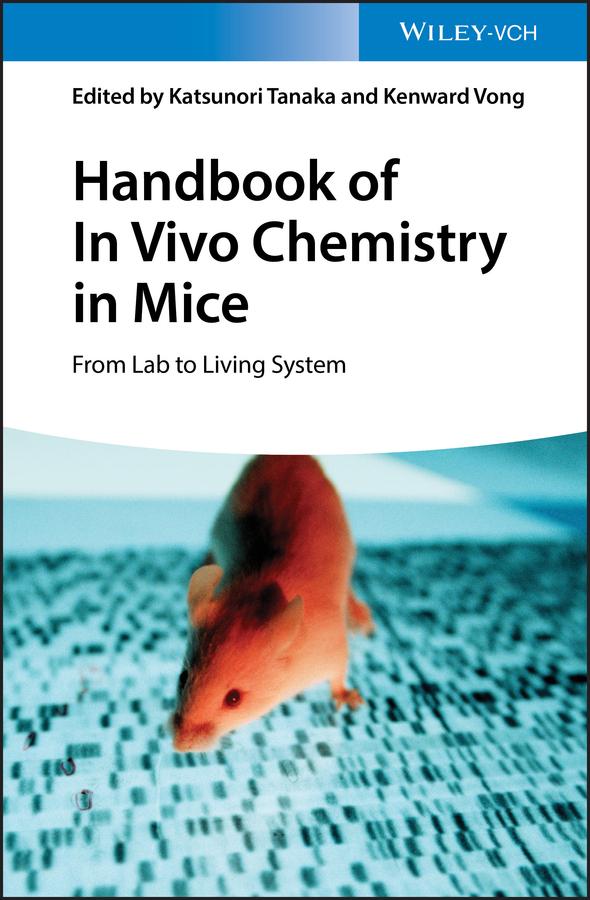
Provides timely, comprehensive coverage of in vivo chemical reactions within live animals
This handbook summarizes the interdisciplinary expertise of both chemists and biologists performing in vivo chemical reactions within live animals. By comparing and contrasting currently available chemical and biological techniques, it serves not just as a collection of the pioneering work done in animal-based studies, but also as a technical guide to help readers decide which tools are suitable and best for their experimental needs.
The Handbook of In Vivo Chemistry in Mice: From Lab to Living System introduces readers to general information about live animal experiments and detection methods commonly used for these animal models. It focuses on chemistry-based techniques to develop selective in vivo targeting methodologies, as well as strategies for in vivo chemistry and drug release. Topics include: currently available mouse models; biocompatible fluorophores; radionuclides for radiodiagnosis/radiotherapy; live animal imaging techniques such as positron emission tomography (PET) imaging; magnetic resonance imaging (MRI); ultrasound imaging; hybrid imaging; biocompatible chemical reactions; ligand-directed nucleophilic substitution chemistry; biorthogonal prodrug release strategies; and various selective targeting strategies for live animals.
-Completely covers current techniques of in vivo chemistry performed in live animals
-Describes general information about commonly used live animal experiments and detection methods
-Focuses on chemistry-based techniques to develop selective in vivo targeting methodologies, as well as strategies for in vivo chemistry and drug release
-Places emphasis on material properties required for the development of appropriate compounds to be used for imaging and therapeutic purposes in preclinical applications
Handbook of In Vivo Chemistry in Mice: From Lab to Living System will be of great interest to pharmaceutical chemists, life scientists, and organic chemists. It will also appeal to those working in the pharmaceutical and biotechnology industries.
This handbook summarizes the interdisciplinary expertise of both chemists and biologists performing in vivo chemical reactions within live animals. By comparing and contrasting currently available chemical and biological techniques, it serves not just as a collection of the pioneering work done in animal-based studies, but also as a technical guide to help readers decide which tools are suitable and best for their experimental needs.
The Handbook of In Vivo Chemistry in Mice: From Lab to Living System introduces readers to general information about live animal experiments and detection methods commonly used for these animal models. It focuses on chemistry-based techniques to develop selective in vivo targeting methodologies, as well as strategies for in vivo chemistry and drug release. Topics include: currently available mouse models; biocompatible fluorophores; radionuclides for radiodiagnosis/radiotherapy; live animal imaging techniques such as positron emission tomography (PET) imaging; magnetic resonance imaging (MRI); ultrasound imaging; hybrid imaging; biocompatible chemical reactions; ligand-directed nucleophilic substitution chemistry; biorthogonal prodrug release strategies; and various selective targeting strategies for live animals.
-Completely covers current techniques of in vivo chemistry performed in live animals
-Describes general information about commonly used live animal experiments and detection methods
-Focuses on chemistry-based techniques to develop selective in vivo targeting methodologies, as well as strategies for in vivo chemistry and drug release
-Places emphasis on material properties required for the development of appropriate compounds to be used for imaging and therapeutic purposes in preclinical applications
Handbook of In Vivo Chemistry in Mice: From Lab to Living System will be of great interest to pharmaceutical chemists, life scientists, and organic chemists. It will also appeal to those working in the pharmaceutical and biotechnology industries.
Paga facilmente con carta, Klarna, Apple Pay o Google Pay. Non sei soddisfatto? Hai sempre 14 giorni per il rimborso. Leggi di più nei nostri termini. Per qualsiasi domanda, scrivici a hello@memmo.org.
Memmo rende lo studio più facile, ovunque tu sia nel mondo. Qui trovi i tuoi libri di testo e strumenti di studio intelligenti, tutto in un unico posto: riassunti, quiz, podcast e flashcard. E poi c'è Ted, il tuo compagno di studio che risponde a ogni tua domanda. Oltre 50.000 studenti studiano già qui: è stato creato per aiutarti a imparare più velocemente e a stressarti meno.