
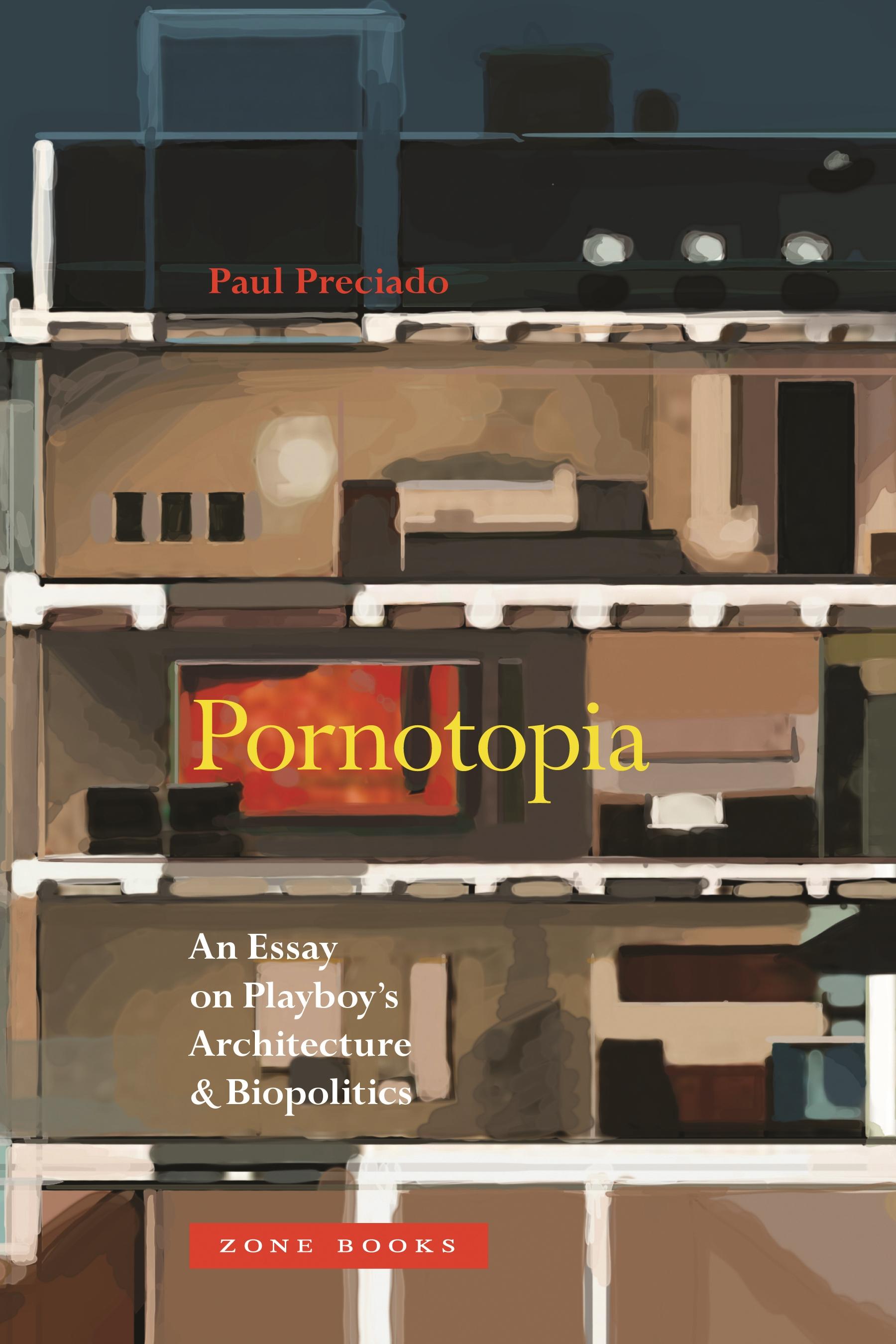
Published for the first time in 1953, Playboy was not only the first pornographic popular magazine in America; it also came to embody an entirely new lifestyle through the construction of a series of utopian multimedia spaces — from the Playboy Mansion and fictional Playboy’s Penthouse of 1959 to the Playboy Clubs and hotels appearing around the world in the 1960s. Simultaneously, the invention of the contraceptive pill provided access to a biochemical technique that separated (hetero) sexuality and reproduction.
Addressing these concurrent cultural shifts, Paul Preciado investigates the strategic relationships between space, gender, and sexuality in popular sites related to the production and consumption of pornography that have tended to reside at the margins of traditional histories of architecture: bachelor pads, multimedia rotating beds, and design objects, among others.
Combining historical perspectives with contemporary critical theory, gender and queer theory, porn studies, the history of technology, and a range of primary transdisciplinary sources — treatises on sexuality, medical and pharmaceutical handbooks, architecture journals, erotic magazines, building manuals, and novels — Pornotopia explores the use of architecture as a biopolitical technique for governing sexual relations and the production of gender in the postwar United States.
Paga facilmente con carta, Klarna, Apple Pay o Google Pay. Non sei soddisfatto? Hai sempre 14 giorni per il rimborso. Leggi di più nei nostri termini. Per qualsiasi domanda, scrivici a hello@memmo.org.
Memmo rende lo studio più facile, ovunque tu sia nel mondo. Qui trovi i tuoi libri di testo e strumenti di studio intelligenti, tutto in un unico posto: riassunti, quiz, podcast e flashcard. E poi c'è Ted, il tuo compagno di studio che risponde a ogni tua domanda. Oltre 50.000 studenti studiano già qui: è stato creato per aiutarti a imparare più velocemente e a stressarti meno.