
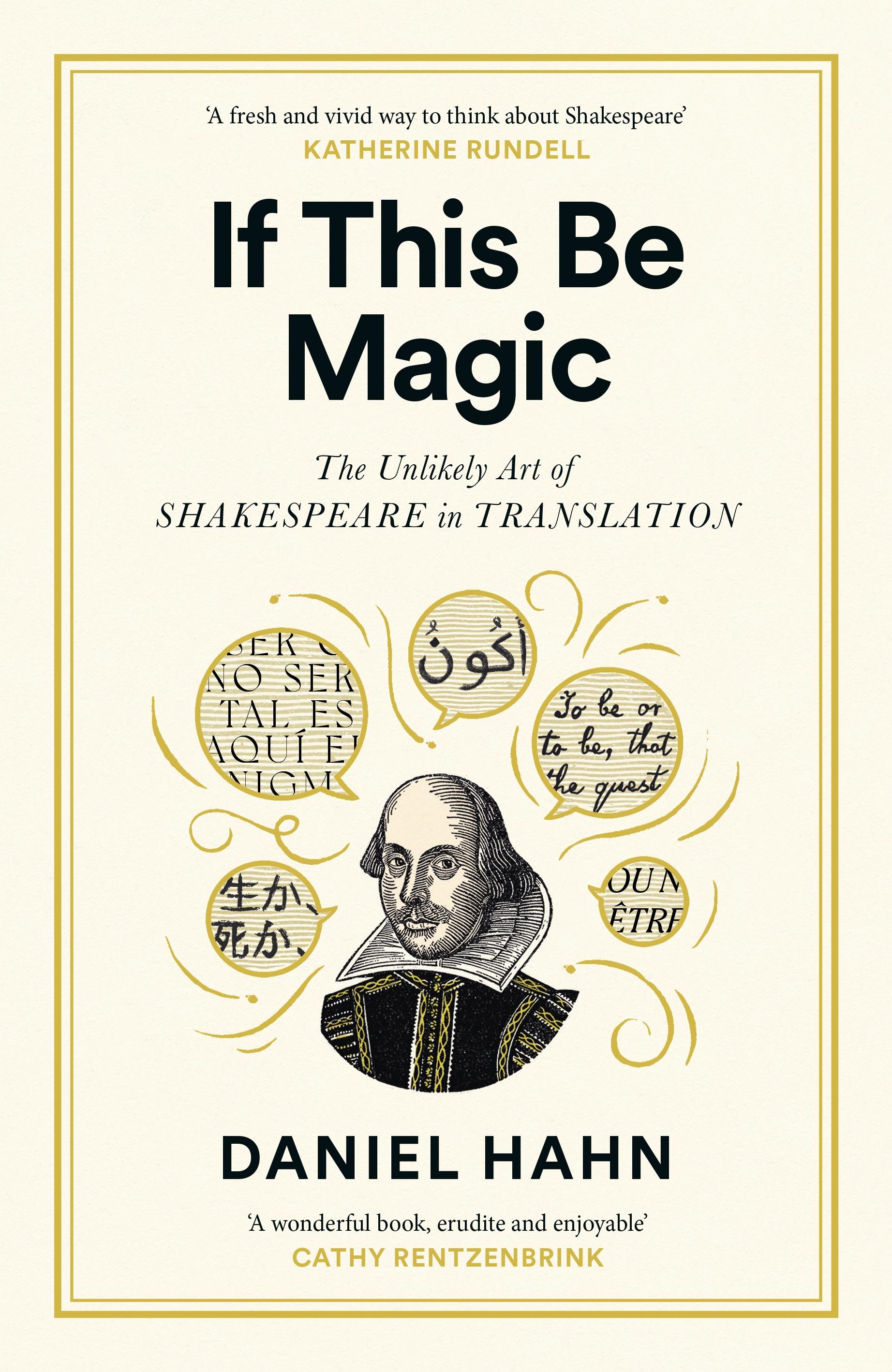
How do you rebuild a 400-year-old topical joke in a new culture and with none of the same words?
How does Romeo and Juliet’s first meeting unfold if they can’t mention pilgrims?
What does Taming of the Shrew sound like in a language where every noun has a gender?
Why might Hamlet be even longer in Japanese?
And why are Lady Macbeth’s pronouns such a problem?
What does it mean to translate Shakespeare? When we change all the poetry, all the wordplay, all the syntax – all the words! – is it still Shakespeare? And is it still any good?
Daniel Hahn, seasoned translator and Shakespeare fanatic, will change the way you think about language itself. Ranging widely across Shakespeare’s works, and across the world’s languages, this book explores what translators have done and what is possible.
No knowledge of any particular language is required, though a bit of patience for the nerdiest of close reading is desirable. This micro-attention to language will reveal some of the complexities of Shakespeare; and by using his work as its subject, with the extraordinary pressures that he puts on language, it will reveal even more about the craft of translation, and the power of words themselves.
Paga facilmente con carta, Klarna, Apple Pay o Google Pay. Non sei soddisfatto? Hai sempre 14 giorni per il rimborso. Leggi di più nei nostri termini. Per qualsiasi domanda, scrivici a hello@memmo.org.
Memmo rende lo studio più facile, ovunque tu sia nel mondo. Qui trovi i tuoi libri di testo e strumenti di studio intelligenti, tutto in un unico posto: riassunti, quiz, podcast e flashcard. E poi c'è Ted, il tuo compagno di studio che risponde a ogni tua domanda. Oltre 50.000 studenti studiano già qui: è stato creato per aiutarti a imparare più velocemente e a stressarti meno.