
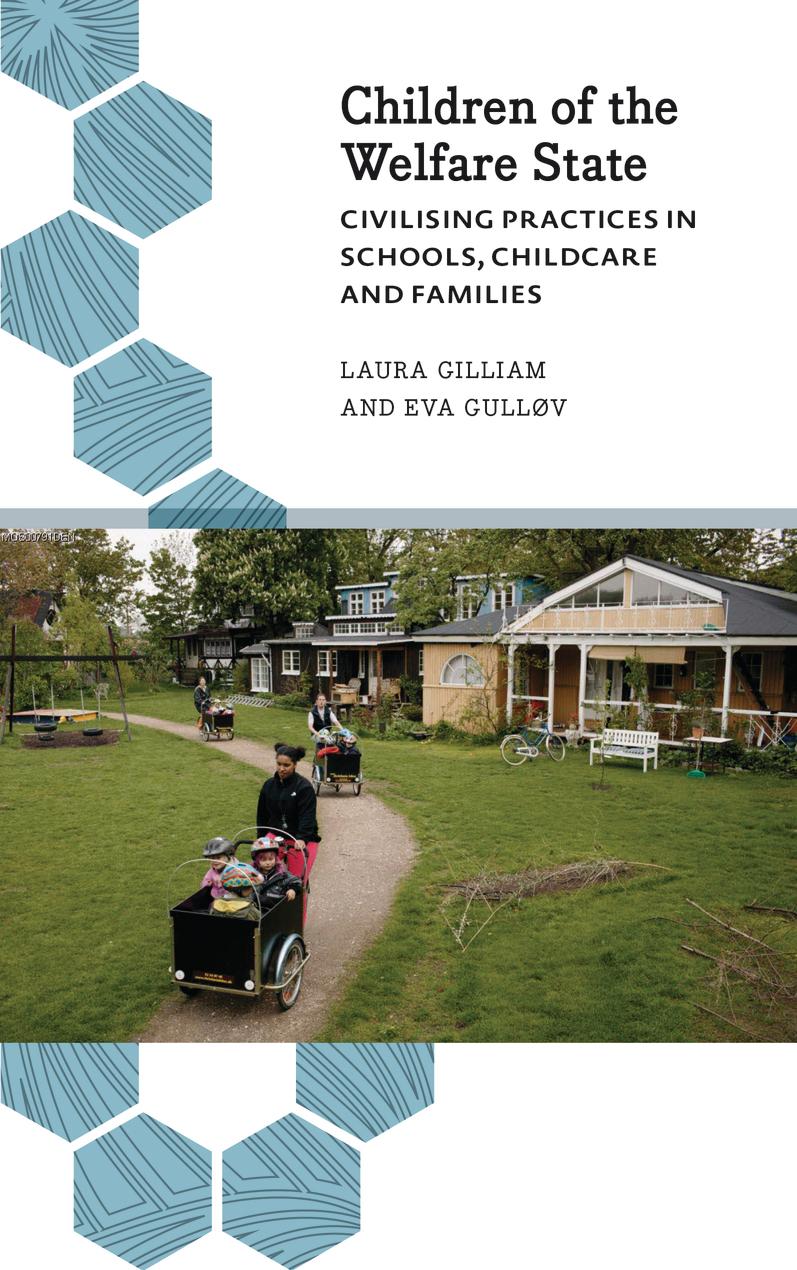
This original ethnographic study looks at how children are ‘civilised’ within child institutions, such as schools, day care centres and families, under the auspices of the welfare state.
As part of a general discussion on civilising projects and the role of state institutions, the authors focus on Denmark, a country characterised by the extent of time children use in public institutions from an early age. They look at the extraordinary amount of attention and effort put into the process of upbringing by the state, as well as the widespread co-operation in this by parents across the social spectrum.
Taking as its point of departure the sociologist Norbert Elias’ concept of civilising, Children of the Welfare State explores the ideals of civilised conduct expressed through institutional upbringing and examine how children of different age, gender, ethnicity and social backgrounds experience and react to these norms and efforts. The analysis demonstrates that welfare state institutions, though characterised by a strong egalitarian ideal, create distinctions between social groups, teach children about moral hierarchies in society and prompts them to identify as more or less civilised citizens of the state.
As part of a general discussion on civilising projects and the role of state institutions, the authors focus on Denmark, a country characterised by the extent of time children use in public institutions from an early age. They look at the extraordinary amount of attention and effort put into the process of upbringing by the state, as well as the widespread co-operation in this by parents across the social spectrum.
Taking as its point of departure the sociologist Norbert Elias’ concept of civilising, Children of the Welfare State explores the ideals of civilised conduct expressed through institutional upbringing and examine how children of different age, gender, ethnicity and social backgrounds experience and react to these norms and efforts. The analysis demonstrates that welfare state institutions, though characterised by a strong egalitarian ideal, create distinctions between social groups, teach children about moral hierarchies in society and prompts them to identify as more or less civilised citizens of the state.
Pagine: 304
Categoria: Sociologi
e-ISBN: 9781786800176
Peso di spedizione: 1.2 kg
Spedito in: 1-2 giorni
Paga facilmente con carta, Klarna, Apple Pay o Google Pay. Non sei soddisfatto? Hai sempre 14 giorni per il rimborso. Leggi di più nei nostri termini. Per qualsiasi domanda, scrivici a hello@memmo.org.
Memmo rende lo studio più facile, ovunque tu sia nel mondo. Qui trovi i tuoi libri di testo e strumenti di studio intelligenti, tutto in un unico posto: riassunti, quiz, podcast e flashcard. E poi c'è Ted, il tuo compagno di studio che risponde a ogni tua domanda. Oltre 50.000 studenti studiano già qui: è stato creato per aiutarti a imparare più velocemente e a stressarti meno.
Potrebbe interessarti anche
Acquista il libro0