
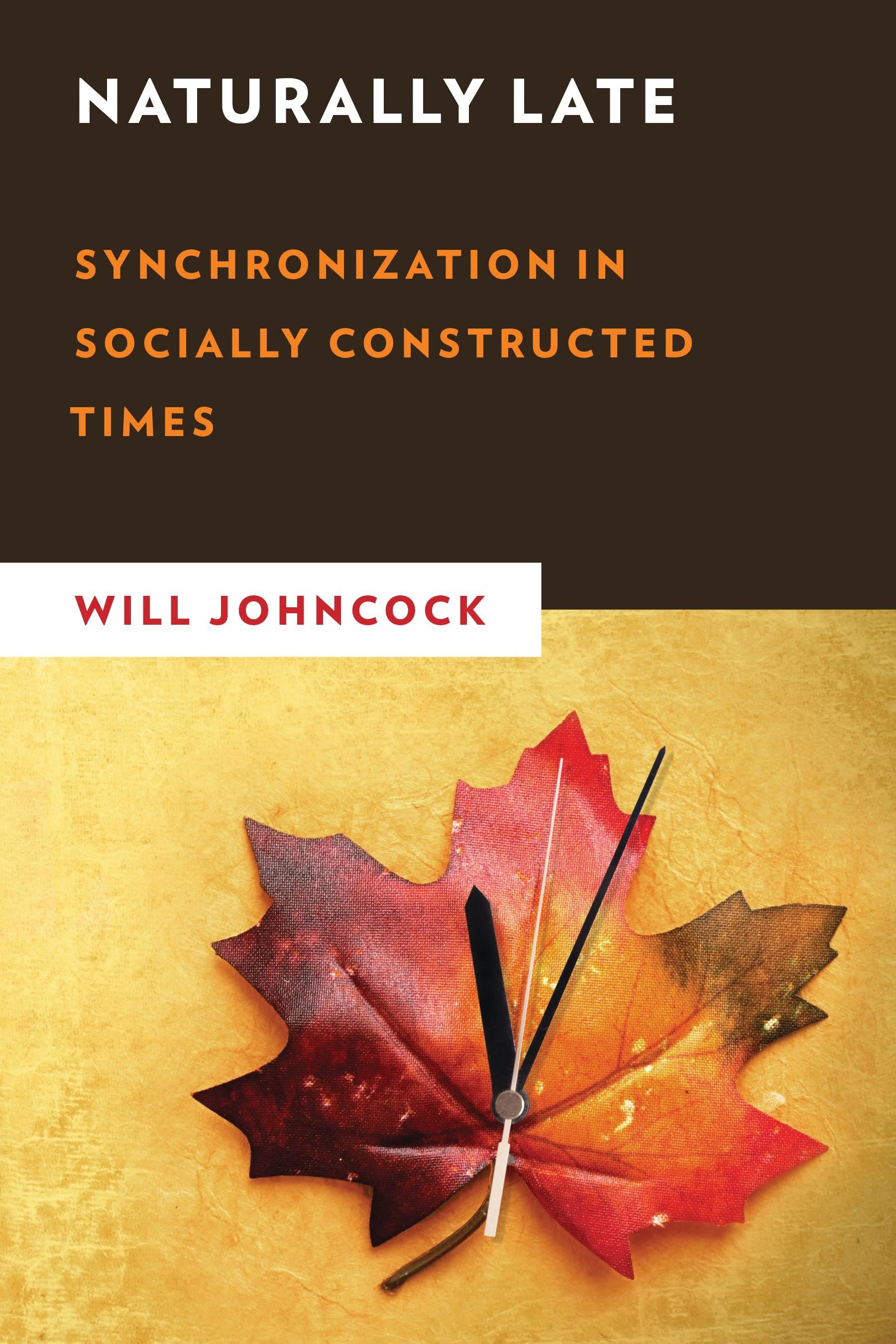
Is time a natural reality that social symbols such as clocks and calendars merely contingently represent? Lateness protocols seemingly exhibit such contingency, for not all cultures regulate synchronization identically. Just as social/cultural time structures are interpreted to diverge from time’s natural rhythm, body modifications are often presented as social productions that divert human bodies from their naturally originated, corporeal temporality. A similar separation informs climate change discourses, supposing a natural rhythm that industrialized culture has invaded, the effects of which humans might be too late to arrest.
Interrogating this conceptual separation matters, given that if certain times are considered to be more natural than others, a situated politics emerges regarding the associated cultural structures. Furthermore, our personal investments in experiences of lateness, which are embedded within social time, seemingly contradict the constructionist impression that social time is merely a contingent misrepresentation of what time actually is. Through Derridian deconstruction, Merleau-Pontian phenomenology, and Bergsonian time-philosophy, complemented with voices from fields including object oriented ontology, new materialism, and new criticism, this book re-evaluates the timing of times from a philosophical perspective.
Interrogating this conceptual separation matters, given that if certain times are considered to be more natural than others, a situated politics emerges regarding the associated cultural structures. Furthermore, our personal investments in experiences of lateness, which are embedded within social time, seemingly contradict the constructionist impression that social time is merely a contingent misrepresentation of what time actually is. Through Derridian deconstruction, Merleau-Pontian phenomenology, and Bergsonian time-philosophy, complemented with voices from fields including object oriented ontology, new materialism, and new criticism, this book re-evaluates the timing of times from a philosophical perspective.
Paga facilmente con carta, Klarna, Apple Pay o Google Pay. Non sei soddisfatto? Hai sempre 14 giorni per il rimborso. Leggi di più nei nostri termini. Per qualsiasi domanda, scrivici a hello@memmo.org.
Memmo rende lo studio più facile, ovunque tu sia nel mondo. Qui trovi i tuoi libri di testo e strumenti di studio intelligenti, tutto in un unico posto: riassunti, quiz, podcast e flashcard. E poi c'è Ted, il tuo compagno di studio che risponde a ogni tua domanda. Oltre 50.000 studenti studiano già qui: è stato creato per aiutarti a imparare più velocemente e a stressarti meno.