
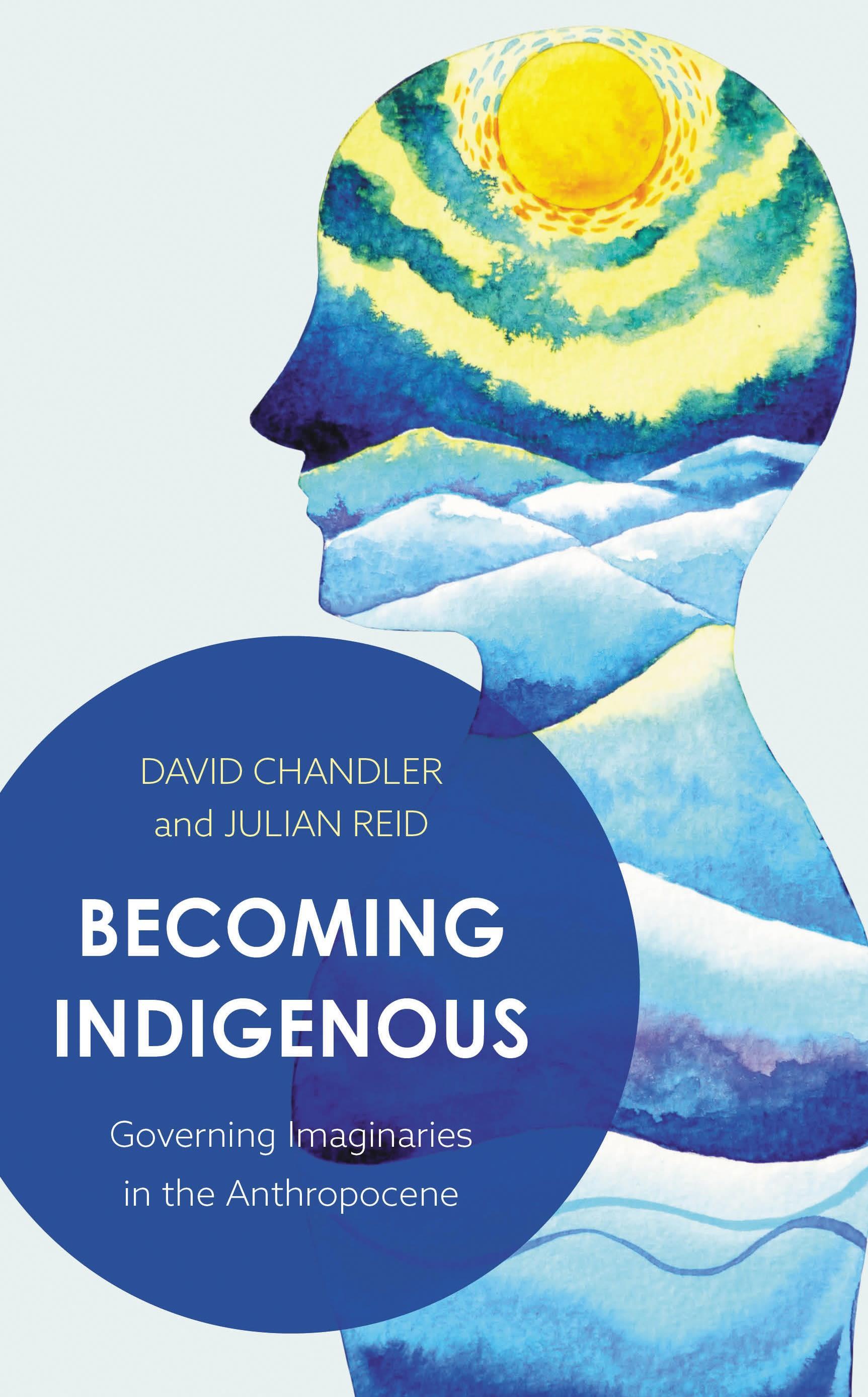
Representations of indigenous peoples, while never static, have always served the interests of settler-colonialism. Historically, the dominant framing marginalised indigenous practices as legacies of the distant past. Today indigenous approaches are demanded in order for settler-colonialism itself to have a future. Becoming indigenous, we are told, is a necessity if humanity is to survive and cope with the catastrophic changes wrought by modernist excess in the Anthropocene.
Becoming Indigenous provides an agenda-setting critique, analysing how and why indigeneity has been reduced to instrumental imaginaries of perseverance and resilience. Indigenous ‘alternatives’ are today central to a range of governing discourses, which promise empowerment but are highly disciplinary. Critical theorists often endorse these framings, happy to instrumentalise indigenous peoples as caretakers of the environment or as teaching the moderns about their ‘more-than-human’ responsibilities.
Chandler and Reid argue that these discourses have little to do with indigenous struggles or with challenging settler-colonial power. In fact, instrumentalising indigeneity in these ways merely reinforces neoliberal hegemony, marginalising critical alternatives for both indigenous and non-indigenous peoples alike.
Becoming Indigenous provides an agenda-setting critique, analysing how and why indigeneity has been reduced to instrumental imaginaries of perseverance and resilience. Indigenous ‘alternatives’ are today central to a range of governing discourses, which promise empowerment but are highly disciplinary. Critical theorists often endorse these framings, happy to instrumentalise indigenous peoples as caretakers of the environment or as teaching the moderns about their ‘more-than-human’ responsibilities.
Chandler and Reid argue that these discourses have little to do with indigenous struggles or with challenging settler-colonial power. In fact, instrumentalising indigeneity in these ways merely reinforces neoliberal hegemony, marginalising critical alternatives for both indigenous and non-indigenous peoples alike.
Paga facilmente con carta, Klarna, Apple Pay o Google Pay. Non sei soddisfatto? Hai sempre 14 giorni per il rimborso. Leggi di più nei nostri termini. Per qualsiasi domanda, scrivici a hello@memmo.org.
Memmo rende lo studio più facile, ovunque tu sia nel mondo. Qui trovi i tuoi libri di testo e strumenti di studio intelligenti, tutto in un unico posto: riassunti, quiz, podcast e flashcard. E poi c'è Ted, il tuo compagno di studio che risponde a ogni tua domanda. Oltre 50.000 studenti studiano già qui: è stato creato per aiutarti a imparare più velocemente e a stressarti meno.