
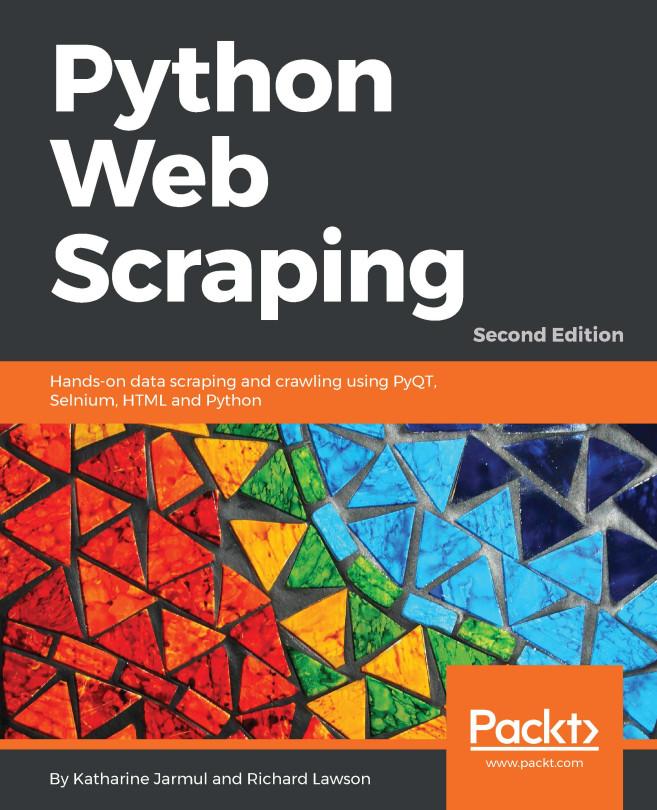
The Internet contains the most useful set of data ever assembled, most of which is publicly accessible for free. However, this data is not easily usable. It is embedded within the structure and style of websites and needs to be carefully extracted. Web scraping is becoming increasingly useful as a means to gather and make sense of the wealth of information available online.
This book is the ultimate guide to using the latest features of Python 3.x to scrape data from websites. In the early chapters, you'll see how to extract data from static web pages. You'll learn to use caching with databases and files to save time and manage the load on servers. After
covering the basics, you'll get hands-on practice building a more sophisticated crawler using browsers, crawlers, and concurrent scrapers.
You'll determine when and how to scrape data from a JavaScript-dependent website using PyQt and Selenium. You'll get a better understanding of how to submit forms on complex websites protected by CAPTCHA. You'll find out how to automate these actions with Python packages such as mechanize. You'll also learn how to create class-based scrapers with Scrapy libraries and implement your learning on real websites.
By the end of the book, you will have explored testing websites with scrapers, remote scraping, best practices, working with images, and many other relevant topics.
Paga facilmente con carta, Klarna, Apple Pay o Google Pay. Non sei soddisfatto? Hai sempre 14 giorni per il rimborso. Leggi di più nei nostri termini. Per qualsiasi domanda, scrivici a hello@memmo.org.
Memmo rende lo studio più facile, ovunque tu sia nel mondo. Qui trovi i tuoi libri di testo e strumenti di studio intelligenti, tutto in un unico posto: riassunti, quiz, podcast e flashcard. E poi c'è Ted, il tuo compagno di studio che risponde a ogni tua domanda. Oltre 50.000 studenti studiano già qui: è stato creato per aiutarti a imparare più velocemente e a stressarti meno.