
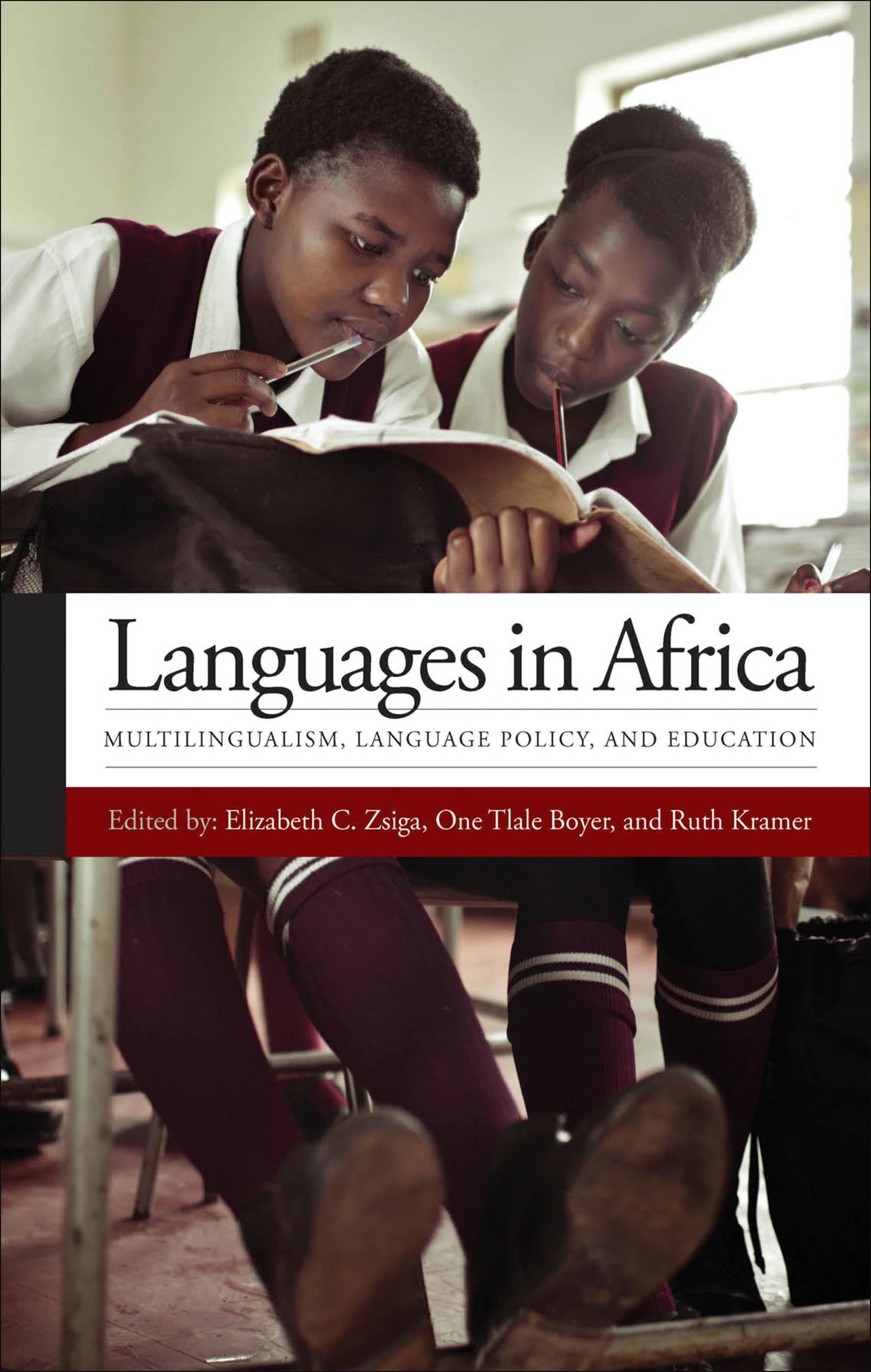
Languages in Africa
People in many African communities live within a series of concentric circles when it comes to language. In a small group, a speaker uses an often unwritten and endangered mother tongue that is rarely used in school. A national indigenous language—written, widespread, sometimes used in school—surrounds it. An international language like French or English, a vestige of colonialism, carries prestige, is used in higher education, and promises mobility—and yet it will not be well known by its users.
The essays in Languages in Africa explore the layers of African multilingualism as they affect language policy and education. Through case studies ranging across the continent, the contributors consider multilingualism in the classroom as well as in domains ranging from music and film to politics and figurative language. The contributors report on the widespread devaluing and even death of indigenous languages. They also investigate how poor teacher training leads to language-related failures in education. At the same time, they demonstrate that education in a mother tongue can work, linguists can use their expertise to provoke changes in language policies, and linguistic creativity thrives in these multilingual communities.
Paga facilmente con carta, Klarna, Apple Pay o Google Pay. Non sei soddisfatto? Hai sempre 14 giorni per il rimborso. Leggi di più nei nostri termini. Per qualsiasi domanda, scrivici a hello@memmo.org.
Memmo rende lo studio più facile, ovunque tu sia nel mondo. Qui trovi i tuoi libri di testo e strumenti di studio intelligenti, tutto in un unico posto: riassunti, quiz, podcast e flashcard. E poi c'è Ted, il tuo compagno di studio che risponde a ogni tua domanda. Oltre 50.000 studenti studiano già qui: è stato creato per aiutarti a imparare più velocemente e a stressarti meno.