
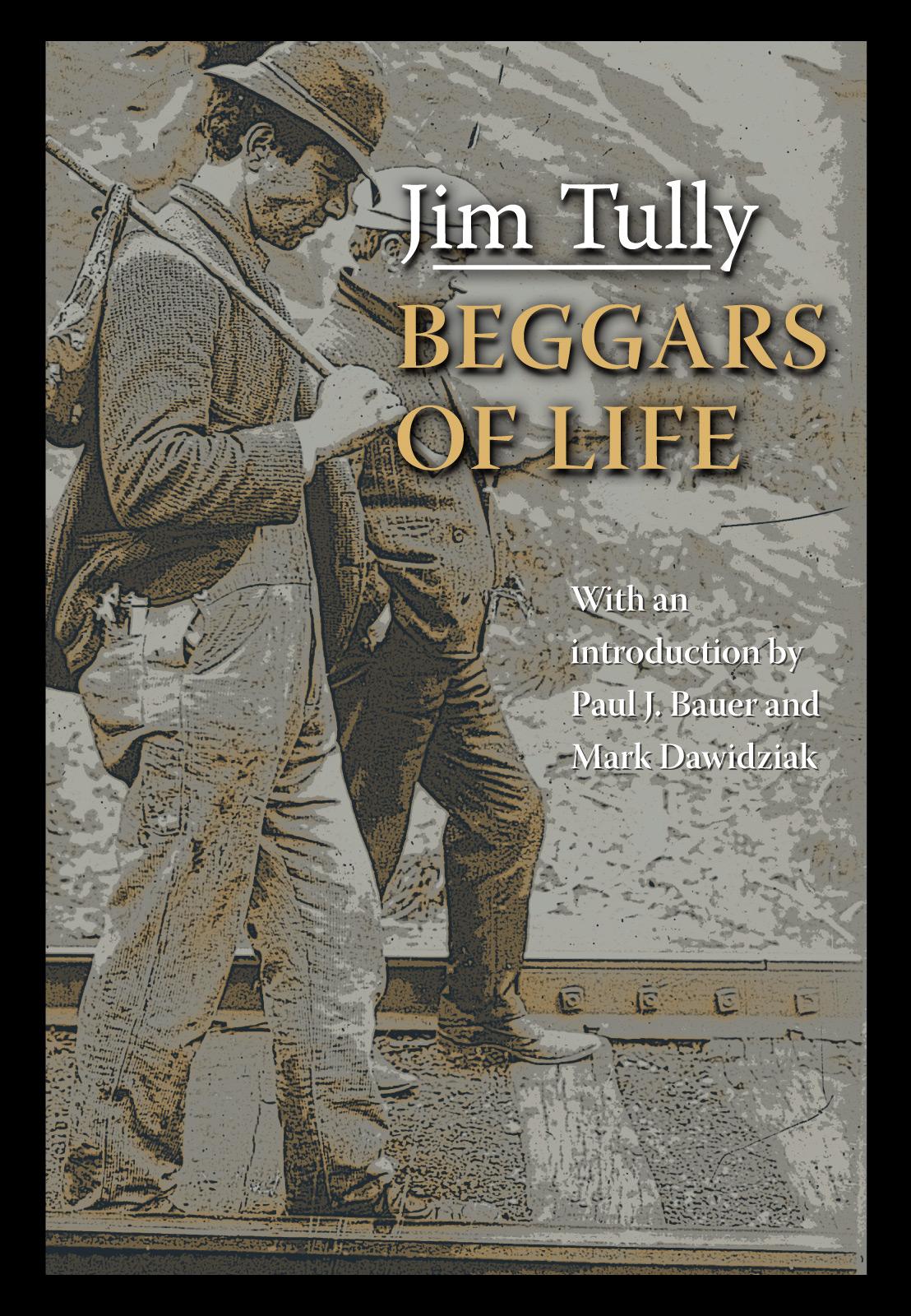
Jim Tully left his hometown of St. Marys, Ohio, in 1901, spending most of his teenage years in the company of hoboes. Drifting across the country as a “road kid,” he spent those years scrambling into boxcars, sleeping in hobo jungles, avoiding railroad cops, begging meals from back doors, and haunting public libraries. Tully crafted these memories into a dark and astonishing chronicle of the American underclass—especially in his second book, Beggars of Life, an autobiographical novel published in 1924. Tully saw it all, from a church baptism in the Mississippi River to election day in Chicago. And in Beggars of Life, he captures an America largely hidden from view.
This novelistic memoir impressed readers and reviewers with its remarkable vitality and honesty. Tully’s devotion to Mark Twain and Jack London taught him the importance of giving the reader a sense of place, and this he does brilliantly, again and again, throughout Beggars of Life. From the opening conversation on a railroad trestle, Beggars of Life rattles along like the Fast Flyer Virginia that Tully boards midway through the book. This is the book that defined Tully’s hard-boiled style and set the pattern for the twelve books that followed over the next two decades. Startling in its originality and intensity, Beggars of Life is a breakneck journey made while clinging to the lowest rungs of the social ladder.
Paga facilmente con carta, Klarna, Apple Pay o Google Pay. Non sei soddisfatto? Hai sempre 14 giorni per il rimborso. Leggi di più nei nostri termini. Per qualsiasi domanda, scrivici a hello@memmo.org.
Memmo rende lo studio più facile, ovunque tu sia nel mondo. Qui trovi i tuoi libri di testo e strumenti di studio intelligenti, tutto in un unico posto: riassunti, quiz, podcast e flashcard. E poi c'è Ted, il tuo compagno di studio che risponde a ogni tua domanda. Oltre 50.000 studenti studiano già qui: è stato creato per aiutarti a imparare più velocemente e a stressarti meno.