
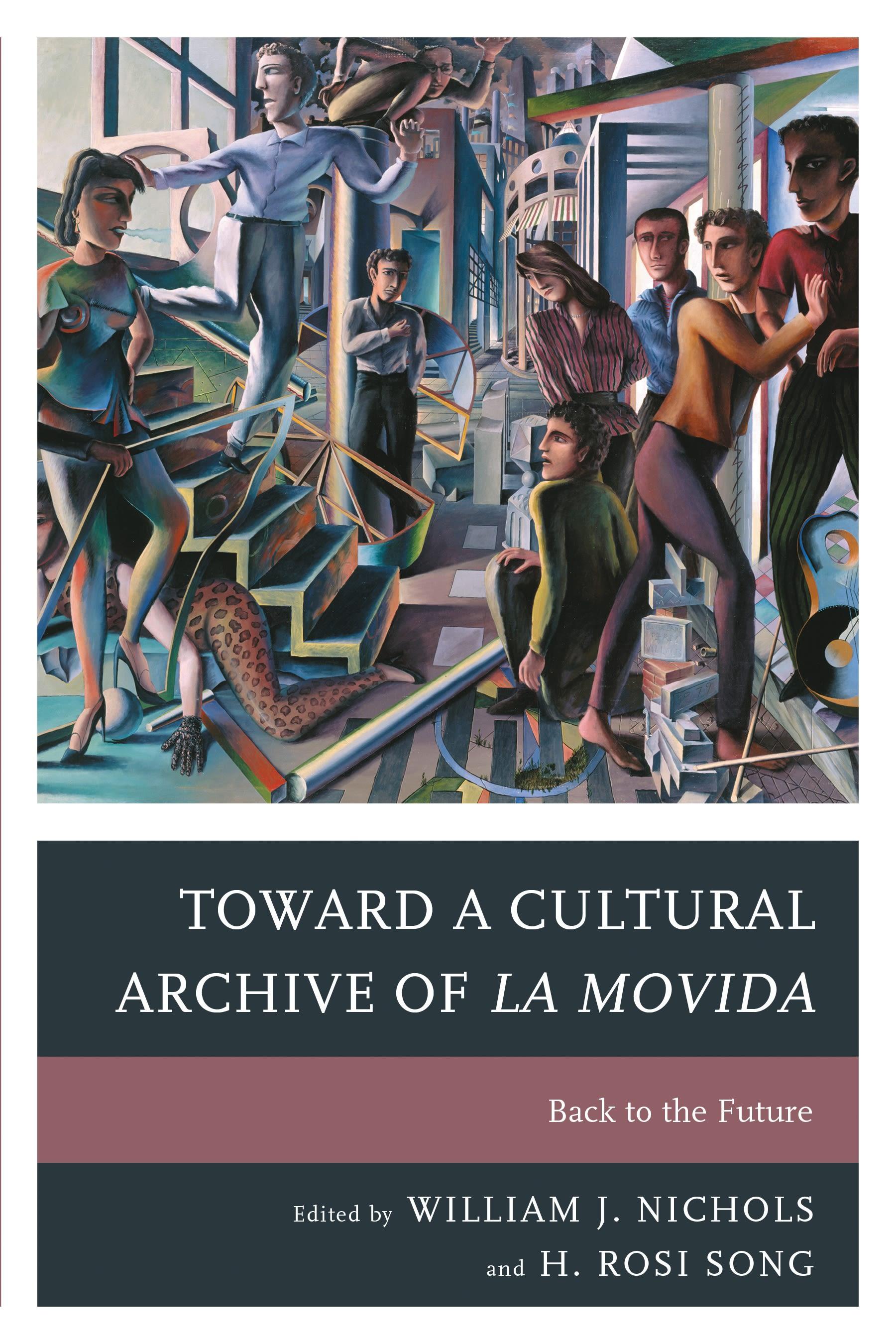
Toward a Cultural Archive of la Movida revisits the cultural and social milieu in which laMovida, an explosion of artistic production in the late 1970s and early 1980s, was articulated discursively, aesthetically, socially, and politically. We connect this experience with a broader national and international context that takes it beyond the city of Madrid and outside the borders of Spain. This collection of essays links the political and social undertakings of this cultural period with youth movements in Spain and other international counter-cultural or underground movements. Moving away from biographical experiences or the identification of further participants and works that belong to laMovida, the articles collected in this volume situate this movement within the political and social development of post-Franco Spain. Finally, it also offers a reading of recent politically motivated recoveries of this cultural phenomenon through exhibitions, state sponsored documentaries, musicals, or tourist itineraries.
The perception of Spain as representative of a successful dual transition from dictatorship to democracy and free market capitalism created a “Spanish model” that has been emulated in countries like Portugal, Argentina, Chile and Hungary, all formerly ruled by totalitarian regimes. While social scientists study the promises, contradictions and failures of the Spanish Transición—especially on issues of memory, repression, and (the lack of) reconciliation —our approach from the humanities offers another vantage point to a wider discussion of an unfinished chapter in recent Spanish history by focusing on laMovida as the “cultural archive” whose cultural transitions parallel the political and economic ones. The transgressive, urban nature of this movement demonstrated an overt desire, especially among Spanish youth, to reach onto a global arena emulating the punk and new wave aesthetic of such cities as London, New York, Paris, and Berlin. Art, design, film, music, fashion during this period helped to forge a sense of a modern urban identity in Spain that also reflected the tensions between modernity and tradition, global forces and local values, international mass media technology and regional customs.
The perception of Spain as representative of a successful dual transition from dictatorship to democracy and free market capitalism created a “Spanish model” that has been emulated in countries like Portugal, Argentina, Chile and Hungary, all formerly ruled by totalitarian regimes. While social scientists study the promises, contradictions and failures of the Spanish Transición—especially on issues of memory, repression, and (the lack of) reconciliation —our approach from the humanities offers another vantage point to a wider discussion of an unfinished chapter in recent Spanish history by focusing on laMovida as the “cultural archive” whose cultural transitions parallel the political and economic ones. The transgressive, urban nature of this movement demonstrated an overt desire, especially among Spanish youth, to reach onto a global arena emulating the punk and new wave aesthetic of such cities as London, New York, Paris, and Berlin. Art, design, film, music, fashion during this period helped to forge a sense of a modern urban identity in Spain that also reflected the tensions between modernity and tradition, global forces and local values, international mass media technology and regional customs.
Paga facilmente con carta, Klarna, Apple Pay o Google Pay. Non sei soddisfatto? Hai sempre 14 giorni per il rimborso. Leggi di più nei nostri termini. Per qualsiasi domanda, scrivici a hello@memmo.org.
Memmo rende lo studio più facile, ovunque tu sia nel mondo. Qui trovi i tuoi libri di testo e strumenti di studio intelligenti, tutto in un unico posto: riassunti, quiz, podcast e flashcard. E poi c'è Ted, il tuo compagno di studio che risponde a ogni tua domanda. Oltre 50.000 studenti studiano già qui: è stato creato per aiutarti a imparare più velocemente e a stressarti meno.