
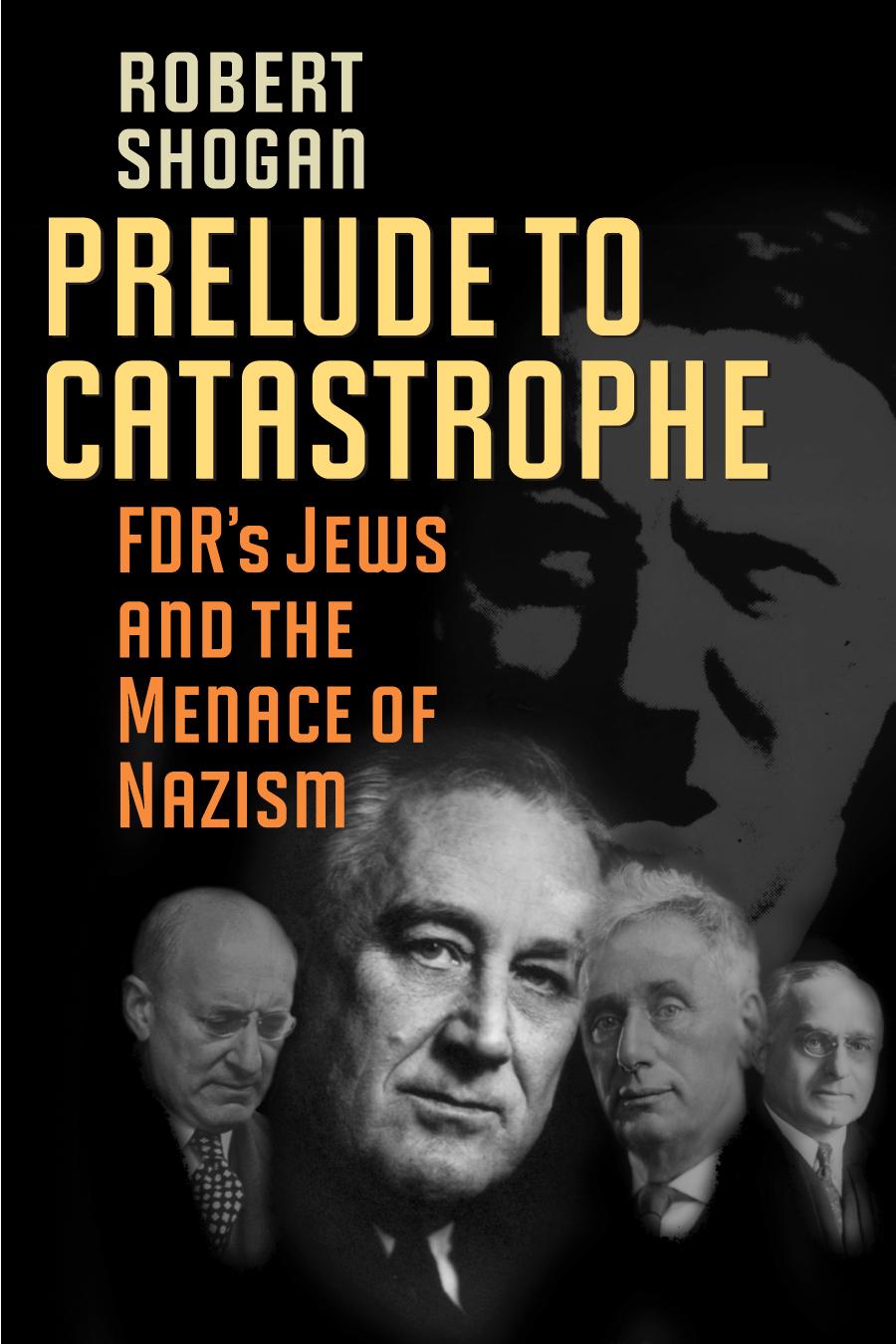
Franklin Roosevelt was the first great hero of American Jews. FDR's promise of economic and social justice was consonant with the mainstays of Jewish culture and with the ethos of the Old Testament and the prophets. And of course these themes were especially resonant during the desperate days of the Great Depression.
The Jews who so deeply admired Roosevelt made up the richest, most influential Jewish community in the world, leaders in government, commerce, and the arts. Yet by the time Franklin Roosevelt died in office, six million European Jews had been murdered by the Nazis while neither FDR nor American Jews lifted much more than a finger to help them. How did the president, the nation he led, and American Jewry allow this to happen? There is no simple answer, but Robert Shogan seeks a partial explanation by examining the behavior of a handful of Jews, so close to Roosevelt and supposedly so influential that they could be considered "the president's Jews."
Most prestigious was Supreme Court justice Louis D. Brandeis. Next was Felix Frankfurter, Harvard law professor and later Supreme Court justice. Sam Rosenman, FDR's chief speechwriter from the time he was governor of New York. Treasury Secretary Henry Morgenthau was an old Dutchess County neighbor of Roosevelt's. Benjamin V. Cohen crafted the major financial reforms of the early New Deal. Their actions, and often inaction, illuminate the strengths and limits of interest-group politics, the system invented by FDR that dominated American politics for the remainder of the century. Taken broadly, the response of the president's Jews to the Nazi threat illustrates with heartbreaking intensity the dilemma of politics—the conflict between conscience and self-interest, between principle and expediency. With 8 pages of black-and-white photographs.
The Jews who so deeply admired Roosevelt made up the richest, most influential Jewish community in the world, leaders in government, commerce, and the arts. Yet by the time Franklin Roosevelt died in office, six million European Jews had been murdered by the Nazis while neither FDR nor American Jews lifted much more than a finger to help them. How did the president, the nation he led, and American Jewry allow this to happen? There is no simple answer, but Robert Shogan seeks a partial explanation by examining the behavior of a handful of Jews, so close to Roosevelt and supposedly so influential that they could be considered "the president's Jews."
Most prestigious was Supreme Court justice Louis D. Brandeis. Next was Felix Frankfurter, Harvard law professor and later Supreme Court justice. Sam Rosenman, FDR's chief speechwriter from the time he was governor of New York. Treasury Secretary Henry Morgenthau was an old Dutchess County neighbor of Roosevelt's. Benjamin V. Cohen crafted the major financial reforms of the early New Deal. Their actions, and often inaction, illuminate the strengths and limits of interest-group politics, the system invented by FDR that dominated American politics for the remainder of the century. Taken broadly, the response of the president's Jews to the Nazi threat illustrates with heartbreaking intensity the dilemma of politics—the conflict between conscience and self-interest, between principle and expediency. With 8 pages of black-and-white photographs.
Paga facilmente con carta, Klarna, Apple Pay o Google Pay. Non sei soddisfatto? Hai sempre 14 giorni per il rimborso. Leggi di più nei nostri termini. Per qualsiasi domanda, scrivici a hello@memmo.org.
Memmo rende lo studio più facile, ovunque tu sia nel mondo. Qui trovi i tuoi libri di testo e strumenti di studio intelligenti, tutto in un unico posto: riassunti, quiz, podcast e flashcard. E poi c'è Ted, il tuo compagno di studio che risponde a ogni tua domanda. Oltre 50.000 studenti studiano già qui: è stato creato per aiutarti a imparare più velocemente e a stressarti meno.