
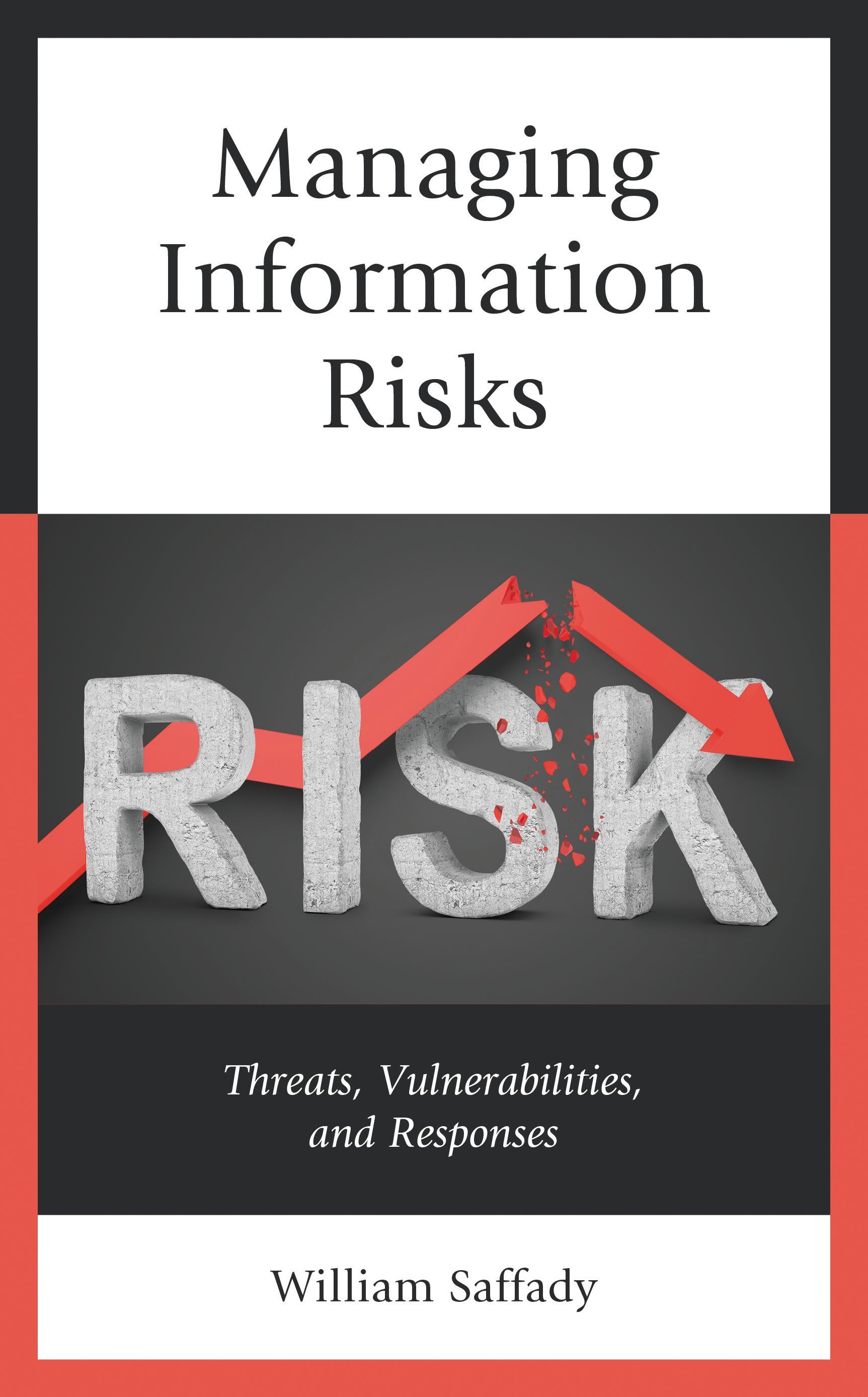
Managing Information Risks: Threats, Vulnerabilities, and Responses identifies and categorizes risks related to creation, collection, storage, retention, retrieval, disclosure and ownership of information in organizations of all types and sizes. It is intended for risk managers, information governance specialists, compliance officers, attorneys, records managers, archivists, and other decision-makers, managers, and analysts who are responsible for risk management initiatives related to their organizations’ information assets.
An opening chapter defines and discusses risk terminology and concepts that are essential for understanding, assessing, and controlling information risk. Subsequent chapters provide detailed explanations of specific threats to an organization’s information assets, an assessment of vulnerabilities that the threats can exploit, and a review of available options to address the threats and their associated vulnerabilities. Applicable laws, regulations, and standards are cited at appropriate points in the text. Each chapter includes extensive endnotes that support specific points and provide suggestions for further reading.
While the book is grounded in scholarship, the treatment is practical rather than theoretical. Each chapter focuses on knowledge and recommendations that readers can use to:
heighten risk awareness within their organizations, identify threats and their associated consequences, assess vulnerabilities, evaluate risk mitigation options, define risk-related responsibilities, and align information-related initiatives and activities with their organizations’ risk management strategies and policies.
Compared to other works, this book deals with a broader range of information risks and draws on ideas from a greater variety of disciplines, including business process management, law, financial analysis, records management, information science, and archival administration. Most books on this topic associate information risk with digital data, information technology, and cyber security. This book covers risks to information of any type in any format, including paper and photographic records as well as digital content.
An opening chapter defines and discusses risk terminology and concepts that are essential for understanding, assessing, and controlling information risk. Subsequent chapters provide detailed explanations of specific threats to an organization’s information assets, an assessment of vulnerabilities that the threats can exploit, and a review of available options to address the threats and their associated vulnerabilities. Applicable laws, regulations, and standards are cited at appropriate points in the text. Each chapter includes extensive endnotes that support specific points and provide suggestions for further reading.
While the book is grounded in scholarship, the treatment is practical rather than theoretical. Each chapter focuses on knowledge and recommendations that readers can use to:
heighten risk awareness within their organizations, identify threats and their associated consequences, assess vulnerabilities, evaluate risk mitigation options, define risk-related responsibilities, and align information-related initiatives and activities with their organizations’ risk management strategies and policies.
Compared to other works, this book deals with a broader range of information risks and draws on ideas from a greater variety of disciplines, including business process management, law, financial analysis, records management, information science, and archival administration. Most books on this topic associate information risk with digital data, information technology, and cyber security. This book covers risks to information of any type in any format, including paper and photographic records as well as digital content.
Paga facilmente con carta, Klarna, Apple Pay o Google Pay. Non sei soddisfatto? Hai sempre 14 giorni per il rimborso. Leggi di più nei nostri termini. Per qualsiasi domanda, scrivici a hello@memmo.org.
Memmo rende lo studio più facile, ovunque tu sia nel mondo. Qui trovi i tuoi libri di testo e strumenti di studio intelligenti, tutto in un unico posto: riassunti, quiz, podcast e flashcard. E poi c'è Ted, il tuo compagno di studio che risponde a ogni tua domanda. Oltre 50.000 studenti studiano già qui: è stato creato per aiutarti a imparare più velocemente e a stressarti meno.