
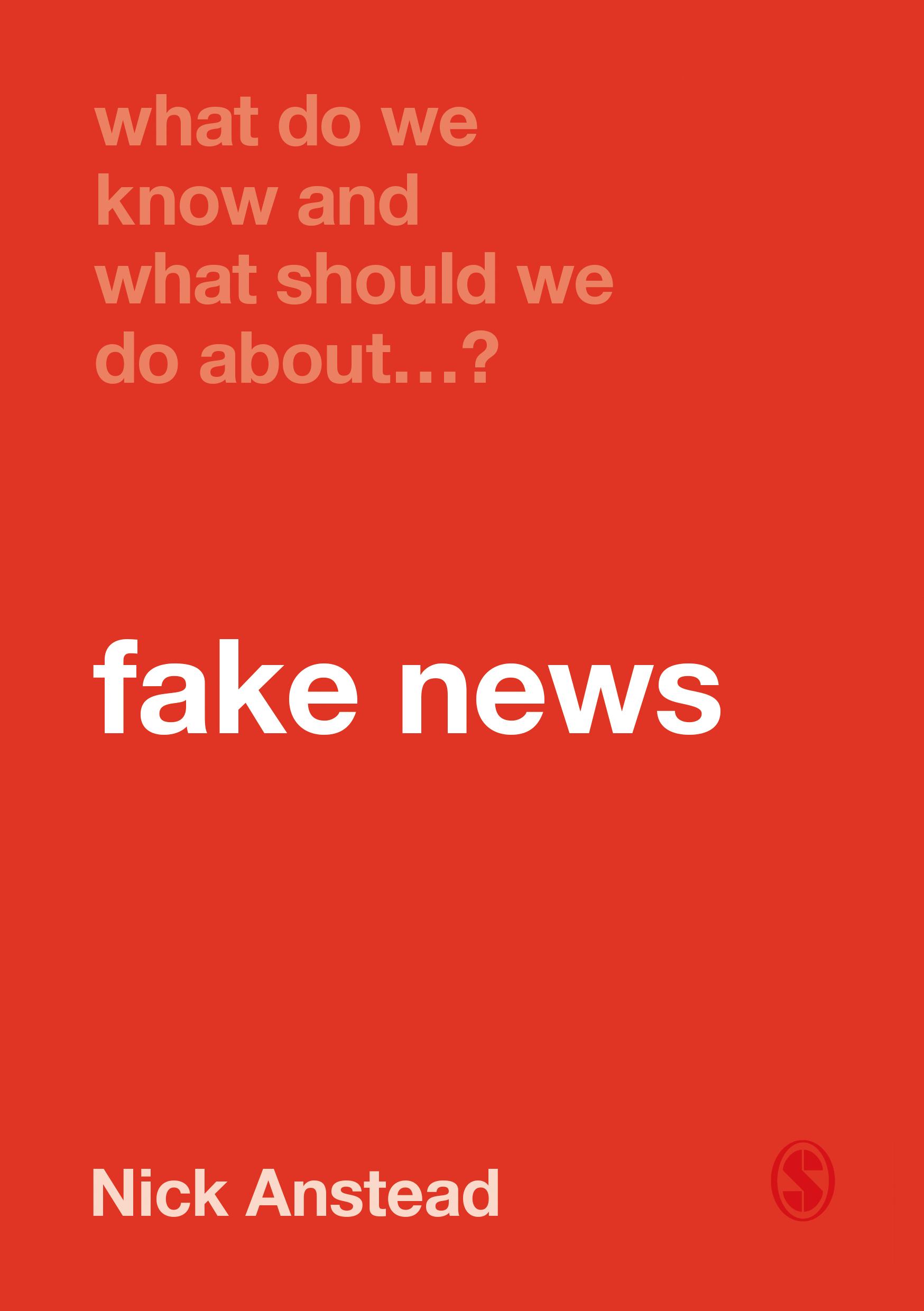
Voters need to be informed to make political decisions, but what if their media diet not only prevents them from getting the information they need, but actively shapes inaccurate perceptions of the world?
Drawing on examples and evidence from around the world, this book aims to make a timely intervention to the debate about the concept of fake news. Its underlying argument will have three objectives. First, to offer more precise definitions for a term that is often loosely used. Second, to offer a less technologically determinist view of fake news. New social media platforms, such as Facebook and WhatsApp, are clearly an important part of the story, but they exist in wider social, political and institutional settings. Third, to situate the idea of fake news (and our concern about it) in broader arguments about an ongoing crisis and loss of confidence in liberal democratic institutions. Only with this perspective, it will be argued, can we possibly address the question of what we should do about fake news.
Written by leading social scientists, the What Do We Know and What Should We Do About...? series offers concise, up-to-date overviews of issues often oversimplified, misrepresented or misunderstood and shows you how to enact change.
"Short, sharp and compelling." - Alex Preston, The Observer
"If you want to learn a lot about what matters most, in as short a time as possible, this is the series for you."- Danny Dorling, 1971 Professor of Geography, University of Oxford
Drawing on examples and evidence from around the world, this book aims to make a timely intervention to the debate about the concept of fake news. Its underlying argument will have three objectives. First, to offer more precise definitions for a term that is often loosely used. Second, to offer a less technologically determinist view of fake news. New social media platforms, such as Facebook and WhatsApp, are clearly an important part of the story, but they exist in wider social, political and institutional settings. Third, to situate the idea of fake news (and our concern about it) in broader arguments about an ongoing crisis and loss of confidence in liberal democratic institutions. Only with this perspective, it will be argued, can we possibly address the question of what we should do about fake news.
Written by leading social scientists, the What Do We Know and What Should We Do About...? series offers concise, up-to-date overviews of issues often oversimplified, misrepresented or misunderstood and shows you how to enact change.
"Short, sharp and compelling." - Alex Preston, The Observer
"If you want to learn a lot about what matters most, in as short a time as possible, this is the series for you."- Danny Dorling, 1971 Professor of Geography, University of Oxford
Paga facilmente con carta, Klarna, Apple Pay o Google Pay. Non sei soddisfatto? Hai sempre 14 giorni per il rimborso. Leggi di più nei nostri termini. Per qualsiasi domanda, scrivici a hello@memmo.org.
Memmo rende lo studio più facile, ovunque tu sia nel mondo. Qui trovi i tuoi libri di testo e strumenti di studio intelligenti, tutto in un unico posto: riassunti, quiz, podcast e flashcard. E poi c'è Ted, il tuo compagno di studio che risponde a ogni tua domanda. Oltre 50.000 studenti studiano già qui: è stato creato per aiutarti a imparare più velocemente e a stressarti meno.