
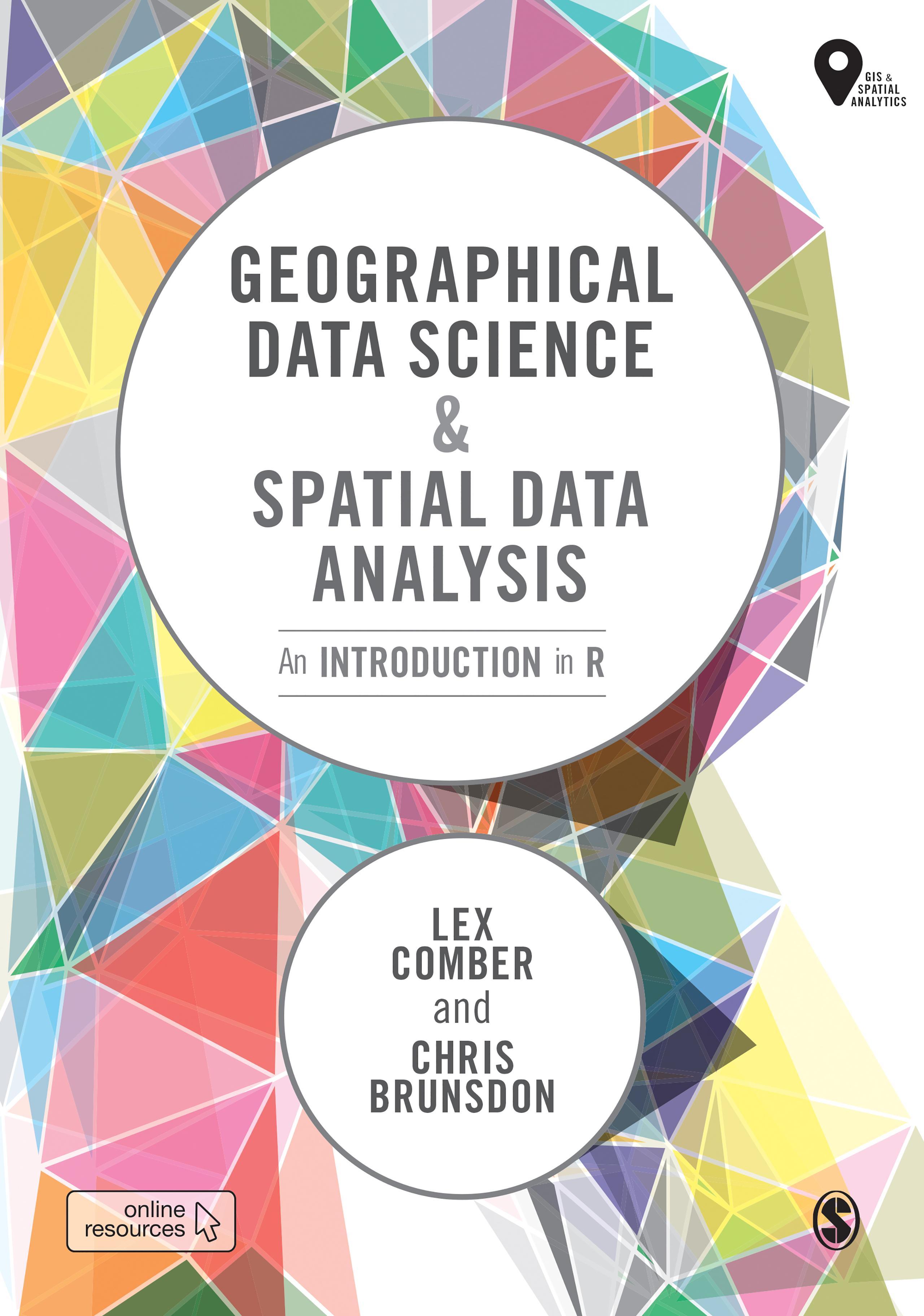
We are in an age of big data where all of our everyday interactions and transactions generate data. Much of this data is spatial – it is collected some-where – and identifying analytical insight from trends and patterns in these increasing rich digital footprints presents a number of challenges.
Whilst other books describe different flavours of Data Analytics in R and other programming languages, there are none that consider Spatial Data (i.e. the location attached to data), or that consider issues of inference, linking Big Data, Geography, GIS, Mapping and Spatial Analytics.
This is a ‘learning by doing’ textbook, building on the previous book by the same authors, An Introduction to R for Spatial Analysis and Mapping. It details the theoretical issues in analyses of Big Spatial Data and developing practical skills in the reader for addressing these with confidence.
Whilst other books describe different flavours of Data Analytics in R and other programming languages, there are none that consider Spatial Data (i.e. the location attached to data), or that consider issues of inference, linking Big Data, Geography, GIS, Mapping and Spatial Analytics.
This is a ‘learning by doing’ textbook, building on the previous book by the same authors, An Introduction to R for Spatial Analysis and Mapping. It details the theoretical issues in analyses of Big Spatial Data and developing practical skills in the reader for addressing these with confidence.
Paga facilmente con carta, Klarna, Apple Pay o Google Pay. Non sei soddisfatto? Hai sempre 14 giorni per il rimborso. Leggi di più nei nostri termini. Per qualsiasi domanda, scrivici a hello@memmo.org.
Memmo rende lo studio più facile, ovunque tu sia nel mondo. Qui trovi i tuoi libri di testo e strumenti di studio intelligenti, tutto in un unico posto: riassunti, quiz, podcast e flashcard. E poi c'è Ted, il tuo compagno di studio che risponde a ogni tua domanda. Oltre 50.000 studenti studiano già qui: è stato creato per aiutarti a imparare più velocemente e a stressarti meno.