
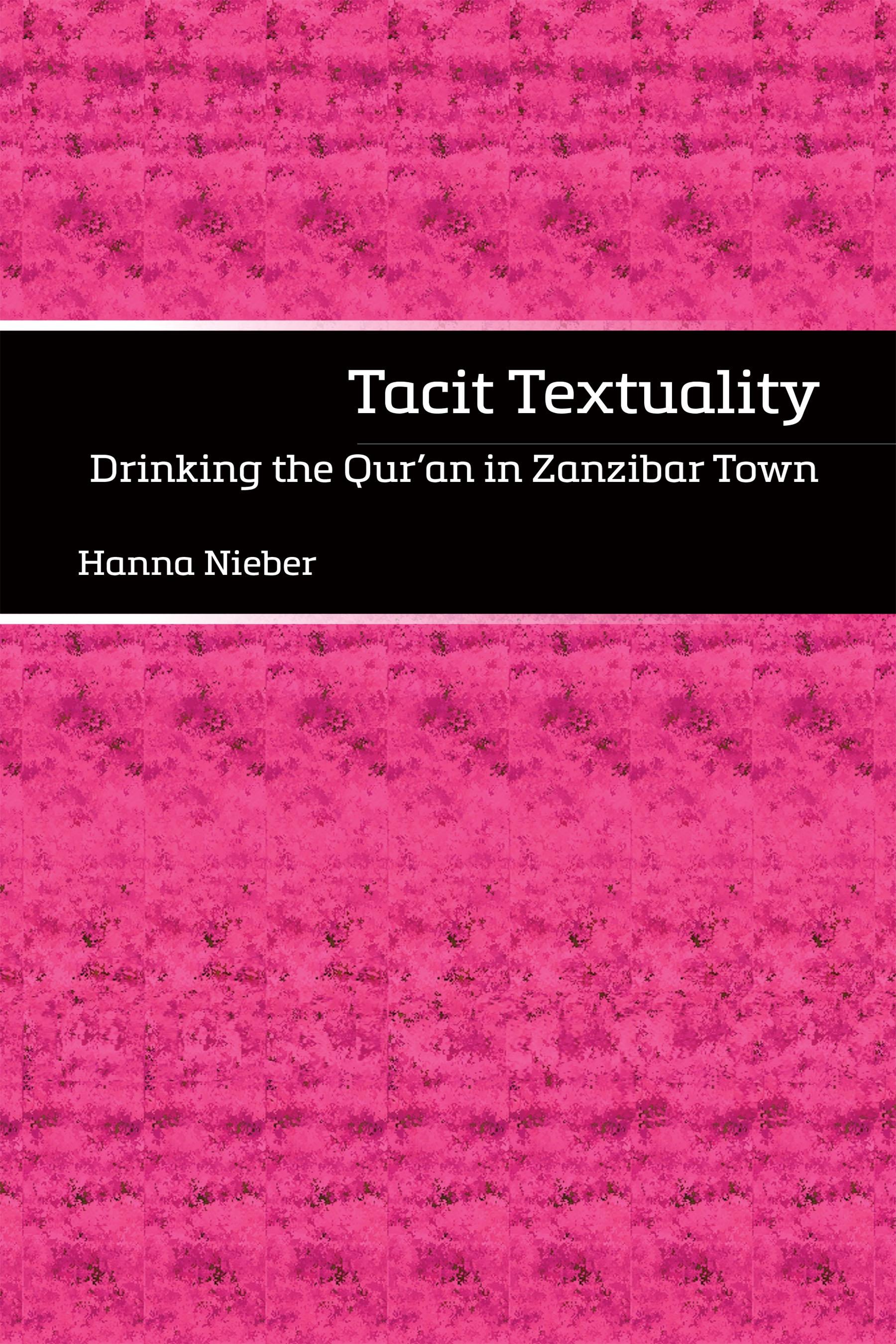
An ethnography about the practice of ingesting the Qur’an as medicine in Zanzibar
Tacit Textuality is an ethnography about the practice of kombe in Zanzibar, in which Qurʾanic verses are liquefied and consumed across religious divides for afflicted bodies to be healed. Primarily based on thirteen months of ethnographic fieldwork in two Zanzibari healing rooms, the book investigates three foci. Firstly, it delves into the minute details of preparing kombe—its textual formation through carefully shaped saffron ink, its liquefaction and containment in water, and its anticipated ingestion for healing purposes. Because kombe’s textuality is rendered tacit, the book argues, it is possible to be read affectively and thereby provide the conditions for the Qurʾan to heal through afflicted bodies. Secondly, it examines kombe in its social context. In Zanzibar, kombe is both “Islamic” and “traditional” medicine, which caters to both Muslims and Christians. Antagonistic debates that render Christians as Muslims’ “other” are complicated by Zanzibar’s situatedness between Indian Ocean connections and its status as semi-autonomously belonging to the Tanzanian state. Hanna Nieber traces how, in this context, Christians drink kombe as “traditional medicine” but do not speak about their ingestion. Thirdly, being text about text that is not visually legible anymore, Tacit Textuality connects this ethnographic case study to academic writing and forms a “diffractive ethnography” in which the materiality of the book itself becomes part of the story.
Paga facilmente con carta, Klarna, Apple Pay o Google Pay. Non sei soddisfatto? Hai sempre 14 giorni per il rimborso. Leggi di più nei nostri termini. Per qualsiasi domanda, scrivici a hello@memmo.org.
Memmo rende lo studio più facile, ovunque tu sia nel mondo. Qui trovi i tuoi libri di testo e strumenti di studio intelligenti, tutto in un unico posto: riassunti, quiz, podcast e flashcard. E poi c'è Ted, il tuo compagno di studio che risponde a ogni tua domanda. Oltre 50.000 studenti studiano già qui: è stato creato per aiutarti a imparare più velocemente e a stressarti meno.