
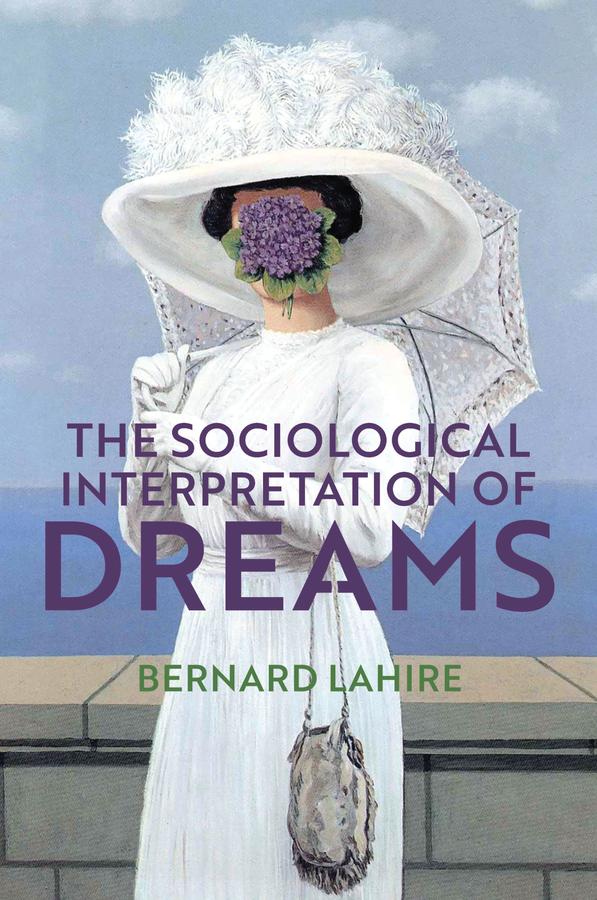
For Freud, dreams were the royal road to the unconscious: through the process of interpretation, the manifest and sometimes bewildering content of dreams can be traced back to the unconscious representations underlying it. But can we understand dreams in another way by considering how the unconscious is structured by our social experiences?
This is hypothesis that underlies this highly original book by Bernard Lahire, who argues that dreams can be interpreted sociologically by seeing the dream as a nocturnal form of self-to-self communication. Lahire rejects Freud’s view that the manifest dream content is the result of a process of censorship: as a form of self-to-self communication, the dream is the symbolic arena most completely freed from all forms of censorship. In Lahire’s view, the dream is a message which can be understood only by relating it to the social world of the dreamer, and in particular to the problems that concern him or her during waking life. As a form of self-to-self communication, the dream is an intimate private diary, providing us with the elements of a profound and subtle understanding of who and what we are. Studying dreams enables us to discover our most deep-seated and hidden preoccupations, and to understand the thought processes that operate within us, beyond the reach of our volition.
The study of dreams and dreaming has largely been the preserve of psychoanalysis, psychology and neuroscience. By showing how dreams are connected to the lived experience of individuals in the social world, this highly original book puts dreams and dreaming at the heart of the social sciences. It will be of great value to students and scholars in sociology, psychology and psychoanalysis and to anyone interested in the nature and meaning of dreams.
This is hypothesis that underlies this highly original book by Bernard Lahire, who argues that dreams can be interpreted sociologically by seeing the dream as a nocturnal form of self-to-self communication. Lahire rejects Freud’s view that the manifest dream content is the result of a process of censorship: as a form of self-to-self communication, the dream is the symbolic arena most completely freed from all forms of censorship. In Lahire’s view, the dream is a message which can be understood only by relating it to the social world of the dreamer, and in particular to the problems that concern him or her during waking life. As a form of self-to-self communication, the dream is an intimate private diary, providing us with the elements of a profound and subtle understanding of who and what we are. Studying dreams enables us to discover our most deep-seated and hidden preoccupations, and to understand the thought processes that operate within us, beyond the reach of our volition.
The study of dreams and dreaming has largely been the preserve of psychoanalysis, psychology and neuroscience. By showing how dreams are connected to the lived experience of individuals in the social world, this highly original book puts dreams and dreaming at the heart of the social sciences. It will be of great value to students and scholars in sociology, psychology and psychoanalysis and to anyone interested in the nature and meaning of dreams.
Paga facilmente con carta, Klarna, Apple Pay o Google Pay. Non sei soddisfatto? Hai sempre 14 giorni per il rimborso. Leggi di più nei nostri termini. Per qualsiasi domanda, scrivici a hello@memmo.org.
Memmo rende lo studio più facile, ovunque tu sia nel mondo. Qui trovi i tuoi libri di testo e strumenti di studio intelligenti, tutto in un unico posto: riassunti, quiz, podcast e flashcard. E poi c'è Ted, il tuo compagno di studio che risponde a ogni tua domanda. Oltre 50.000 studenti studiano già qui: è stato creato per aiutarti a imparare più velocemente e a stressarti meno.
Potrebbe interessarti anche
Acquista il libro0