
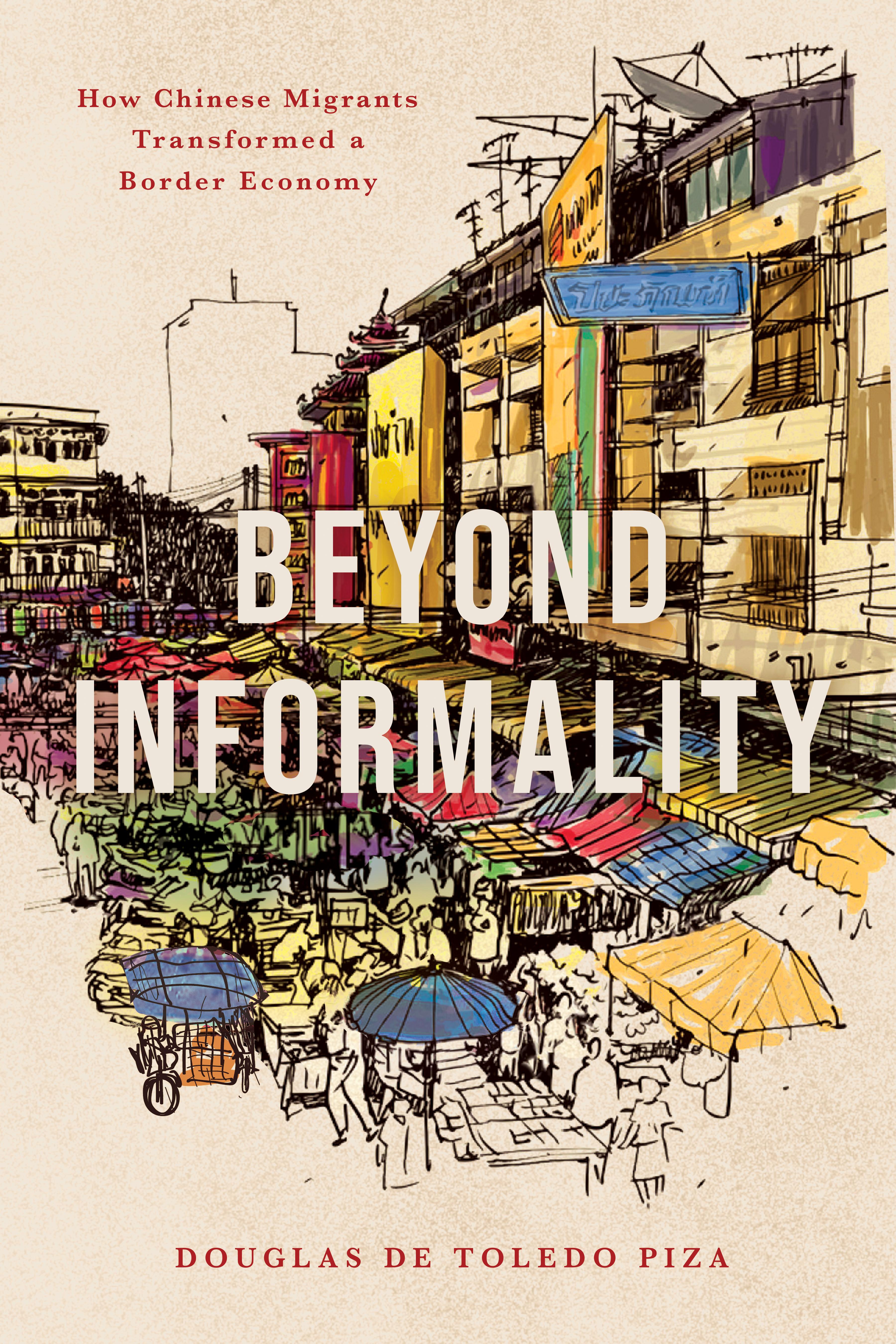
Chinese migrants are playing increasingly large, stratified roles in the informal economies of South America. One of the clearest examples of this phenomenon is in the region's largest informal economy of counterfeit and smuggled goods, spanning from Ciudad del Este, the Paraguayan border city, to São Paulo, Brazil's largest metropolis. Here, Chinese vendors, on the one hand, are some of the most marginalized workers facing a doubly difficult landscape due to their precarious immigration status and their illegal economic activities. They bear the brunt of working on the margins of the law, and as a result do not always reap the benefits of their own labor. A transnational elite of Chinese businesspeople, on the other hand, profits and profiteers from the booming market. They leverage their economic, social, and political power to bend the law to their favor and get away with irregularities, violations, and criminal behavior. In Beyond Informality Douglas de Toledo Piza reveals the complex ways these actors interact with each other, and how the law shapes those interactions. He argues that structural inequalities in the global economy push Chinese migrants to South America, while placing them, surprisingly, in positions to overhaul markets and tip the scales of deep-seated power structures in the Global South.
Paga facilmente con carta, Klarna, Apple Pay o Google Pay. Non sei soddisfatto? Hai sempre 14 giorni per il rimborso. Leggi di più nei nostri termini. Per qualsiasi domanda, scrivici a hello@memmo.org.
Memmo rende lo studio più facile, ovunque tu sia nel mondo. Qui trovi i tuoi libri di testo e strumenti di studio intelligenti, tutto in un unico posto: riassunti, quiz, podcast e flashcard. E poi c'è Ted, il tuo compagno di studio che risponde a ogni tua domanda. Oltre 50.000 studenti studiano già qui: è stato creato per aiutarti a imparare più velocemente e a stressarti meno.