
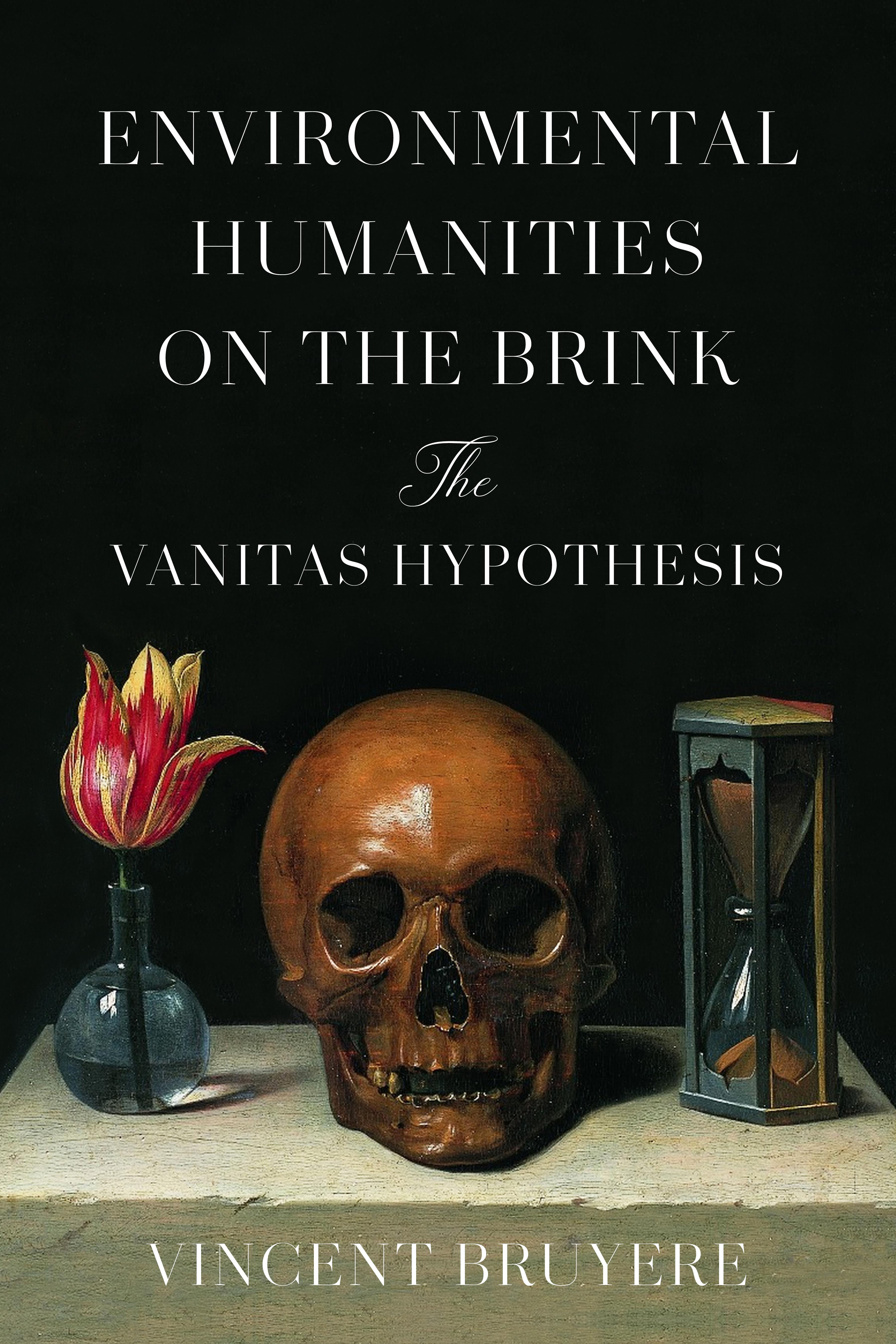
In this experimental work of ecocriticism, Vincent Bruyere confronts the seeming pointlessness of the humanities amid spectacularly negative future projections of environmental collapse.
The vanitas paintings of the sixteenth and seventeenth centuries dazzlingly depict heaps of riches alongside skulls, shells, and hourglasses. Sometimes even featuring the illusion that their canvases are peeling away, vanitas images openly declare their own pointlessness in relation to the future. This book takes inspiration from the vanitas tradition to fearlessly contemplate the stakes of the humanities in the Anthropocene present, when the accumulated human record could well outlast the climate conditions for our survival. Staging a series of unsettling encounters with early modern texts and images whose claims of relevance have long since expired, Bruyere experiments with the interpretive affordances of allegory and fairytale, still life and travelogues. Each chapter places a vanitas motif—canvas, debris, toxics, paper, ark, meat, and light—in conversation with stories and images of the Anthropocene, from the Pleistocene Park geoengineering project to toxic legacies to in-vitro meat.
Considering questions of quiet erasure and environmental memory, this book argues we ought to keep reading, even by the flickering light of extinction.
Paga facilmente con carta, Klarna, Apple Pay o Google Pay. Non sei soddisfatto? Hai sempre 14 giorni per il rimborso. Leggi di più nei nostri termini. Per qualsiasi domanda, scrivici a hello@memmo.org.
Memmo rende lo studio più facile, ovunque tu sia nel mondo. Qui trovi i tuoi libri di testo e strumenti di studio intelligenti, tutto in un unico posto: riassunti, quiz, podcast e flashcard. E poi c'è Ted, il tuo compagno di studio che risponde a ogni tua domanda. Oltre 50.000 studenti studiano già qui: è stato creato per aiutarti a imparare più velocemente e a stressarti meno.