
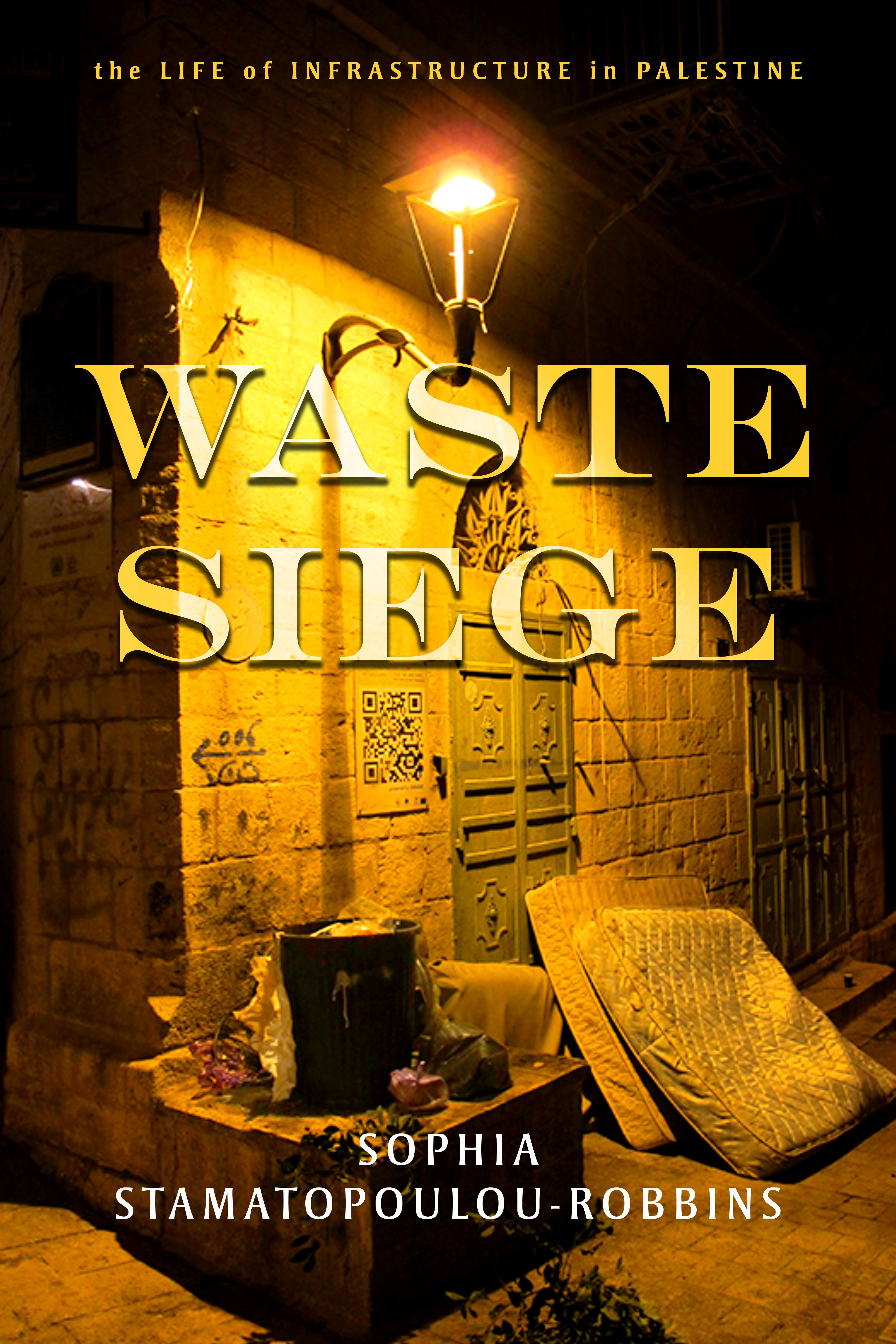
Waste Siege offers an analysis unusual in the study of Palestine: it depicts the environmental, infrastructural, and aesthetic context in which Palestinians are obliged to forge their lives. To speak of waste siege is to describe a series of conditions, from smelling wastes to negotiating military infrastructures, from biopolitical forms of colonial rule to experiences of governmental abandonment, from obvious targets of resistance to confusion over responsibility for the burdensome objects of daily life. Within this rubble, debris, and infrastructural fallout, West Bank Palestinians create a life under settler colonial rule.
Sophia Stamatopoulou-Robbins focuses on waste as an experience of everyday life that is continuous with, but not a result only of, occupation. Tracing Palestinians' own experiences of wastes over the past decade, she considers how multiple authorities governing the West Bank—including municipalities, the Palestinian Authority, international aid organizations, NGOs, and Israel—rule by waste siege, whether intentionally or not. Her work challenges both common formulations of waste as "matter out of place" and as the ontological opposite of the environment, by suggesting instead that waste siege be understood as an ecology of "matter with no place to go." Waste siege thus not only describes a stateless Palestine, but also becomes a metaphor for our besieged planet.
Paga facilmente con carta, Klarna, Apple Pay o Google Pay. Non sei soddisfatto? Hai sempre 14 giorni per il rimborso. Leggi di più nei nostri termini. Per qualsiasi domanda, scrivici a hello@memmo.org.
Memmo rende lo studio più facile, ovunque tu sia nel mondo. Qui trovi i tuoi libri di testo e strumenti di studio intelligenti, tutto in un unico posto: riassunti, quiz, podcast e flashcard. E poi c'è Ted, il tuo compagno di studio che risponde a ogni tua domanda. Oltre 50.000 studenti studiano già qui: è stato creato per aiutarti a imparare più velocemente e a stressarti meno.