
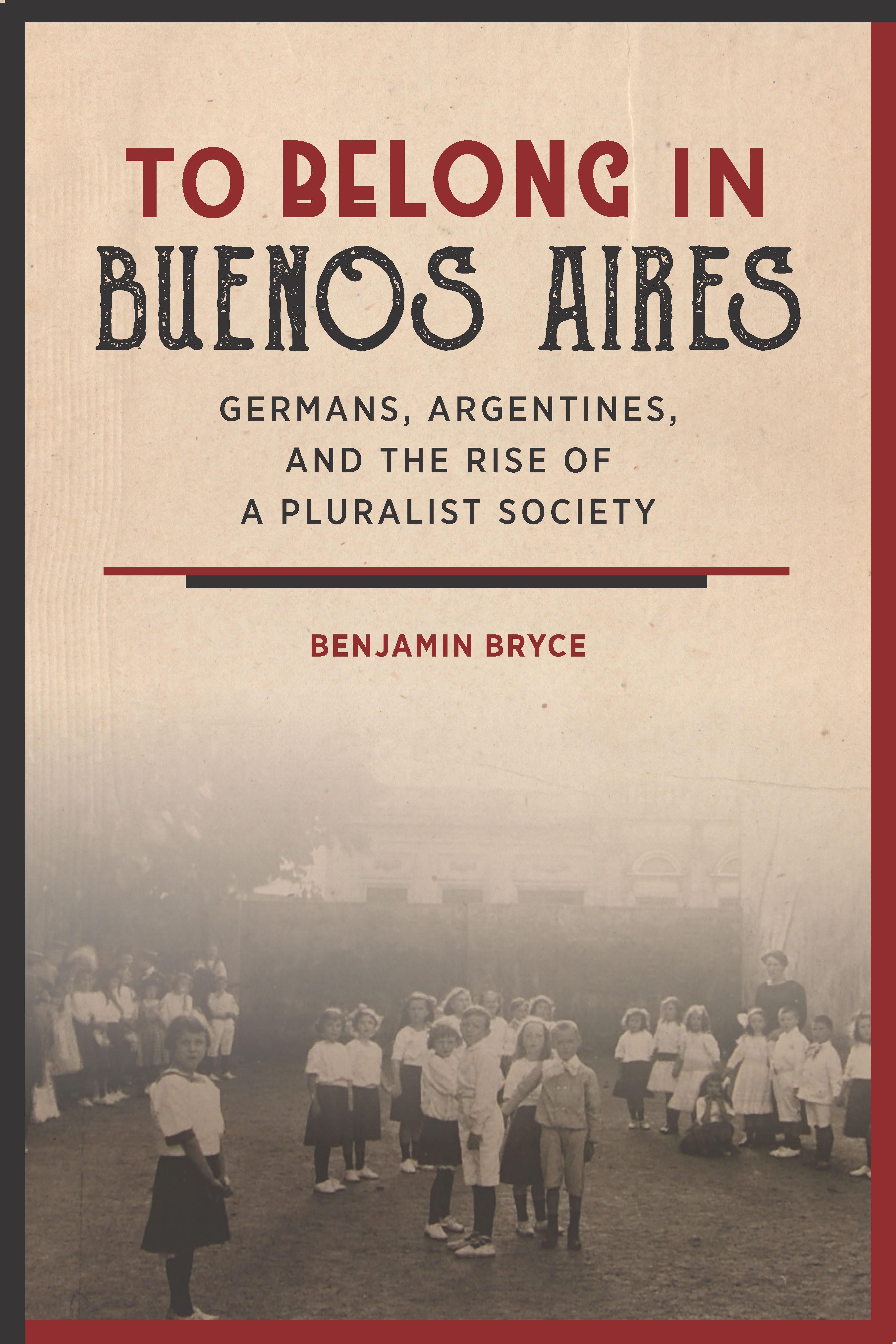
In the late nineteenth and early twentieth centuries, a massive wave of immigration transformed the cultural landscape of Argentina. Alongside other immigrants to Buenos Aires, German speakers strove to carve out a place for themselves as Argentines without fully relinquishing their German language and identity. Their story sheds light on how pluralistic societies take shape and how immigrants negotiate the terms of citizenship and belonging.
Focusing on social welfare, education, religion, language, and the importance of children, Benjamin Bryce examines the formation of a distinct German-Argentine identity. Through a combination of cultural adaptation and a commitment to Protestant and Catholic religious affiliations, German speakers became stalwart Argentine citizens while maintaining connections to German culture. Even as Argentine nationalism intensified and the state called for a more culturally homogeneous citizenry, the leaders of Buenos Aires's German community advocated for a new, more pluralistic vision of Argentine citizenship by insisting that it was possible both to retain one's ethnic identity and be a good Argentine. Drawing parallels to other immigrant groups while closely analyzing the experiences of Argentines of German heritage, Bryce contributes new perspectives on the history of migration to Latin America—and on the complex interconnections between cultural pluralism and the emergence of national cultures.
Paga facilmente con carta, Klarna, Apple Pay o Google Pay. Non sei soddisfatto? Hai sempre 14 giorni per il rimborso. Leggi di più nei nostri termini. Per qualsiasi domanda, scrivici a hello@memmo.org.
Memmo rende lo studio più facile, ovunque tu sia nel mondo. Qui trovi i tuoi libri di testo e strumenti di studio intelligenti, tutto in un unico posto: riassunti, quiz, podcast e flashcard. E poi c'è Ted, il tuo compagno di studio che risponde a ogni tua domanda. Oltre 50.000 studenti studiano già qui: è stato creato per aiutarti a imparare più velocemente e a stressarti meno.