
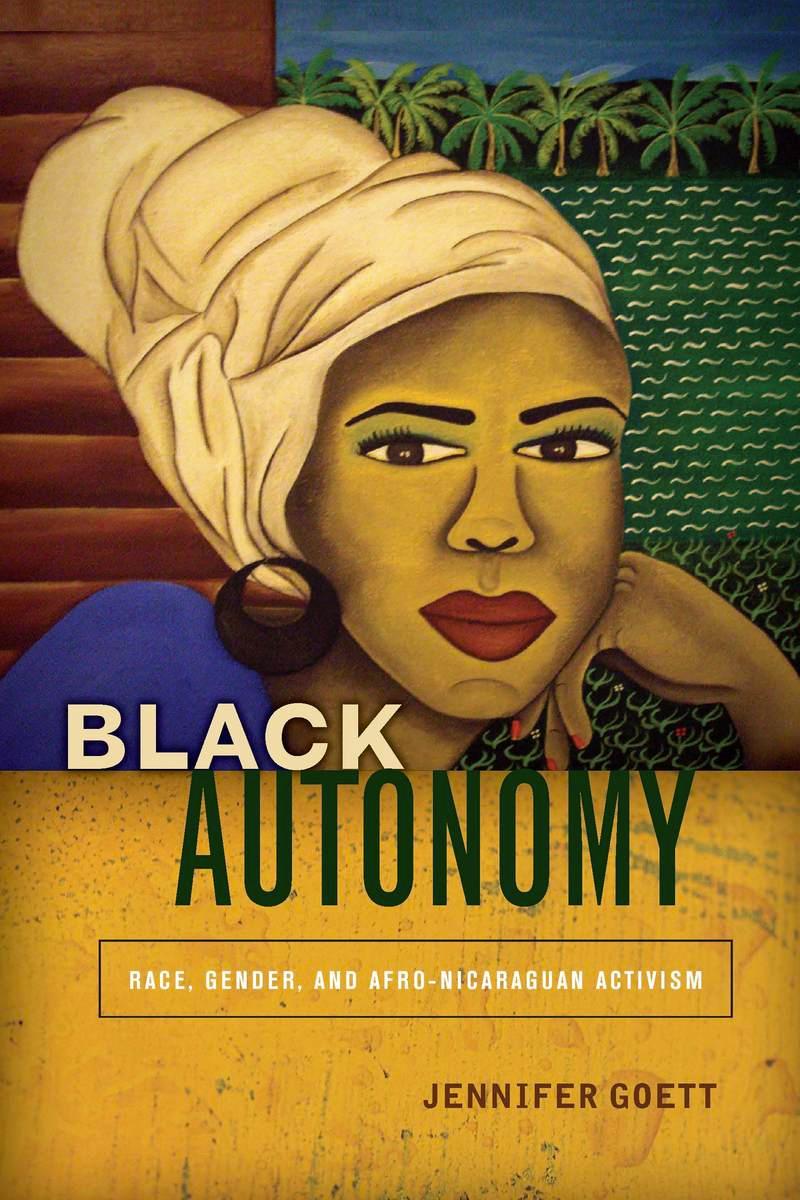
Decades after the first multicultural reforms were introduced in Latin America, Afrodescendant people from the region are still disproportionately impoverished, underserved, policed, and incarcerated. In Nicaragua, Afrodescendants have mobilized to confront this state of siege through the politics of black autonomy. For women and men grappling with postwar violence, black autonomy has its own cultural meanings as a political aspiration and a way of crafting selfhood and solidarity.
Jennifer Goett's ethnography examines the race and gender politics of activism for autonomous rights in an Afrodescendant. Creole community in Nicaragua. Weaving together fifteen years of research, Black Autonomy follows this community-based movement from its inception in the late 1990s to its realization as an autonomous territory in 2009 and beyond. Goett argues that despite significant gains in multicultural recognition, Afro-Nicaraguan Creoles continue to grapple with the day-to-day violence of capitalist intensification, racialized policing, and drug war militarization in their territories. Activists have responded by adopting a politics of autonomy based on race pride, territoriality, self-determination, and self-defense. Black Autonomy shows how this political radicalism is rooted in African diasporic identification and gendered cultural practices that women and men use to assert control over their bodies, labor, and spaces in an atmosphere of violence.
Paga facilmente con carta, Klarna, Apple Pay o Google Pay. Non sei soddisfatto? Hai sempre 14 giorni per il rimborso. Leggi di più nei nostri termini. Per qualsiasi domanda, scrivici a hello@memmo.org.
Memmo rende lo studio più facile, ovunque tu sia nel mondo. Qui trovi i tuoi libri di testo e strumenti di studio intelligenti, tutto in un unico posto: riassunti, quiz, podcast e flashcard. E poi c'è Ted, il tuo compagno di studio che risponde a ogni tua domanda. Oltre 50.000 studenti studiano già qui: è stato creato per aiutarti a imparare più velocemente e a stressarti meno.