
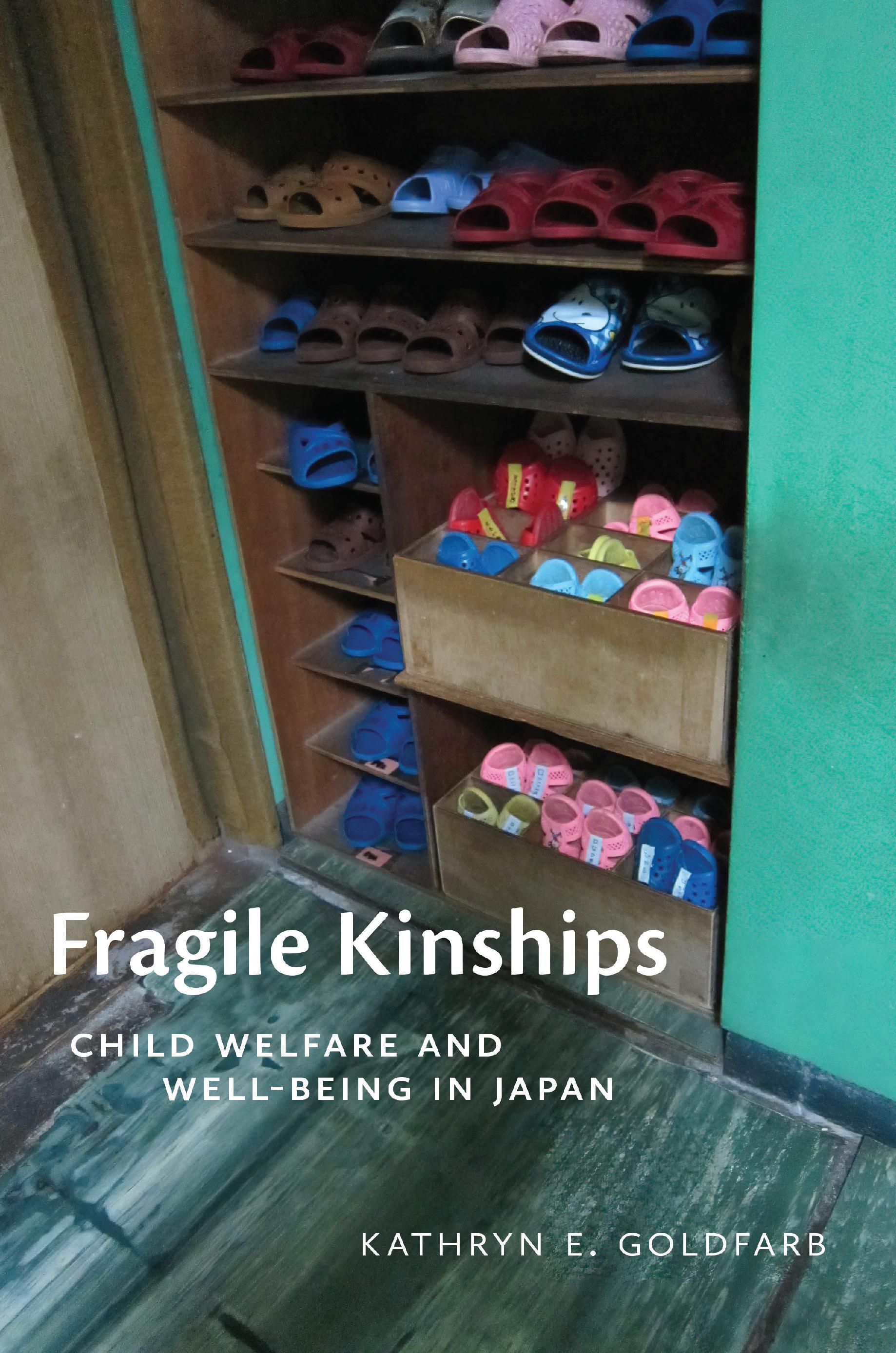
In Fragile Kinships, Kathryn E. Goldfarb shows how child welfare systems do not always generate well-being. This is true across the world, as it is in Japan. Policymakers, caregivers, and people with experience in state care endeavor to imagine—and implement—child welfare systems that are genuinely supportive. Yet despite these efforts, social welfare systems too often produce people who are alone. By centering relationality in theorizing social forms of care, Fragile Kinships offers key insights into embodied and socioemotional well-being. Goldfarb analyzes both the feelings and effects of lacking kin, and the transformative energy people invest in creating new forms of kinship and relatedness.
Fragile Kinships demonstrates why welfare systems must support relational well-being. In her contributions to anthropological theories of kinship, embodiment, and the field of Japanese studies, Goldfarb also speaks to academics, practitioners, and policymakers in Japan and globally with ethnographically grounded perspectives suggesting ways that child welfare systems might truly achieve wellbeing.
Paga facilmente con carta, Klarna, Apple Pay o Google Pay. Non sei soddisfatto? Hai sempre 14 giorni per il rimborso. Leggi di più nei nostri termini. Per qualsiasi domanda, scrivici a hello@memmo.org.
Memmo rende lo studio più facile, ovunque tu sia nel mondo. Qui trovi i tuoi libri di testo e strumenti di studio intelligenti, tutto in un unico posto: riassunti, quiz, podcast e flashcard. E poi c'è Ted, il tuo compagno di studio che risponde a ogni tua domanda. Oltre 50.000 studenti studiano già qui: è stato creato per aiutarti a imparare più velocemente e a stressarti meno.